This Exited Founder Has Now Raised $28M to Build the Future of Money Movement


 Spotify
 Apple Podcasts
 YouTube
 RSS Feed
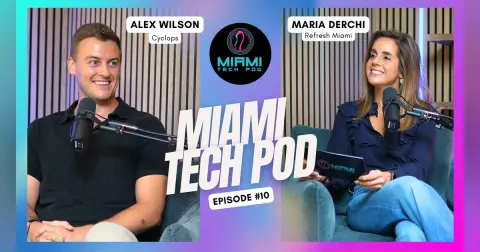
 Alex Wilson has already built and exited one crypto startup. Now he's doing it again.
After co-founding The Giving Block and selling it to Shift4 in 2021, Alex spent four years leading crypto at the payments company before leaving to launch Miami-based Cyclops.
Less than a year in, Cyclops has raised $28 million and grown to more than 30 employees, with a mission to change how money moves around the world.
In this episode, Alex shares what he's doing differently as a second-time founder, why investors were lining up to back Cyclops, what he learned from Shift4 founder Jared Isaacman, and why he believes Miami is one of the best places to build a company.
00:00 - Welcome And New Dad Life
01:05 - Building The Giving Block From Scratch
03:10 - How Crypto Use Cases Hooked Him
03:55 - Bootstrapping Then Selling To Shift4
08:05 - Leadership Lessons From Shift4
09:55 - Cyclops Origin And Stablecoin Money Movement
13:00 - Choosing Cofounders Who Fit
16:10 - Why Second Companies Move Faster
17:10 - Fundraising Fast And Picking Investors
20:50 - Why Miami Works For Fintech
26:55 - Hiring For Ownership And High Agency
29:00 - Rapid Fire And Community Ask
Welcome And New Dad Life
Maria
Welcome to the Miami Tech Pod. I am your host, Maria Durchi, and as always, we're recording from our home at the Lab Miami in Wynwood. Huge shout out to the lab for always being great hosts. And today on the podcast, we have Alex Wilson, co-founder of Cyclops, a company on a mission to radically improve the waste payments companies use stable coins and crypto. Welcome to the pod, Alex.
Alex
Thanks for having me, Maria.
Maria
I think congratulations are in order. You're a new dad.
Alex
Thank you, thank you.
Maria
How has that experience been?
Alex
It's been great. I'm a girl dad. So a baby girl named Charlotte. She's about four months old now. It's been a ton of fun and it's already flown by.
Maria
What better to do than while you're, you know, starting a company than adding some more stress to the situation.
Alex
My wife giving me a little bit of a hard time on that, having a new company come out of stealth in March, right around the time the baby was born. We kind of joked it was two kids at once, but it's been uh it's been fun. Helps you prioritize what really matters, right?
Maria
That is true. We're gonna get
Building The Giving Block From Scratch
Maria
into Cyclops in a bit, but Cyclops is not your first rodeo. And it's almost feels like the two roles you had before this were all kind of leading up to Cyclops. So first I want to go back to your first rodeo, which is the giving block. Uh, can you tell us what did the giving block do?
Alex
Yeah. And it's like you said, it's like been a very natural progression between all these things. So we started the giving block back in 2018. The concept was we thought crypto was going to be a big deal, and we thought no one was really helping nonprofits do a good job of accepting and fundraising crypto and stablecoin donations. Um, my co-founder Pat Duffy, uh, we went to college together. We were living in Washington, D.C. together after school, and we were both very entrepreneurial, always thinking like we want to start a business. We both got into crypto. Funny enough, he was kind of the guy in our friend group talking people out of crypto, and I was the one talking people into it. But eventually, kind of kicking and screaming, he came around and read the Bitcoin white paper and uh became a believer. And he happened to be working at a nonprofit at the time, actually. So he was working at the Lupus Foundation. I was a management consultant, I was just obsessed with crypto nights and weekends, reading whatever I could about it. And over drinks, one day, he had the idea of like, hey, we should help charities accept crypto donations. And as you can imagine, though, in 2018, they looked at us like we were crazy. This was like, you know, Bitcoin was in the news for the first time, a bit more than usual back then, but still a lot of people thought it was just a fad, a bubble, all these different things. Um, so it was it was quite the uphill battle, but we we stuck with it. We were very stubborn about it, and you know, eventually it really took off and we worked with all the largest charities around the world.
Maria
And how long were you running that then?
Alex
So we ran that from 2018 to 2021 when we sold it to Shift 4 payments.
Maria
Okay. So I'm curious what excited you? How did you initially get into crypto?
Alex
Um, it it sort of happened a little bit by accident. Um, some of it was through work at my management consulting job. I was always trying to work my way onto a team that was focused on emerging tech. And it's funny because back then the things the kind of Fortune 500
How Crypto Use Cases Hooked Him
Alex
companies were interested in is very similar to now. It was AI, it was IoT, it was blockchain. Those were the same sort of buzzwords then as they are now. And so we would do presentations for these big companies that give them like crypto 101, blockchain 101, AI 101. And that kind of you know took me down the rabbit hole of learning about crypto. And I was always just interested in ways to make more money. So I started trying to invest a little bit, trade a little bit, and that's what pulled me in. And then I started hearing about these incredible use cases with crypto and stable coins in Latin America and journalists using it to escape, like, you know, basically political persecution where the bank accounts might be closed down by the local government, but they could still get paid or operate using stable coins. Um a lot of just real interesting use cases drew me
Bootstrapping Then Selling To Shift4
Alex
in.
Maria
How did the whole sale to shift four come about?
Alex
It happened faster than we expected. We weren't planning on selling the company at the time. So when we started the giving block in 2018, we had zero connections to like any sort of VCs or angel investors or anything like that. We tried fundraising, we never really got very far. And eventually we said, you know, let's just build the company, bootstrap it, like we'll just keep going nights and weekends as long as we have to, keep our day jobs as long as we have to. Um, and any money we did make, we focused on hiring other people while we figured out, you know, kind of odd jobs on the side to help pay the bills. And it's funny because once the giving block was profitable, then we were able to raise some VC money. So we raised a small million and a half dollar seed round back then. Um, and then about a year after that, we were going to raise what we thought was going to be our series A. And we said we only want to raise money from people who were gonna be really, really strategic and help us actually grow, not just raise money for the sake of raising money because we were already profitable at that point. Um, and those conversations led to conversations from these potential investors saying, could we just buy you instead? Would you sell? And we were like, uh, you know, we weren't really planning on selling, but of course you always want to hear them out. Um, and it happened often enough that we decided to hire an investment banker and ran a formal process to take a look at all the bids, do all the due diligence, and that was a ton of work. And and ultimately shift four was the the right partner for us. It was it was crazy how it all came together so quickly, um, but a really awesome outcome.
Maria
Incredible. And so odd jobs, any what was the oddest job you or your co-founders took on in that case?
Alex
Even leading up to that, like we throughout college and after college, like, you know, he was selling like Bluetooth speakers and I was doing like valet, and I was a bar back even and like all these random things. Um, but then we also just like kept our day jobs as part-time jobs for a really long time um and just kind of tried to make the bare minimum from our our other jobs so everything could go back into the business. Awesome. Um but I had a bunch of random little jobs. Like I even had a business buying and selling domain names online. So we've we've done a little bit of everything.
Maria
Is this domain squatting?
Alex
Is it no, not quite. Um, I would just try to identify trends and keywords that people would want to buy domains for and register those for, you know, seven dollars on GoDaddy. And I would try to sell them for like 15, 20 bucks each, but I was selling, you know, sometimes hundreds of them a week. So it was really like a mass, you know, kind of almost flipping of them.
Maria
It's a volume play.
Alex
Yeah.
Maria
Okay. Yeah, I can imagine it was hard to, it would be hard to raise from a VC at that time where you're like, we are crypto, but we're also nonprofit, and like the combination of those two is very rich.
Alex
Just the name nonprofit scares most investors and entrepreneurs away.
Maria
Yeah.
Alex
Um, but it's a much bigger park market than people realize and tends to be very underserved because of that. I I really encourage people actually to start businesses in that space because there's a lot of opportunity. And even just in the US, $400 billion a year are donated to give people a sense of how much bigger that market is than most people expect.
Maria
And now, I mean, I you keep reading about like the wealth transfer and like how that's gonna affect, I think, uh, the nonprofit space of all these people who are gonna be looking to kind of donate.
Alex
So that was a huge catalyst for us and something that really got nonprofits interested was you know, the younger generation spends money, invests, and donates very differently than previous generations. There's some really incredible stats around, you know, younger people investing more in digital assets like crypto compared to, let's say, the traditional stock and bond portfolio. So they need to be ready for that wealth transfer and be ready to accept in their preferred way of giving.
Maria
Yeah. And so when you joined Shift, you were purchased by Shift 4 and then you joined as head of crypto, correct?
Alex
Right. So I became head of crypto once we got acquired.
Maria
And you did that for four years. I would love to learn, you know, what are some of the lessons you took from that time.
Alex
Yeah. Um, it was it was incredible. And and we actually, you know, probably stuck around longer than we initially intended. We always knew we wanted to do something new
Leadership Lessons From Shift4
Alex
again afterwards, and it was kind of a when and what question. Um, but part of the reason we had such a good experience there and learned so much was because of the founder, Jared Isaacman. So um, if you haven't looked him up, incredible guy. He started Shift 4 when he was 16 out of his parents' spaceman or garage in Allentown, Pennsylvania, ran the company ever since, and just like an incredible visionary and founder and executor. We learned so much working with him and working at Shift 4. And now he's even leading NASA. So uh he's living his childhood dream. He's he's always wanted to do something like this. And he's even been to space a couple times on some SpaceX, SpaceX trips.
Maria
Very cool. So, what were some of the lessons? Just one or two.
Alex
So he was great about having um company principles and values that made the company successful, things like ownership and accountability um being really, really important things that he emphasized. Um, and he embodied that even the way he operated. He would jump into a random uh support thread, for example, make sure people were taking ownership, make sure problems were being solved, making sure that there was kind of no problem too small to fix. And he really did a good job keeping a pulse on the business. So that's something we try to always remember, no matter how quickly we're growing, no matter how big Cyclops ends up becoming, we always want to have a really, really good pulse on everything that's happening across the company. We never want to have sort of tunnel vision. Um, even if one of us as co-founders is focused on one part of the company more than others, it's really important that we see the full picture and even, you know, occasionally handle support requests, right? We we still do sales pitches, we still do demos, we still do onboarding and like we really know how every part of the business works. And I think that was a huge thing we took away from Jared's leadership at Shift Four.
Maria
So, at what point that while you were at Shift Four, did
Cyclops Origin And Stablecoin Money Movement
Maria
you decide did the kind of Cyclops aha moment happen?
Alex
So it was kind of sitting right in front of us for a long time, and it took us a while to realize it. Um, so the mandate at Shift 4 as head of crypto was to build these different crypto and stable coin products for their, you know, hundreds of thousands of merchants. So we built things like pay with crypto, we did payouts use cases, we did stable coin settlement use cases. Um, we built a lot of different crypto and stable coin products, and to do that, we used um like crypto as a service providers in the space. Um, so we we worked with a bunch of different companies to build those products. And there was there were two things that really surprised us over those four years. One was that none of them were focused on the payment space, which meant like a lot of these companies were going very broad and they might list payments companies, you know, alongside 10 other types of industries they service. But whether you were, let's say, a brokerage like Schwab or a payments company like Shift 4, you were getting the same product, same support, same documentation, same contract. And to us, that that didn't make sense because it meant you had to customize things a lot. And it also meant you normally had to stitch together a handful of different companies to deliver the product. So no one was really this one-stop shop for payments companies. And after four years of getting frustrated, um, the three of us were sitting around my kitchen table here in Miami, like essentially complaining out loud and venting about how frustrating this was. And we're like, wait a second, why don't we just start a company that fixes this? And uh about a year ago is when we started kicking this idea around. And uh mid-August, it'll be be one year. So coming up.
Maria
Okay, well, one year anniversary.
Alex
Yeah.
Maria
Uh so for someone not in crypto, how do you explain what Cyclops does?
Alex
Yeah, we we really actually think of ourselves as a money movement company, more so than a stablecoin company. We just happen to use stable coins often because it tends to be how we can move the money more quickly and efficiently. Um, most of our products really have stable coins operating behind the scenes, and we really don't want to have to change any sort of consumer behavior or even interaction with crypto whenever possible. So our business is very B2B. We're always selling to the payments companies. But if you want to think about what a stable coin really is, just think about it as a digital dollar, an online dollar. Rather than, you know, being constrained by banking hours, you can move money at essentially the the speed of the internet. It's it's very much a real-time system that operates 24-7.
Maria
If your vision comes true, how does the average person's daily life actually change?
Alex
So I hope stable coins become so mainstream that people even stop talking about them. Um, that's really where I think this is headed in in five or more years, where it's just how money moves. Like we're really just scratching the surface now. Most estimates would say something like 1% of money moves on stablecoin rails. It's really early. Um, I think once you get to something like 10, 20% of money movement on stablecoin rails, which I think is gonna happen in in the next five to 10 years, it's it just becomes ubiquitous with money movement
Choosing Cofounders Who Fit
Alex
and it's just a payment rail behind the scenes. Um and people stop talking about it, they stop thinking about it. It's just how you it's just how you move money.
Maria
Giving block was the same co-founders as Cyclops, correct?
Alex
Sort of. So there's a there's a good story there.
Maria
Okay.
Alex
So Pat and I co-founded the Giving Block. We went to college together, and then the third co-founder of Cyclops, David Johnson, um, he was actually running a blockchain co-working space, an incubator, in Washington, D.C. when we started the giving block. And we were the first startup to be accepted into there and start working out of there. So we ended up helping him run it and he became almost like an outside advisor to us in the early days of the giving block. Um, and he was always looking for a way to be more entrepreneurial and get involved in crypto and stable coins while he was really a full-time lawyer at a firm called Pillsbury. And then we started using him more and more for legal work at the giving block. He helped with the deal to sell to Shift 4, was really instrumental in that MA transaction. And then after we sold to Shift 4, we convinced him to join us full-time at Shift 4. So we joined his in-house council at Shift 4. He was really like our right-hand man on a lot of these different crypto projects. And he was really making a bet that, you know, he was going to take a bit of a pay cut, but really wanted to be around for the next thing we did. And so it really came full circle and he became the third co-founder for Cyclops.
Maria
Now, so many relationships between founders and poorly, unfortunately, you know, we hear about it all the time. Uh, so the fact that you have now started a second company, at least with one of your former co-founders, is a great sign. What advice would you have to folks as they think about starting a relationship with a co-founder to make sure to set them up as much as possible for success?
Alex
Yeah, it's it's one of those things where it's it sounds so obvious, but you really have to enjoy working with them. And I think there's a lot of co-founders who just butt heads because they just they're just not having fun. Right. There's something about the personalities that just don't mash. Like you can forget about how good they are, maybe at their job, but if the personalities and just can't get along day-to-day stuff, and if you can't work through disagreements and then, you know, move on to the next thing and still have a great time working together, it's really hard to make that work. Between Pat, David, and I and the rest of the team, like we we are having so much fun and we really enjoy working together. And of course, you know, we've become really good friends too, outside of work, too. I would consider them some of my best friends, and a lot of the other people at the company, I'd say the same thing about. Um, so I just think that's that's something you have to think about when you're going into business with someone. You have to really see yourself enjoying it, spending time with them traveling, right? Whether you're in the same office or not, just spending most of your day with them. And if you're not enjoying it, then it's it's gonna be tough.
Maria
Yeah, fair. So is there anything that has surprised you most about starting a second company, like this time around?
Alex
Um I would say it was mostly expected, but just how much faster things go and in a sense how much easier they are. Part of the excitement and part of the reason we wanted to start a company again was because we learned so much and we wanted to apply that. We couldn't wait to apply everything we learned. We're
Why Second Companies Move Faster
Alex
like, oh my gosh, this time around, it's gonna be so much easier. Not to say it's it's easy, but it's comparatively much easier. Um, even things like fundraising, right? I was telling you how we really struggled to fundraise with the giving block. With Cyclops, we had investors keeping in touch with us even after we sold the company, just trying to be there for whenever we started something new, for example. And the the investor, Castle Island, who led our seed round, I mean, they're like a you know case study of what investors should be doing because they kept in touch with us. They kept referring business to the giving block in Shiffer, even though they had no stake because they wanted to earn their spot at the next company. And so, of course, they were our first call, but we had a ton of options. It was it was inbound interest rather than us, you know, sending, you know, cold messages on LinkedIn to investors. So we were very fortunate to have a lot of options for which investors, um, even having a core team we knew and trusted from day one made a huge difference. And and there's even the more boring stuff like you know, what systems to
Fundraising Fast And Picking Investors
Alex
use and how to set up processes around the sales team, right? And all these different things that, you know, I think um they make a huge difference because there's a lot less trial and error in the early days.
Maria
So let's get into the speed because we mentioned that it's this month. We're recording this in August. We probably put publish in September, but August marks one year since you started the company. You raised an $8 million seed in March, so pretty quickly, and then just announced a $20 million Series A in July. Uh that's quite in quite the year.
Alex
Yeah. And we actually so we announced the seed round in March, but we actually raised it in October. Oh, wow. So we kept it quiet, we stayed in stealth, and March was really the first time we announced Cyclops publicly. And it's funny too, because in March, when we came out of Stealth, we weren't planning on fundraising again, but we got so much interest and so much inbound. And those first few months coming out of stealth, there was so much interest, and the pitch was really resonating that we were just getting inbound offers from investors to do a series A early. Yeah. Um, and we were even days away from signing a smaller strategic round of $10 million because we really thought, like, ah, let's not rush it. But then we found just the right partners in Nava Ventures to actually pull forward the series A. Um and did the series A in July much sooner than expected.
Maria
Well, congrats on that too. Uh and you had some heavy hitters that came into this round. You mentioned Nava. There was also participation from Coinbase Ventures, Castle Island came back in, Circle Ventures, GPT Ventures, and Lasagna, local Lasagna Ventures. Uh and from what I understand, these are not like the typical uh crypto investors. Um can you talk to through kind of how you thought about who you were going to bring into this round? Because to your point, you had a lot of options.
Alex
Yeah. Um, yeah, we were very deliberate about who we brought in, especially because we didn't necessarily need the money. You know, everyone's always a good position to be in. Right? I I always say like everyone on our cap table had to earn their spot. It was almost like we had tryouts, right? And and investors were coming to us and explaining why we should choose them. They're like, oh, I know so-and-so, I'll make an introduction today. And people like Nava, people like lasagna, uh like GPT, they went out of their way to show value before we agreed to anything or even agreed to let them invest. Um, so if you think about people like GPT Ventures, also local here in Miami, there in the Grove. Um, Javier Perez, who is the founder of GPT Ventures, was the former president of MasterCard. He was an early investor in Ad-In. So all of these investors have a lot of relationships and a lot of knowledge operating payments companies. And that's what's most helpful for us because we're selling two payments companies. We see so many companies out there that are building crypto and stablecoin infrastructure. And they're often raising money from crypto venture funds that are kind of generalist crypto funds. Um, and if you're selling two crypto businesses, I think that's helpful because they have a good network there and they know how to operate in the space. But if you're selling to a traditional industry like payments or banks or something like that, you really want your investors to help you with the industry you're selling into rather than the industry your product is built in, if that makes sense. So that's why we we thought that was so important to bring them in rather than, let's say, more crypto investors. We of course have Coinbase and Circle, which are are much more on the crypto side, but even for them, right, it's very much a strategic alignment around stable coins.
Maria
Now you mentioned, okay, between GPT Ventures, uh lasagna, which is Grant, also based in Miami, and then OpenFX, right?
Alex
Yeah, OpenFX as well. And they have a big Miami presence. Yeah.
Maria
Uh so kind of getting into Miami, how has being in Miami has helped? Because
Why Miami Works For Fintech
Maria
it sounds like it led to a lot of great investors.
Alex
Yeah, we we love Miami, and I really credit moving to Miami about five years ago with a lot of our success and our network. Um, like after selling the giving block and joining Shift Four, like out of all the things we did that probably helped the business and helped us start Cyclops, moving to Miami was maybe one of the most impactful things because of the people we met, just the quality of life and just like how much we enjoyed being here. And I think a lot of people assume, like, okay, you moved to Miami, yeah, it's great weather, yeah, you don't have the state income tax. Like those things are obvious. But the quality of the people that are in Miami and coming to Miami is what really makes the difference of why we like it so much and why we wanted Cyclops to be based here. Um, because we meet people like these investors. And we met a lot of other entrepreneurs who have moved here and other executives. And even a lot of our customers we're selling to, payments companies are in Miami. Um, especially if you think about some of these remittance companies that are moving money between the US and Latin America. It's just an incredible place to be if you're building any sort of financial services business, payments business. Um, and if you're an entrepreneur, it's always great being around other entrepreneurs. So we We absolutely love it. And I always say I'm a Miami maximalist. I'm always recruiting people to Miami. Um, it's it's really an amazing place to build a company.
Maria
Yeah, I believe you've recruited your brother, your parents.
Alex
Yeah, exactly. My brother and I moved down together to Brickle. My parents live in Boca now. So we've got the the whole family down here now. It's great.
Maria
What originally even made Miami on your radar spark do to come consider it? And then what pushed you over?
Alex
So I started coming here more often because of the COVID lockdowns. And we were living in DC at the time, and Miami was still relatively open compared to a lot of other places. So there were still conferences happening here, for example, in crypto and payments. So I had more and more business trips to South Florida. And then my brother and I just enjoyed going here because of the weather and everything else. And then I realized, you know, had other friends moving, and then Mayor Suarez, of course, his kind of famous, how can I help? That really resonated because I'd never even seen a, especially a local politician or any politician at all actually wanting to help and sort of get out of the way or open doors rather than just put up barriers. So that that really resonated with me being a founder and an entrepreneur. Um, and it just felt like, you know, the right place, the right time, and we wanted to be part of that momentum and that story in Miami.
Maria
And you're I think sometimes people think about Miami and folks moving here, and they think of like more perhaps single, younger people, but you are now raising a family here. Yeah. Thoughts to parents who might be listening on like what it would might be like to raise a family in Miami.
Alex
Yeah, it's funny because I I think you're right. A lot of people, they just think like spring break on South Beach, right, when they hear Miami. Um, and visiting Miami, whether you visited when you were maybe in college or something like that, or living here is just so different. Um, you can you can certainly come here and have a lot of fun in South Beach vacation kind of trip, but living here is is just completely different. Even things like um, you know, like the schools and the the quality of life or you know, cost of living can be pretty expensive. But if you compare it to places like, I don't know, New York or Boston, it's actually still relatively affordable. Um, not to say it's inexpensive, it's it's definitely expensive, but we've just really enjoyed it and we really feel like you know, we found a great community of other people who have moved to Miami, and people are generally just very open, I would say. And we talked about this earlier too, like they're very optimistic too. Um, we lived in Boston for a while, we lived in DC. Compared to Miami, those are much more sort of clicky or closed communities. I find Miami very open and welcoming. So if you want to meet other young families, you want to make friends, like people in Miami are generally very willing to talk and make friends and help people. And they generally just so optimistic about life. Maybe the weather has something to do with that, but they have a very positive attitude, right? Everyone just seems happy when you see them walking around. Um, it's just good for your general, I think, attitude towards life to have it's like an infectious optimism almost being in Miami that we really love and we think that's a great thing to raise a family around.
Maria
Yeah, I feel like it goes probably why the crypto community is so big here. It's just like the whole we're gonna make it kind of optimism. Yeah.
Alex
Exactly.
Maria
Um I'm so glad to hear you're having a great experience. How have you seen like the crypto ecosystem in Miami evolve over the time that you've been here?
Alex
I think when I first moved here, it was a big draw that there was a lot of other crypto founders and crypto companies moving here. Now it feels much broader technology than just crypto when I first came here. Um, right, you've even got AI companies that I see you guys writing about a lot. Um, it's it's definitely much broader than just crypto. I think crypto was just, you know, in the media a lot and got a lot of attention. But I think there's a much bigger story to tell about tech startups and just startups in general. I just think it's a great place to start a business because you have, you know, that local community of entrepreneurs and that optimism too. Um, I think that's really what encourages a lot of the entrepreneurship here, too. It's like everyone wants to make more money. They want to create a better life for their family, they want to do something new and exciting, they're willing to take risks, they're really willing to hustle, have a side project, right? There's the joke that everyone in Miami is a DJ, right? Like everyone's got a little side hustle.
Maria
This is fair. Um yeah, I think the optimism is a huge part of it. And we were mentioning this before we started recording, is um I think for the same reasons people love to be in a startup, because it's early, you wear a lot of hats, you can kind of like figure out your way, and everything's not just so set, is probably a lot of the reasons people like Miami is because it feels that way, it feels malleable, it feels like you know, if you want to make a name for yourself, you can. And uh so I definitely see a lot of correlations there. Now you are guys are about 30 people on the team now?
Alex
Yeah, just over 30. We've we've we've been hiring like crazy.
Maria
Yeah. Well, let's talk about that. I think I was on the site, I saw you have a bunch of different roles. Um, some are remote, but if obviously if they're based here, you know, that's a plus. Uh engineering roles, director of customer success, director
Hiring For Ownership And High Agency
Maria
of biz dev, director of strategic partnerships. What kind of person is the right fit to work at Cyclops?
Alex
Yeah, so it depends a little bit on the role, but generally it goes back to a lot of these principles and values I mentioned that we learned at Shift 4 around like ownership and accountability. Um, and we we generally just want self-starters, right? Like we don't want to be micromanagers of people. We want people who we give them kind of fairly clear goals and some guidelines, but then they can just kind of go out and do it. I don't want to have to check in every day on how something is going. I want them to go out, do it, report back, come if they need help. Um, so we want people who have a bit more of an entrepreneurial mindset and act like owners in the business. So we make sure everyone in the company has equity, for example, because we think that helps with that owner mindset. Operate the company, run your job and your day-to-day as if you were an owner in the company because you actually are an owner in the company. So we really want people to care about even the little things, right? How quickly you're responding to a support request. Are you taking ownership of something that went wrong and sticking with it until it gets resolved, even if it's not necessarily your job? Um, so we don't want people who are just looking for a nine to five, who are gonna be like, up, this is my job description. I'm not doing anything outside of that. We want people who are gonna be flexible, they're gonna be adaptable, and they're just gonna jump into something they know nothing about and figure it out. Um so they have to be very willing to learn quickly and just kind of go with the flow.
Maria
So it sounds like high agency. Do they need to come, do they need to have any crypto experience?
Alex
Not really. Some of the engineering roles, it it certainly helps. Um, but outside of that, um not really. We we don't care too much, I would say, for some of the sales and like partnerships types of roles. Of course, coming from payments helps a lot because you have your own network. But otherwise, we're we're pretty open and we hire more for um like those personality traits and those ways of working than we do, you know, where they went to school or where they worked.
Maria
Rapid fire time.
Alex
Okay.
Maria
Only a few. Uh, company you're most excited about outside of Cyclops?
Alex
I think OpenFX actually. Okay. So another Miami company, those guys are just crushing it. It's incredible. They've been posting some of the stats on their volume growth. It's it's really amazing what they've
Rapid Fire And Community Ask
Alex
done in just uh just a couple of years.
Maria
Yeah, I think we just wrote a piece on Harrison and we've written a bit about the uh I think a few times about him. Because he leads the Miami office.
Alex
Correct.
Maria
Okay. Book that has had the biggest impact on you.
Alex
Oh well, that's a good one. So I am a huge Atlas Shrugged fan, Ayn Rand. Um, there's a good backstory with it too. So at Wake Forest, where I went to undergrad, every student admitted into the business school got a copy of Atlas Shrugged, and it's this thick book. And I got it, I was like, I'm not, I'm not reading that. Are you kidding me?
Maria
I gotta use it as a doorstep or something.
Alex
But eventually I actually had a class on the study of capitalism where we had to read like the Communist Manifesto, all these different books on socialism, and then you get to stuff like Road to Serfdom, Atlas Shrugged. Um, and that book I think changed my life more than any other book I've read. And I I feel like it just instilled some of these values of even being an entrepreneur in me. Because it was all about building and like being objective in your decision making. Um, and those things, I mean, they really stick with you as an entrepreneur.
Maria
Oh, good suggestion.
Alex
Yeah.
Maria
Um, favorite AI tool.
Alex
Favorite AI tool, Claude. I mean, I I can't imagine living without it. I use it all day, every day.
Maria
And then last one is just how can the community, Miami Tech community, be helpful to you?
Alex
You know, help us hire people locally whenever possible. We we love when people are local and when we can find talent locally. It's always my preference to have people in Miami whenever it works out. Um, so if you know great people, send them to Cyclops. We've got something like 17 or 18 open jobs right now. And I would love for as many of those as possible to be in Miami.
Maria
And then customers, ICP payments companies.
Alex
So think of uh companies like Shift 4, which is a big customer's hours. So PSPs, acquirers, gateway, payment orchestrators, those types of companies, basically money movement companies.
Maria
Any hobbies outside of raising your newborn?
Alex
Yeah, that takes up a lot of the time, but um pretty into fitness. Love going to berries on the weekend or sweat 440, workout classes, things like that. Beach day is, of course, always good in Miami too. Otherwise, like I I really enjoy working, actually. Like I love learning about new technology and just keeping up with what's happening in Miami and technology.
Maria
Awesome. Thanks for coming to the pod.
Alex
Yeah, thanks for having me so much. You guys are doing an awesome job.
Maria
Thank you.