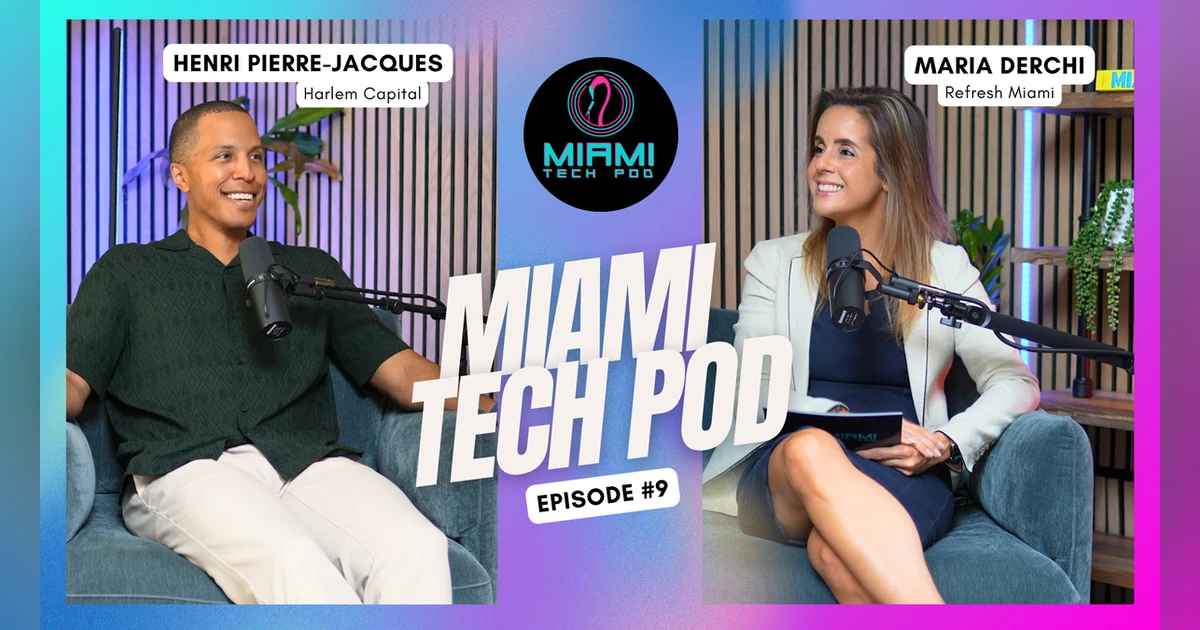
Building a VC Brand & Backing Winners with Harlem Capital's Henri Pierre-Jacques

 Spotify
 Apple Podcasts
 YouTube
 RSS Feed
 What does it actually take to win in venture capital?
Harlem Capital co-founder and Managing Partner Henri Pierre-Jacques joins Maria to unpack a decade of lessons. They talk about how to identify exceptional founders, why the best VC deals can take years to build, the growing importance of an investor’s personal brand, and why founders should reference-check their VCs.
Henri also shares Harlem Capital’s approach to investment decisions, what it takes to make partner, how AI has changed the way he reflects and creates, and why he believes “winners want to be around winners.”
00:00 - Welcome And Harlem Capital Overview
01:15 - The $25 Lesson In Investing
06:45 - From College Hustle To Wall Street
11:40 - The Moment Harlem Capital Clicked
15:10 - Building A VC Brand That Pulls Inbound
21:40 - Authentic Content And AI Writing Prompts
27:20 - Coaching, Therapy, And Blind Spots
31:55 - The Reality Of Diverse Funding Numbers
35:45 - All Winners Welcome Investment Thesis
39:50 - IC Decisions, Scores, And Fund Strategy
43:35 - Sourcing Is A Five Year Game
46:10 - Moving To Miami And Finding Community
Welcome And Harlem Capital Overview
Maria
Welcome to the Miami Tech Pod. I'm your host, Maria Derchi. And as always, we're recording from our home at the Lab Miami in Wynwood. Huge shout out to the lab. Thank you for hosting us. And on today's podcast, we have Henri of Harlem Capital. Welcome to the pod.
Henri
Thanks for having me.
Maria
My pleasure. This is, you know, one of my favorite guests, anticipated guests. So you are the founder and general partner of Harlem Capital, which is a venture capital fund with 250 assets under management, AUM, and a goal to invest in a thousand diverse founders, correct?
Henri
Correct.
Maria
So in my research, it sounds like you came out of the womb destined to be in finance. You started trading stocks in middle school, from what I understand. And I think I heard that your mom had a really unique way of kind of getting you into this. And I would love for you to share a little bit more about that.
Henri
Yeah, so I don't know if I came out of the womb, but my mom definitely groomed me to be in finance. Uh, she was a doctor, and I think she always like wanted to be an investor, and so she put that investor energy into me. Um, so I used to get a uh like $25 a week chores. I'd like to do a bunch of chores around the house and the grass
The $25 Lesson In Investing
Henri
and the gardens. And if I gave her $25 back, then she would double it and invest in any stock of my choice. And so the stock I chose was Home Depot, because we actually built our home from scratch, and I used to like go with the construction workers and drive the trucks and go to Home Depot with them. And so that was at the time when I was in middle school, that was like the one place I knew. And I was like, oh, like this place must be making a lot of money. My mom and my parents and construction workers are coming here every single day. So I put most of my money into Home Depot. Uh so I actually just sold that stock probably like three or four months ago, and it was like my best return ever.
Maria
You held it for that long.
Henri
Yeah, I held it for that long. And my mom put it in a way where the dividends reinvested automatically. And so like I put in like a couple thousand dollars, you know, over like whatever, five or six years in that like 30, 40, 50x over the past 20 plus years. And so really just like really good lessons my mom. And the re the reason she did it, which I didn't know at the time, was you can actually give your kids $13,500 of free salary, uh, and then they can invest that tax-free. And you get to deduct that from your taxes. And so my mom used a loophole to have me work for her. She paid me to work for her, she had to expense it, and I got to invest it tax-free. And so, you know, shout out to my mom for being like smart with the tax event.
Maria
Yeah, it sounds like she's pretty savvy.
Henri
She's very savvy.
Maria
Oh my gosh. Okay, so tip for for parents, especially. So, and then I believe in you went to Northwestern, are we share that alma mater? I mean, I did grad school there. You started a company in college?
Henri
Yeah, so there was a company on campus called um Wildcat Express Delivery. Basically, it was like DoorDash or GoPuff before these companies came out. As you know, I was in college in 2005. So we started a company called Wildcat Special Delivery. And so it was for delivering cakes for Valentine's or birthdays, flowers for you know, your girlfriends, like non-food related, like really unique places that were usually further outside of Evanson. We did deliveries for that. And eventually Wildcat Express Delivery actually acquired us and we merged the two companies and just became like an all-in-one solution.
Maria
Oh, so you kind of like leveraged their name to kind of expand.
Henri
They didn't they didn't have uh they didn't have anything on uh trademark on it.
Maria
So lesson for them.
Henri
Exactly.
Maria
Okay, and then yeah, I think you've kind of from there went into investment banking. Um, would love to kind of you take us through a little bit about your career path to starting Heartlem Capital.
Henri
Yeah, very traditional um finance path. So college, I did Goldman Sachs, Bank of America, my sophomore and junior year. I went to Bank of America full-time after, did real estate and gaming banking. So I largely was working with casinos in Vegas. So I was actually flying to Vegas and doing the financing. So whether it's the ARIA, Cosmopolitan, Red Rock Hotel, like I was working with all those casinos, helping to finance them, whether they were building or they needed new debt financing. Um, I realized pretty early on, like I actually like the business inside the real estate more than the real estate itself. And so I quickly knew, like, okay, if I'm gonna go to private equity, all my friends in my group were going to Black Zone and related, all the other real estate private equity firms. I was like, I want to go to a generalist, like private equity firm shop that's not real estate related. I was the only person in my group who ended up going to a generalist firm. I ended up going to a firm called ICV Partners, which is actually now based here in Miami. At the time, they were based in New York. Uh as a black-owned private equity firm, and that's really where Harlem Capital came into existence. And so, you know, black-owned P firm, there's very few of them. And it was the first time I got to work for people of color. None of our portfolio companies were people of color, and we had one woman, CEO, who eventually fired. And so we were buying companies in Iowa and Wisconsin. And so I love the transition from being the only black person in my investment banking group to, you know, and mostly black firm. But then I was like, oh, but the piece I'm missing now is like the actual companies that we're investing in. And so at the time, I was like, okay, well, like what if we start our own fund and we actually invest in diverse people? It became very clear that couldn't be in private equity, like 10 million plus EBITDA, you know, typically 30 million plus of revenue business. There just weren't enough of them. But in venture, there were. We were seeing them when we were angel investing. And so we focused Harlem Capital to start as an angel syndicate on investing in pre-seed and seed companies that were diverse focused. Since then, we've raised, you know, three funds. But like that really was like the inflection point for us. Like, hey, like we love this experience of working for people like us, but like we're still not investing in our communities. Like, we want to do both. And when we got to business school at Harvard Business School in 2017, well before George Floyd, there were like very few, if none, firms that were diverse-led, inverse, and diversity-focused funds. Obviously, post-diverse uh George Floyd, there's tons of funds now, but the time when we started, there weren't. And so we were like, we actually were our preference was to go work for somebody else, but nobody else was doing it. And so we said, hey, Lauren, we just raise our own fun.
Maria
And I feel like you were pretty early on in understanding the power of social media in building a reputation and a brand. Did you understand that from the get-go earlier?
Henri
I love social media. I always have. I mean, so yeah, I personally have liked it. Brandon on our team was a social media influencer. So he was my roommate at the time. We worked in banking together. He had like a quarter million followers on Instagram. So he knew it. And he really led the drive for the team. So the website, the branding, the photo shoots, the photographer, the video, he knew that because that was the bread and butter. He had contacts, he knows tons of designers, tons of videographers, tons of photographers. And so he was very always pushing us like, hey guys, like this is gonna be important. Early on, we noticed that like we were getting opportunities.
Maria
And what year was this?
Henri
So we started the firm 2016.
Maria
Okay.
Henri
Yeah, so 10 years ago.
Maria
Okay.
Henri
And so early on when we were angel syndicate, we were writing $25,000 checks, right? And we were getting opportunities to speak at Forbes. We got 330 and Black Enterprise. We're
From College Hustle To Wall Street
Henri
like, why are we getting all these opportunities for writing relatively small checks? They were a lot of money for us because we were 25 years old at the time, but like in the scheme of things, tiny checks, and it was because of the brand. And so we just said, hey, we're gonna double down and do this even more and more because we're realizing this is giving access and rooms that we couldn't get otherwise, given how small our checks were. And so, like, because of the brand, people actually thought we were a fund before we were a fund. Like we were just investing in our own capital. Everybody's like, oh, like how big is your fund? Could you lead around? Like, no, like this is just our money. We're writing like 5k checks each to like get to $25,000. But like, but the brand made people think we actually were funding. So that's when we realized, like, oh, this is powerful. Then we started our intern program, we were able to get like hundreds of applicants because of the brand. We were getting LPs, like reach out to us. Actually, our largest LP in our third fund was an inbound, right? And so they reach out to us, like, hey, we we saw you guys, and one of our investors like is looking for a very specific thesis, like, and you guys for that thesis, we'd love to meet with you. And so I think over and over you just begin to realize like the brand opens doors and enables you to like meet people without you having to outreach. Like they actually reach out to you. And so once that becomes a thing in the top, me and my partner Jared, we started to push that down, and we're like, hey, the firm has to focus on this, like every single person has to be a priority.
Maria
Myself, I kind of had an experience where I underst when I started to understand some of the power of social media when in 2021, I believe it was, yeah, it was 2021. Um I was working at a at the Venture City of a local venture capital fund, but I was running refresh and kind of posting a lot, and this was like in the huge wave of people moving here. And all of a sudden I got a DM on Twitter from Florida funders, and they were like, we have this role and we think you'd be great for it. And so I never thought I'd get a job offer sort of through Twitter. Uh but that made me realize, like, okay, this is uh, you know, this can be very powerful. So now when I talk to people who are kind of looking to get into venture, I'm like, try to make sure you're being active. Gotta be on Twitter. So on that note, what is some advice you would have for either a founder or a fund or an investor who kind of wants to grow their brand and wants to do some of the kind of the reputational management that you're doing?
Henri
Yeah, I mean, there's a lot of like threads on how do you, you know, get the most reach and all these things. And obviously the algorithms like everybody now is doing video for every startup, you know, fundraise release. It's you gotta do video and the videos are getting much more. So I think you have to at least like know the trends in order to get the most reach. I try to just like stay true to like what is authentic for me. I've tried video, I don't mind doing podcasts, but like in terms of like TikTok or reels and stuff, like it just doesn't, it's just not my thing. I I like to write. And so like typically once a week I'll spend like two hours just like no TV, no podcasts, no music, and just like write about topics. And now with AI, it's easier because I can have AI like you know tell me, like, hey, like, give me some of the top conversations I had this week, or like, you know, my executive coaching sessions, like put my executive coaching session notes or my therapy notes into AI and like say, like, hey, like, what are some of the interesting topics you think I can write about? Right? The hardest thing about writing is like coming up with the idea. Once I have the idea, I can actually like write it pretty easily. But it's like before we had all these Zoom recordings, you're having all these conversations with interesting founders, interesting VCs, interesting LPs, but like you have to actually remember them. And so typically, actually, like you don't need to do anything new. You've actually already had the thing you should talk about. Because in a week we're having hours and hours of conversations. The question is like, can you leverage that information, which now with AI or granola or all these like tools, you can leverage that a lot easier. And so, like, that's made the process a lot more fluid for me. Um, because once I have a kid and my son's two years old, like the mental capacity, especially like in the first year for writing, like I just had a massive writing blockage. Like I could not write to save my life. Because I was like, the hour I have off, the last thing I want to do is like sit and write. So, like you, you know, you go through different seasons, but I think what's important is just like find your niche, don't try to be like everybody else, because otherwise you can't sustain it. Like it's really hard to do this over like years and years, and similar for podcasts, like if you have to do hundreds and hundreds of podcast episodes, and eventually at some point, like it clicks, right? And you have this big inflection point, and you never know when that's gonna be. And that's the same for like any, whether it's your newsletter, your Twitter, your LinkedIn, like it just takes a lot of reps, and so you have to be authentic to who you are.
Maria
Totally agree. Yeah. And so you said something that I wanted to kind of appeal on the executive coach. So, how long have you worked with one? How and it sounds like it's been helpful because you're still doing it.
Henri
Yep.
Maria
Um, yeah, for those who are potentially thinking about getting an executive coach.
Henri
Yeah, I mean, so we got one. I got one probably, me and my partner both got one three years ago. I don't have one right now. I have a therapist now. So the coaching, I kind of go on and off. So for the why I got the coach, we'd raise fund two, much bigger fund. We double the team size, and we kind of went from like this friend fund one. We've known each other for 10 years, you know. Um Brandon's the godfather of my son, I'm the godfather Jared's daughter. Now it's like, oh, we have employees who like we didn't know who haven't been in our lives for a decade. Like, this is a different firm. Right. And so I think there's like key inflection points versus Brandon, my partner, he's had executive coach for four or five years straight, same coach, and so different philosophy. But for me, I typically try to bring in the coach like at like really
The Moment Harlem Capital Clicked
Henri
key inflection points in my life. Uh the therapist, similar, right? Like now I'm a parent, and like parenthood is just like very different. And I've just had to think about like myself for most of my life and you know my wife as well. But now it's like, oh, there's a kid and there's parenting. So like that's an inflection point. So like therapy like made sense. Like, hey, like, let's do a reflection because I'm probably gonna parent my child, how I was parented. So I should probably have a conversation with somebody about like, hey, like, what are the things that I grew up thinking about? Because consciously or subconsciously, I'm gonna like bring that into like my fatherhood with my child. And if I don't take a moment to do that, then I'm not gonna hit that point. So for me, I typically do therapy, coaching, whatever it is, like at like key inflection points. It makes sense to have a third party reflect on my life and like cover my blind spots.
Maria
I I worked with one, yeah, similar kind of an inflection point about a a year or two ago. Um, something I loved about her, which I thought was really unique, was you know, with a therapist or a coach, it takes them a while to get to know you. Yeah. And so one way she kind of sped that up was she's like, send me any past assessments you've done, like personality assessments, and I'm big on that. I love I love just you know, taking them on a weekend. Whether they're not, they're bullshit or not. But I took a bunch of those and so I sent them to her. And then she also interviewed up to eight people that I've worked with, either currently or formerly, to get a sense like you think this of yourself, but like what do other people think?
Henri
That's a good coach. That's an expensive coach. That's a good coach.
Maria
Actually, yeah, well, thankfully she was sort of, you know, she's reasonable, but um, I kind of connected to her through the Kellogg Network, um, going back to Northwestern. And so it was so helpful because she just kind of like she immediately could kind of understand who I was to so it kind of sped up that process.
Henri
Yeah, and now with AI that's even easier. Yeah. Because like I literally, I dropped in all my coaching, my therapy. I also I'm uh I'm religious, I'm Christian, I take notes in church. I never like actually, I've taken notes in church for probably like eight or ten years on like my little Apple notes. So I just have tons of them. Occasionally I'll go back and look, but it's like so hard to analyze thousand, thousand words. And so I literally copied and pasted it and then I put it into Chat GPT. And I was like, hey, like give me my religious template based on like the notes that I thought was valuable. What do you think like I value in my faith? And never like been able to like actually like reflect on like what is like my faith commandments subconsciously based on the things that I'm running now that are important to me that I've been doing for years, you probably can get a sense of like what I actually value from like all these church services, right? Because if you talk for an hour, I write down like 10 things and those things, those 10 things resonate with me for a reason. And so you begin to see the trends. And so it's like super fascinating now, like the things that you can analyze about yourself that just were like near impossible to do before.
Maria
Yeah, I did that recently like a little while back on with dreams. Like I started. I have a dreams note too. Because you don't go to the consciousness. Like you don't know what the threads kind of across dreams and very cool.
Henri
You write it down and it's like you never actually would have ever looked at it again.
Maria
Yeah.
Henri
Right. And like until these moments, and now it's like, okay, like go back three years and like tell me like why I had that. Otherwise, I'm not scrolling back to like look at these things three years ago.
Maria
Yeah, fair. So I want to talk about a little bit more about Harlem Capital. Uh you know, you started it you 10 years ago, really focus on investing in diverse founders. How has that landscape changed? Are we doing better?
Henri
No. No, no, like I mean, so obviously there's been like an anti-DEI, anti-woke, you know, backlash. You know, George Floyd saw a massive inflection point in 21 was by far the highest from a capital perspective, and that's decline. And even for women, right? It's been pretty much like one to two percent for like 20 years. Yeah, right. In black founders, it's like 0.4
Building A VC Brand That Pulls Inbound
Henri
to 0.6%. So most of the stats like the dollars went up as the dollars went up, but on a percentage basis, like the percentages have stayed relatively the same. And so I'd say on a market perspective, has that changed as much? No. What are the things that have changed positively and that we're seeing? I mean, there's more diverse repeat founders who now can raise larger amounts of capital. So when we started doing this 10 years ago, like that was like the first diverse founders who were really raising capital, like 2013. The like compasses, the Ryan of Cadre, the you know, Julia of Zoom, Pizza, those were all like 2012, 2013. And so when we started, there were no like actual like repeat founders who had raised like tens of millions of venture funding before who were black, Latino. And there was even on the women's side, like very few as well. Now, you know, 10 years later, there's hundreds of them, right? And so now those founders can go and they can raise a 10, 20, 30 million dollar seed round, or they can raise Series A's, and you just never saw that before. And so I think the caliber of diverse founder has elevated as time has gone on. Unfortunately, like that dispersion has not widened. And I would say that also trends to the market, right? Like there's just more capital being raised into fewer companies. And so even if you're not diverse, like you're seeing that outlier trend, the the long tail is like getting shorter, like there's just more capital growing to fewer people, so it's getting longer, I meant. And so that's the hard part. But there are some positive things, some negative things, but overall you're probably break-even. You know, pre-George Floyd, like you're back to where you were. There was a little blip and it came back, and now we're like the same place, unfortunately. But I think, you know, for us, it's like no matter what, we're gonna continue to do the work. Like the mission is what drives us, and some things had to change, like in different, you know, like our legal firm, like when people are getting sued for being diversity focused, obviously, all the diverse funds were having like conversations with their lawyers and what's the things we should go through to ensure we don't get sued by the government who wants to be anti-DEI. But in the day, like the mission is still the same. Like we're still doing the work, we still want to like invest in the underserved communities.
Maria
And let's talk about a little bit about thesis, it's pretty broad. And so take us through the thesis, some of your portfolio companies.
Henri
Yeah, I mean, so All Winners Welcome is our slogan, our new slogan. And like for us, it's like we want to invest in the best founders. And if we went back and reflected on what are the companies that are anti-portfolios, the companies that we either miss or we pass on that end up becoming unicorns, we almost always pass because the market, the TAM was too small, there was too much competition. You know, there's a company here in Miami called Felix Pago, which does uh remittances for Latinos and Latin America. We're like, there's tons of remittance companies and Wells Far going into the brace to the bottom and they're they're crushing it, they're doing billions of transaction volume, and it's like a deal we should have done. Right. And so I think ultimately when we went back and we reflected and we looked at our data, it was like it came down to incredible founders. And so we're like, we just have to back incredible founders, and they may not be in industries we love. We can't hate the industry, like we don't, you know, do consumer package goods. Like we don't, we hate that industry, right? But it's like we don't hate the industry, but we don't love it, but we love the founder, we're gonna do the deal. And so I think when we went back and we did all of our like market map analysis, and one of the industries is like just invest in people, and that's how we started the firm, right? We're angel syndicate, just investing in people. And so we kind of went back to our roots and we're like, let's just like back winners. And that winner definition is broad and determined because like we have celebrities in our portfolio, and it's like we have athletes and we have repeat founders, we have first time 20-year-olds who dropped out of college because you can tell like they've won at different areas of their life. And so one of our questions is what are you if you walk into a room, what are you better than 99.9% of people in guaranteed? Like, what are you highly confident, like on that one thing that you spike that nobody else like for me? It's networking. I know I'm better than 99% of people networking, like that's my superpower, right? And so for every founder, we want to know, okay, why? Now give me examples. Okay, you did chess club or whatever it was, I was like all state or top in the world. Like, what is that? And like now, why does that give you an outside chance to beat other 7 billion people in the world at whatever you think? Because you think you're better than everybody else in the world are doing this. Why else are you doing this then?
Maria
Is there any trait that's like something unexpected that you picked up on?
Henri
From the best founders. I mean, obsession obviously is one. I think the the traits have changed because the market has changed. So, like in a market today, distribution and like media and marketing matters a lot more because I think there's a lot less moats, and so I think the days of like being quiet or you know, stealth mode, and obviously um, you know, Travis just announced his company coming out of stealth, but he can do that. But like, I don't think a lot of other uh founders are gonna be able to do that in this market because the brand just matters so much. I think in today's market, another thing that matters more is like hiring. Hiring's always mattered, but it's really hard now. And so like your access to network matters more than ever. Versus before you can use agencies, you raise a 20 million dollar round, you're a hot startup, you can like pull in people. I mean, all the top talent now is going to like five or six funds, particularly if they're like engineers, right? And even like VCs are leaving Sequoia and other comp funds to go to like work at Enthopic. Right. And so like the concentration of talent is getting super dense. And so the question is like, how do you convince, particularly if you're like a technical company, how do you convince these really smart people to not want to make a half million dollars or more and get like tens of millions of equity grants to come work for your company? Like you better be deeply networked and have people who can give you extremely high references, which was always the case, but I think the level of it now is just higher than it's ever been. And if you can't get that, you're not gonna be able to compete in this market.
Maria
Yeah, that I think that's why you see funds like A16C, like building out these whole new media arms. Now, every that's kind of one of their pitches to VCs are businesses.
Henri
Yeah. Right. And it's like we are businesses, and now like capital is a commodity, AI has made you know building companies easier to some extent. And so it's like, what is your edge as a VC? And so like the branding just matters so much because it's like, how do you have people have a thought of you before you're in the room? Like that's just like powerful, particularly when it's competitive and responsible terms sheets. It's like I can't be selling you during the deal process. I already had them been sold before, and now I'm just reconfirming what you already believed.
Maria
I love that. Uh so what is one thing that you still see mistake that you still see diverse founders make?
Henri
I don't think it's a mistake. I think the thing that's been consistent over time is like it's really hard to know what is required, you know, what best men would call a supernova. These companies who are going 0 to 200 million, 000 million in three, four years, it's hard to know what's required unless you've been there. So, like, unless you've worked at those companies, worked at a cursor, a repli, a lovable, or unless you had friends who are founders, and like you're having, you know, your founder dinners on the weekends, you're talking about like what's required, like you just don't know.
Authentic Content And AI Writing Prompts
Henri
And so when you're in these, you know, we used to invest everywhere, and we still do, but we're definitely becoming more concentrated in New York and SF and some Miami. Because like in outside of those regions, there's one, there's very few companies, right? Atlanta, you had you know, MailChimp and Calendly, probably top two companies there. So all those other cities have like one or two companies, like, unless you knew them or you worked for them or you're their friend. There's less surface area for you to understand what it takes to go from zero to 10 billion of enterprise value. And if you don't know that, I think it's really hard to actually understand like how do you scale your team that quickly? How do you hire what's the brand? What's the systems in place? And so I think that's the the downside diverse founders is like we just haven't had the opportunities to like know as many of those people, right? Or those companies haven't hired us, right? Just Google and Facebook have had the same percent diverse employees as they've had for like 10 or 20 years, right? If not, it's probably going down. They don't report it anymore. And so I think that's the thing it's not like so it's not a mistake. I think it's just more like we try to, as a fund, make sure we bring top talent to our founders. And so for our founder summit we had in May, we brought two diverse founders who scaled their companies to one at 400 million of revenue and then one to 60 million of revenue. And they had like real talk for an hour about like what it was like, what were the negatives, when did we almost fail, what's required, what's the hunger and obsession that's required. And just like sitting there and watching our founders, you could tell they're like, wow, like this is powerful. Like, and it inspires them because it's like, oh, somebody's doing it who I know because I've been in a room and who looks like me. Everybody knows the stories of Elon, but like if you don't identify with Elon, if you've never been in a room with Elon, knowing reading a book about SpaceX and Tesla will only tell you so much. Yeah. Right. It's like you have to actually like feel the emotion and like feel like, okay, like I can do this. And I was like close enough to like that person who did it, that gives you a different sense. And for us, you know, for Harlem Capo, that was ICV. We were at a black owned PE firm. I was literally like in the car with Willie, driving to partner meetings, having conversations, in, you know, on the plane, flying to Wisconsin, asking him questions. I was like, oh, like this is a person of color who manages a billion plus AUM, who's investing in companies, deploying capital on their fifth fund. I'm touching him. And I was like, I can start holding capital. Like it's a belief system that is really hard to get unless you're like you're in the room.
Maria
Is it more like like if you're looking at people like Elon, you kind of put him on a pedestal and you kind of, once you're closer to someone, you're like, oh, they're a duck and breaking up.
Henri
But it's like also like his story is different. Yeah. Right? It's like, okay, you're on the spectrum white guy who's had access to you know billions of government funding, and you're like in the, you know, you're funding present stuff, and he's giving you stuff. Like it's like you're just a different person, right? And you're uh part of the PayPal mafia, and obviously that's created trillions of dollars of enterprise value. Like that journey is just gonna be very different than the average person's journey, right? It doesn't mean that like he didn't come from somewhere lower, but it's just like you have a different path, and everybody can have a different path to some extent, but like your path is just wildly different from mine. And so I think the closer you can get to people who have similar paths as you, and that doesn't necessarily mean you have to be the same race or the same gender as you or be from the same schools as you, but it's like you just have to feel that like you have that belief. And I think that closeness, we always say internally, you can't be what you can't see. And for us, like we could see Willie. We, you know, we're in these programs called MLT and SEO, which are diversity finance programs. Like, we saw it like very early and we saw success. And it gave us that belief to like go out at 25 and say, we're gonna raise our own fund. I always knew I would start my own fund very early in my life, but I never thought I would start it that at that age. But as I saw more people earlier in my life, I was like, oh, like I'm as smart as these people. Like there's a couple more things I need to know, but like I can do this, and then so I started the fund earlier.
Maria
So I think it would be helpful. I don't think a lot of founders understand kind of they get to IC, they pitch each fund's kind of strategy on making decisions. Some, you know, all the partners have to be unanimous. Some of them are like, you know, it's just a majority. Can you walk us through kind of how decisions are made?
Henri
And the strategy evolves to every fund as well.
Maria
It's good, I think.
Henri
Like in this market, right? Like everybody's strategy, you're seeing funds take lower ownership than they've ever taken. You've seen funds write bigger checks than they've ever written. So the market changes and the funds have to change with them. As a result, we've also changed our funds. So for fund three, it's the first time we split the fund into two, and half the fund is lead checks, where we're gonna do million to two million dollar checks to try to get our eight to 12% ownership, and half the fund is co-investment checks, quarter million and million dollar checks. We used to never do like Toho checks, as you would say, right? Like kind of two to five percent ownership. But I think in this market, it's like we want to be in the the winners. And if the winners in this market are raising 10, 20, 40 million dollar seed rounds, obviously we're not gonna be able to leads, we're not writing five to 10 million dollar checks. And so the question becomes like, do we just not invest if we don't have this winner who we can get into? And maybe it's harder to return the fund, but ultimately, if you could have been in SpaceX or OpenAI and you can write a half million dollar check at whatever price, 50 million, you would have done it all day. Right. And so I think it's like it's you have to know when to break and flex the model. I think over time when we realize that, hey, we just want to be around the best people. And if we want to be around the best people, we have to adjust the model, right? It doesn't mean that all of our checks are gonna be Toho's, because I don't think that returns the fund, but at least half the fund will be. And so like we've adjusted. And from a voting perspective, we're pretty consensus driven. We do a score of one to 10, and you have to be above a 7.5 in order for it to get passed. And then if you're above an eight across the partners, like that's consensus, 7.5 to 8's conviction. And we basically split the fund into like you get two-thirds consensus, one-third conviction. And so over time we kind of track it and there'll be periods of time where maybe like your higher conviction, but like it has to kind of even out to like what we say is that two-thirds, one third. And we basically use our data because we've been voting since we started the fund, and we can look at our votes and compare it to like who are our tier one companies, our tier two, tier three, and we can do an analysis. We did this before AI. Now, if AI is even better, but you
Coaching, Therapy, And Blind Spots
Henri
can just put in that data and say, like, hey, based on our voting system, and based on like how our companies are marked, or like who we believe like has the potential to be outliers, what are the appropriate score lines that you're seeing that like tie to actual performance versus like how we feel? Right. And so we've also adjusted that over time as the data shifted, or like as we added a fourth partner. We went from two partners to three partners to four partners. Like we had all the partners always vote. So even if you're a senior associate or principal, you always vote. Your vote doesn't count, but you do always vote. So we can go back and actually look at your score before you're a partner and see, like, hey, what would the trend line have been previously? Now that you're a new partner, how do we need to make any adjustments? And we have the data actually like prove that versus like, oh, we're gonna keep the same data or like this partner's like vote is equal or not equal. Like, no, like we can just look at the data. And so like we're very data driven. Like one of our values is data drives decisions, and so we try to use data as much as possible.
Maria
And does it influence like who you promote? You're like, oh, that associate, you know, he's he or she's been pretty right.
Henri
Let's the way you become partner is you have to do deals, right? It's like bringing deals. Yeah. So it's like when you're a senior associate, you had to like have source deals. You know, value add matters. I think what we've realized is like value add matters a lot less. Like 80%, and I believe this wholeheartedly, is can you get into the deal? So like the first step is like, can you source the winner? And then can you win the winner? Right. And if you're not a partner, then you obviously aren't the one winning the deal typically. But like the sourcing is important. So you have to prove that you can source the winners, and then hopefully you brought the partner and the partner won. And there's some signals around, like, hey, we think you can actually win the deal. But like the value add, like, you can probably help people get from like a one to two or three X. You can't help people get from a two to a hundred X. The hundred X is the thousand X returns, like that's just partner led. And so there are like the value add matters, and we do have a lot of value that we give, but I think we've just realized like the most important decisions in the firm is like how we source. And so we have to be extremely focused on like, do we believe that we are finding the top 1% of people in the world? And then like, why do we win? And so we actually we had an executive coaching session for the first time. All of us have coaches, we did a partner executive coaching session. And so we've had probably like five sessions, we do it every two months. And one of the sessions was like, what is your right to win as a partner? And each partner had to make a slide, and you had to have a title of what you know, what your your theme was.
Maria
What was your theme?
Henri
So I'm beyond the check. That's like my like line. You know, Jared is like Mr. New York, Brandon's the brand guy. And so it was like we had to like create like, hey, like of our direct competitors for me, you know, and I name like three other partners, like, why can I beat them toe-to-toe? And what's my pitch and what's my slide? And then we had the partnership poke at it, we agree with it, we disagree with it, the coach came in, and it's like, okay, in this market, how do you as a partner win? Because we're really good. The brand was great for the firm, which we call the front of Jersey. Like Harlem Capital, we built an incredible brand. We have a million dollars across our platform. Most people know us. But now we're in an era where like the back of the jersey matters more, right? So I'm a big basketball fan. LeBron went to Philly. Philly didn't matter as much. LeBron comes, ticket prices go up four times. You know, they have 26, you know, TV national television games versus six last season. The back of the jersey mattered more than the Philadelphia 76ers. And so now in venture capital, the same thing is happening too. As a partner, whether you're Sequoia or Andreessen, even the big firms, the partner matters a lot. And we have our founders come to us and say, hey, I want this partner at this firm. And so internally, we had to reflect and say, hey, we spent the last five years like focusing the firm. And we're like, we're equal partnership in Harlem Capital, but now it's like, no, each partner needs to have their own right to win. The firm can't win anymore. You can't go into a pitch of founder and say, hey, like, Harlem Capital wants to win. Like, no, they like they want me. And sometimes we'll we'll pass the deal off to a different partner because we think another partner has a better right to win for a particular founder. And so that was like the executive training session. And I think that's really important for VCs and for founders, is like, what is your right to win and whatever you're doing? And like have like deep reflection, like why you believe that's true, and have people around you like push and test that as well and like push back on you.
Maria
So you mentioned kind of to get promoted, to be a partner, you need to bring in great deals. Is there anything you've seen like a senior associate do like really unique to get into some of these deals? Like if there's someone listening who's like I really they're either, you know, early on in their career in VC or want to get into VC, and they like a yeah, any you know.
Henri
I mean, it's such a long game. Like you've gotta just really we do, you know, we have three internships a year, and the interns always like want to do deals and we have them source, and it's like the probability of you like sourcing a deal in a 10-week internship for the firm is like 0.0001%. The last year we did eight deals, the median time we knew the founder was five
The Reality Of Diverse Funding Numbers
Henri
years.
Maria
Oh wow.
Henri
Right, and that range from two months to 12 years, right? And so we will like know founders for a short period of time, like those the shorter ones, the two months and the five month ones, we knew the people who introduced us to them for more than five years. Right? Whereas like, hey, like we have high trust for like why we believe this person is unique. Because ultimately, if our belief is like we are looking for winners, it's hard to know if you're a winner within a two-week period. Maybe later stages, series B, it's more metric driven. But early on, we're trying to get a sense of like why like you're uniquely positioned. And you can tell me your spiel, and I can look at your resume and your LinkedIn, but like that doesn't tell me because you went to Stanford or worked it in topic like that you're necessarily a winner. Like it gives some signal, but not fully. And so it takes time to learn why you're like a winner. And also takes time, like if it truly is a winner, like truly a winner, they are highly unlikely to choose you, right, in a short period of time. Right. And so the question I always asked, like when we had a deal a couple weeks ago with somebody who left um like Google Labs. I got introduced, they were super interested in us. I was like, why they're raising a $10 million round? I was like, why do we have the opportunity to win this deal? Like, this person should have access to literally everybody in San Francisco. And so we started doing some you know back channeling, and then we found out like, hey, like they're like just weren't as good as we thought they were, even though they had the resume. Also, we always ask the question like, why do we have access to the supposed winner who like we have not built a relationship with? Right? Because the best people should have options. And so it's like truly, like you actually shouldn't be doing deals like in a two-week period, and maybe like a Sequoia or Indreason can do that because they have the brand, and so the best people come to them. But like for the majority, the 90, 90% of funds who are not the top 10, 20 funds, like there really has to be a reason why this supposed top 1% of person is coming to you when that person should have access to anybody in the world. And so that takes time, I think. So I think the best senior associates and the best juniors understand like it's a long game and you've got to build a relationship, and maybe you start doing that before you were in venture capital. Ideally, that's the case. Yeah. But if not, it's just like doing the Twitter, hosting events, going to events, building relationships. Like we do spa days for people, I do paddle events, we do dinners. We I've done top, I've invested in a founder in February. I did top golf with him every six months for five years. He lives in Boca, and we would meet at the top golf in North Miami between us, and we would just, you know, golf for an hour or two and we would just catch up. We did it every six months, it was on the calendar, right? And then eventually I uh he came to my art boss dinner in December and he told me he was leaving his company. I invested him in February. Just like a freaking slow grind. Like I say it's like VC is like the Olympics. You train for four years, yeah, and then you hope, like when you hope that you don't fall start, and now you're you know it's over, four years training done, and you hope that like you get the call, right? And so there was another deal I had in January, similar founder I've been tracking for five years. He came to Art Bots of dinner as well. So Art Boss and we had two two founders from dinner and he called me in January and said, Hey, I'm raising. I called five funds, I'm gonna close next week. And so the lead investor was the person who led his last company, which he sold to a public company, which I was like, makes sense. You've known this person longer and it's a friend of mine. And then we were the second largest check who I've known for five years, right? And so it's like, if he didn't call me, if I didn't have that dinner and we didn't build a relationship and I was one of the first five calls, pre-C rounds done, you don't even have opportunity. Yeah, right. And so it's like it's it's kind of frustrating because it's like you put in all this work and you host these dinners and you hope when that person decides to start a company, you're one of the first five people to call. Because if they're a winner, a true winner, they're calling you. There's no outbound, there's no like, hey, another VC is sharing the deal with you, which like we will look at those deals, but like typically like the bet the winners aren't having their VCs share their companies with other people because they don't have to. Because they literally can call their phone and say, This is who I want. And that is like the hard part about ventures, like you're training for the Olympics, and you've got 10 seconds over a four-year period to like prove your worth to hopefully like have the next decade with this person.
Maria
Such a good point. And and
All Winners Welcome Investment Thesis
Maria
and something you mentioned made me think of it is you know, my time at Florida Funders, every now and then we'd get like a founder based in San Francisco, and they would seem good on paper, but I'm like, you are in San Francisco, there's money is everywhere. Why are you coming to this Florida funds?
Henri
And we left Florida.
Maria
And I'm like, yeah, like and in some cases there was a reason. There were they were trying, they were moving their offices here, they wanted a local fund. But when it was just kind of like, oh no, I'm like, you if you've exhausted every opportunity in San Francisco, this is a bad sign. So don't only agree on terms of like, you know, keep an eye out for that kind of those red flags. On the subject, don't have red flags. I feel like we always talk about founder red flags. But it made me think of another Miami resident, Greg Eisenberg, on Twitter a few weeks ago, months ago, kind of went viral after kind of sharing some VC stories, which led to kind of everyone sharing their VC horror stories. Uh so in your experience, I would love to hear is there other VC, some VC bad behavior you've observed that you want to give founder advice on, kind of like this if a VC says this to you, like right.
Henri
I don't know if you so you're not gonna get a VC to say it. I mean, the things I see a lot now is ghosting, like just you're not tier one and no more, you're like no more board meetings, no more monthly calls, or on the board meetings, they'll you know, they'll put the senior associate on, which I've seen, so the partner leaves, or like they're giving you just like bad advice, or like just also like kind of like anger, like hostile. Yeah, especially particularly I've seen this with diverse founders and I've called it out. Like, hey, like you wouldn't do this like other founders. Like the way you're talking is just like disrespectful, in my opinion. The only way you'll know that is by references. Like, we do dozens of references on our founders, and the best founders do not dozens, but they do like at least like three to four references on us, right? So, like that deal, the one that was he called five his five funds, like asked for three founders, and then I found out he did a couple off-sheet founders references, and they reach out to me and say, Hey, like he called about you, right? And so it's like the best founders are gonna do references on them because they have options, yeah. Right, and so my thing is like do references, ask the funds for like give me, you know, your top two companies and give me a company. Uh oftentimes it's like give me a company that's closed. Either it was an aqua hire, not like a good exit, so give me a bad exit founder. So, like somebody who you actually aren't talking to, so it was not in a portfolio. So then it's like, did you actually maintain a relationship? So uh a prop moment I had is I was in San Francisco a couple months ago and I had lunch with one of our ex-founders, and it was an Aqua Hire, you know, three, four million dollar exit. So we didn't make any money. And at lunch, she was like, you know what? Like, you're the only investor who I still talk to. And she's like, I'm really like proud and happy because like we know that they were tier three, right? And it was like nobody else still like values.
Maria
That you're rough.
Henri
Yeah, so like typically, let's say you invest in 30 companies in a fund, your tier ones, your top 10, your tier twos, your 10 to 20, your tier threes, your 20 to 30. Ultimately, tier one, even your top 10 of 30, only three of those 10 will matter, right? But like you're kind of trying to try, like, hey, obviously, figure out which of the ten, we'll get to the three. And like the thing is that actually changes. We've had companies go from one to three and three to one. So, right, like you had to be it's subjective, and over time it usually like levels out. But like funds will allocate resources based on that. And some funds are more explicit, like Sequoia is pretty explicit. Like, if you're not tier one, you just don't get as much resources, and like that's just a thing. Some funds are less explicit. We started the firm like being more family-oriented, right? Like, hey, everybody wins, like, and then you realize like you just can't do that, and you only have so many VCs you can share deals with, you only have so many consultants or you know, sales coaches or whatever who you can like make introductions to. And so you've got to consolidate until we started doing tier ranking, and we still do monthly calls with all of our companies. Maybe if you're tier three, the businesses are growing, it's pretty clear like you're in steady state profit mode, we're gonna move our monthly calls to quarterly. We don't need to talk every month, and it's not like uh like, hey, we don't want to support you, but like there's just not as much happening in the business. And so I think we have to get comfortable because that's very I was in private equity. That's very different. Private equity, you spend more time on tier three than
IC Decisions, Scores, And Fund Strategy
Henri
tier one. It's the opposite, right? The companies that are struggling that like could destroy the funds returns because you own 100% of the business and you put in debt in your finance and you don't want to lose a company, that like you're going to that company every week, you're flying to them, you're taught like so it's complete opposite, right? So it mentally it was a shift for us because we were private equity guys, where it's like now, like all your time at speech money to tier one and you support tier three, but you can't put as much you know effort into and from private equity, you put all your time into tier three, you support tier one, but it's like, oh, it's on autopilot, the business is crushing it, it's growing, you know, 50% year over year, we're fine. And so that was a flip. But I think every business to some extent, and whether you're a founder or you're a VC, you do have to prioritize where your efforts and resources are going. And some people may take offense to that. And I think it took us time to get comfortable with that level of offense. And we've done it in a way where like we don't think we've offended our founders, like we support all of our founders, just the level of support has to be different.
Maria
So I want to touch a little bit on Miami. Um I want to hear your origin story. How did you end up here?
Henri
Uh, five years ago, 2021, my wife and I got married April 10th, and we actually were in Miami December before that. So December of 2020 for a week, and we just had a great time. Like, we had gone to Mexico for a week before, and then we came here. A couple of my friends were here, a couple of her friends were here, we were hanging out, and we're like, wow, there's more people who live here now. And we were subleasing our apartment in New York for seven months. So we at the time we were living in Detroit where I'm from, and we were like, our subletter was leaving in February. We're like, oh, we don't want to go back to New York. Like, New York was just not good during COVID. Yeah. Uh we were in Harlem, so it was like COVID plus like George Floyd riots, and there's just a lot of tension. And we were on the phone with my mom actually, and she's like, Why don't you guys just like go to Miami? Like, you're down here right now, you love it. And we just like that, we just started looking, and then we moved to Miami a month after a week after our wedding, and it was supposed to be for a month, so we actually didn't do a honeymoon, and we were we said Miami for a year would be our honeymoon. Like, we're like the money we're gonna spend to move and rent the apartment, it will be roughly equal to the honeymoon costs, and so we'll just do Miami for a year, and we'll go back to New York, you know, when things settle down. So, like, there was no intention of staying here. I've been to Miami dozens of times, I've taken 13 cruises out of Miami. My I have family, I'm Haitian, I have family who lives here. And I never considered living in Miami pre-COVID. And post-COVID, like it was just a different world. It was basically, I call it the sixth borough. It's a ton of New Yorkers. And yeah, a year later, liked it. We stayed another year, got pregnant, now son's two. And like, right for me personally, raising a kid in New York is just too hard. Uh, Jared, who's my partner, is the only friend I have in Manhattan who has a kid. All my other friends live in either Brooklyn, Jersey, Connecticut, North New York. Like, it's just hard, it's expensive. And so I think once we had a kid, it kind of just cemented like it's too hard to go back. Like, we have a car, we're walking, we're going to parks. Like, we go, I go home to Detroit in the winter. I'm like, there's nothing, I don't know what to do. What do you do with my kid? Like, we're inside in the living room watching TV. I'm like, no, I'm going back like to Florida where you can play in the playground, you can walk outside. And so I think as a family, it just makes more sense for us personally.
Maria
Yeah, I was gonna ask what keeps you here, but it sounds like Yeah, I mean it's family, it's lifestyle.
Henri
Like the taxes obviously help, but I don't think he's safe for that, right? There's a reason California and New York have the most billionaires in the world. Like it's if you are making money, like you go where you want to be, right? So taxes are helpful and there are more billionaires moving here because all the taxes that are getting pushed, but I think ultimately you have to love where you live. And every city isn't only, you know, the people that are in it, right? And so like New York is a city of cement and Miami is a city of beach in great weather, and you can like that for a certain period of time and love going to the beach and go out on boats. But like if you don't find your community, the beach is just sand, right? And so ultimately we both found our community. Like I found mine pretty early on. My wife created hers, and so she has a group of like 3,000 women of color that she's like curated. And so, like, once we
Sourcing Is A Five Year Game
Henri
find our community, they're like, Yeah, like this is perfect. Like, we have our community, we love the weather, we love the place, but like without that, just another city, you don't pay taxes in, like, it's not gonna sustain you for the next 20, 30 years.
Maria
And you gotten very into paddle, right?
Henri
Variant.
Maria
So, what's your paddle ranking?
Henri
Uh, four, four and a half.
Maria
Okay. I'm a beginner, so I don't even know what mine is. Uh, but yes, people can otherwise find you on the paddle court.
Henri
Paddle court, tennis court, I love any sort of rock. Sport. It's less than an ad. I mean, that's another thing I love about Miami. Like it's so much easier to play sports. Like sports in New York is expensive and it's hard. Yeah, like reserve courts. And this is like I just I'm an athlete. And so I love the ability to like play basketball, play tennis, play paddle. You know, I'm going to uh a chess tournament on Friday that my friends invited me to. So like here in chess tournaments. It's on the ones in South Beach. And so I love that like just Miami sports culture because it does tie to like where I am in my life.
Maria
And I, you know, before we started recording, we were talking about you paid paddle this morning and it was indoor, but you said you prefer outdoor. And mind you, it is July. It's in the middle of summer in Miami. And so you, you know, people like to hate on Miami the summer.
Henri
I want to sweat. I actually, I mean, Miami summer is nice because it's quiet. Yeah. Less traffic. You can get a dinner reservation at any top restaurant. And it kind of gives you time just like reset. Yeah. Right. So we still travel. I was in Portugal last week for my birthday. Yeah. So would you like would you like a week? Thank you. A week, like a month. But like I actually do like being in Miami when it's quiet to reset and just like have our own time and away from the noise, right? And that will change in three weeks when school starts. But it is like really nice. I I do appreciate it.
Maria
I totally agree. I feel like the beginning of the year is a sprint with all the events, like everything happens.
Henri
I mean, the winter is our summer. Yeah. Like January to April is just so busy.
Maria
Yeah, you need it. If not, you're gonna burn out. Like, we need the winner.
Henri
This is like when you just like it's gonna be dark outside, hope you're down, and just focus.
Maria
Totally. Okay, how can the community be helpful to you?
Henri
Helpful to me. I mean, ultimately, like my job is just to find winners, right? And so my job's simple. I want to meet the smartest and brightest minds in the world. And so I've been doing that in Miami. I think I have six investments in Miami. One of them is based here in the lab now. Nice. Um, you know, Austin of Access Grid, former CTO of QuickNote. Yeah. And so, yeah, like I just like want to meet incredible people. And so whether it's Miami or not in Miami, like, guys want to meet them. And it's not about investing in them, right? It's just like I just want to be around them. I just find joy getting to know really smart people. And over time, you find ways to add value to each other, whether it's you know, through investment or dollars, whatever it is. I think it's just like winners want to be around winners, right? And so that's a big priority for me. It's just like asking people, like, hey, who are the top one or two people you know that you would like want to be around? Like, I'll
Moving To Miami And Finding Community
Henri
like introduce me and I'll introduce you to those two people for me.
Maria
Yeah, it sounds like it'll take five years, so yeah, it takes time. Like, it's just Do you ever like do it just with people who are working at companies and you're just like one day they're gonna start something?
Henri
Yeah, you just know. I mean, we did um one of my one of my founders is uh a former intern of ours. So he interned for us five or six years ago. And I knew like when he was an intern, I was like, this guy is smart, like double Harvard, Harvard undergrad, Harvard Business School, master's degree at Washington, worked at Microsoft Ventures all by like 24 or 23. And I was like, this is like, and then he was our first intern that we ever invested in. And I told him, and over time he had started this company. The first company was a chef platform, so like it was where chefs can come to your house. I was like, hey, I use one, I use the service myself, but this isn't venture scalable, in my opinion. Then he started like a dinner networking session, like, hey, like if you want to have different topics and meet random people or dinner, like this was a platform. I was like, I didn't like this idea. So to the point of like, I love the founder, but I hated ideas. Yeah. And then he started a company called Test Party, which is ADA compliance for e-commerce brands. And so basically, for websites, if you're partially blind or have you know hearing issues, like is the website compliant to enable disabled people to actually shop? And a lot of people get sued, like hundreds of millions of dollars a year get sued. And so he started a company doing that. They've grown 10x year over year for the last two years, and you know, knock on where we're gonna raise our series A in the fall. I was like, Oh, like I don't love this idea, but I don't hate it. I don't know anything about this market, but like it's enterprise, it seems decent. Like, I love you, now I'm ready. So it took him three company iterations and we had conversations during these, but like did it match. It's like you're just tracking somebody over time, following them, having discussions and being honest, like, hey, I want to back you, but I also have to like have conviction in what you're doing. Yeah. And like if I back a person who I love, but I don't have a conviction in your idea, like it just doesn't feel right for me personally. And so then once it was like, hey, I actually believe in this and I believe in you, let's like work together if you want to like, you know, if you're willing to take my money. And we were the we led the route.
Maria
So yeah, you you know, you're really much betting on the person and it's people business. Yeah, totally. Thanks for coming on the pod.
Henri
Thanks for having me.
Maria
Uh yeah, hope to see you again, hope to have the do this again soon.
Henri
We'll play Palo soon. Yes.
Maria
I mean, I need a a lot more practice before I play against you.