A $10M Miami Startup Turning Seawalls Into Living Reefs
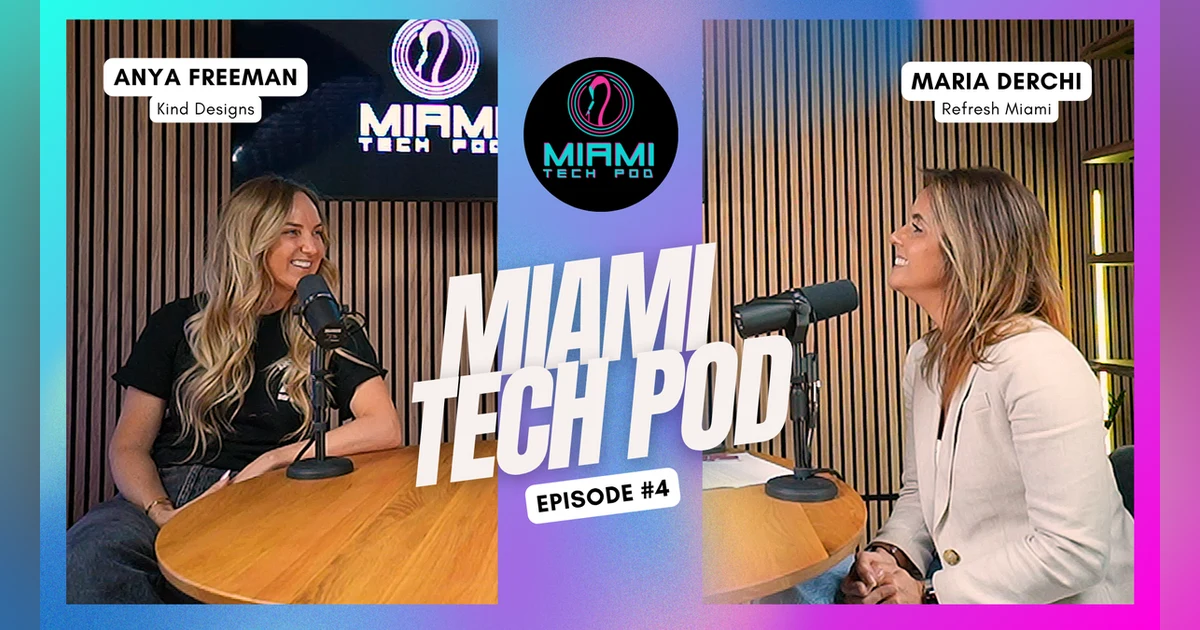
Seawalls haven’t changed in over 100 years… until now. In this episode, Anya Freeman shares how she left a legal career to build Kind Designs, a Miami-based startup using 3D printing to reinvent coastal infrastructure—making seawalls cheaper, stronger, and alive.
We get into:
- Why traditional seawalls are failing (and costing homeowners $300K+)
- How “living seawalls” repair themselves and improve water quality
- The unexpected path from lawyer → climate tech founder
- How she navigated one of the toughest permitting environments in the country
- What it takes to scale a hard tech startup with a 10-person team

 Spotify
 Apple Podcasts
 YouTube
 RSS Feed
 Seawalls haven’t changed in over 100 years… until now.
In this episode, Anya Freeman shares how she left a legal career to build Kind Designs, a Miami-based startup using 3D printing to reinvent coastal infrastructure—making seawalls cheaper, stronger, and alive.
We get into:
- Why traditional seawalls are failing (and costing homeowners $300K+)
- How “living seawalls” repair themselves and improve water quality
- The unexpected path from lawyer → climate tech founder
- How she navigated one of the toughest permitting environments in the country
- What it takes to scale a hard tech startup with a 10-person team
A big thanks to our podcast home, The LAB Miami!
00:00 - Welcome And The Flooding Problem
01:49 - Why 3D Print Seawalls
04:10 - Self Healing Walls And Longer Lifespan
05:53 - Who Buys Living Seawalls
08:01 - Reef Parks For Tourism And Fun
09:33 - Permitting Reform That Unblocked Growth
13:35 - Robots Lean Team And Fast Scaling
14:32 - When People Replace A Seawall
15:39 - From Lawyer To Climate Tech Founder
17:38 - Recruiting Technical Talent To Miami
20:24 - Factory Plans And Series A Goals
21:47 - Dropping Limiting Beliefs And Starting
24:59 - How The Community Can Help
26:07 - Final Thanks And Wrap
Welcome And The Flooding Problem
Maria
Welcome to the Miami Tech Pod. My name is Maria. I'm your host. Today we are recording from the beautiful lab Miami in Winwood. I want to welcome my guest, Anya Freeman of Kind Designs, a Miami-based company that is reinventing seawalls. So, Anya, welcome to the pod. Thank you so much. Excited to be here. I'm excited to have you. I would love to start with kind of the problem that Kind Designs is solving.
Anya
Sure. So we are both a construction tech and a climate tech startup, and we are addressing the challenges my community is experiencing, which is flooding, rising sea levels, increases in storm surges that are causing big problems in our community. So I've lived in Miami Beach now 15 years. And every time there's a rainstorm, I used to have to rush home to move my car off of Jefferson Avenue because it would flood so bad. Our cars would literally like float down the street. And couldn't we get car insurance to cover flooding damage anymore? And I just thought, no, all this flooding is not normal. And everyone is focused on the problem, but it's easy to complain, right? Everyone's writing articles saying you're crazy to move to Florida. We're all going to be underwater. But I noticed that nobody was talking about solutions. And so two and a half years ago in 2024, uh to my parents' disappointment, I left behind my legal career, my staple job, and I dove in uh to starting kind designs and finding that solution for my community. That's inspiration for what we're doing. And we want to make it extremely affordable so it's scalable, duplicatable, and we can really make Florida an example of what's possible in coastal infrastructure and construction, and then scale it to every city that's at risk from flooding.
Maria
Amazing. Okay, so take me through the production. So you guys specifically are focused on 3D printed seawalls. Can can you explain why that is better than the current use?
Anya
Sure. So seawalls have been around forever in the U.S. The first seawall was installed in Galveston in 1904, and it's almost exactly the same seawall you see in Miami today. It's a very actually fun product to innovate because no one has touched it. And the problem with these traditional seawalls are two main things. One, they're very expensive. And a lot of people think, oh, you only people who live on Star Island need a seawall. But in fact, many, many people live on canals, inherit their homes. An average seawall costs $300,000. Gosh, you can't finance it. So people are actually losing their homes because they can't keep up with the infrastructure, the seawall maintenance and repair needs. So that's the first problem. Problem. Seawalls are expensive. The second problem about seawalls is that they're destroying marine habitats for two reasons. One, they're leaching chemicals into the water. And two, just because they're flat. Before there was a wall, there's all these organisms living by the coast. Once you put in something flat, now these organisms have nothing to attach to, especially during storm events. So they all migrate and no one is left to eat the toxins in the water. And so we thought, how do we come up with a seawall that's more affordable? And what if instead of destroying marine habitats, what if the seawall was a marine habitat? How do we converge infrastructure and artificial reef science? And that's how we came up with this idea that we're doing at scale in our factory today, which is using 3D printing technology to create living seawalls. So structurally, they're the same as regular 100-year-old concrete seawalls. But because of the method of manufacturing, we can do it exponentially cheaper, exponentially faster, and we can incorporate a biomimicry design. So now the seawall is essentially a reef. It has caves where sea life can hide from predators, it mimics local marine habitats, so it attracts native species, and it also dissipates wave energy. And with all of those uh amazing environmental benefits, there's still no green premium. The living seawalls are actually priced competitive to these traditional toxic concrete seawall systems.
Maria
I now have a ton of questions based off of that. So one is you mentioned that seawalls can't be financed. Why is that?
Anya
That's a good question. That's that's not a problem I'm solving because I don't have the answer for me. We are looking into partnering up with a local bank and provide a financing option for homeowners, but for now that doesn't exist.
Maria
That's incredible. Okay. Anyone who wants to start a startup financing seawalls. Yes. And then does it then require less maintenance than a traditional seawall? Or is it pretty much the same?
Who Buys Living Seawalls
Anya
One thing that helps the lifespan of the seawall and therefore reduces maintenance costs and frequency is that the seawall self-healing, because it attracts things like oysters and corals, those organisms start depositing their shells into the wall, and that strengthens the wall over time and also repairs any cracks that may happen after decades. And the second thing we're doing, and this is more generation two living seawalls, so Q4 of this year will be releasing them. But we are creating living seawalls with uh a lot, a lot less rebar. So we started with a seawall that was reinforced traditionally. So we put a rebar in the seawall, like every other seawall to keep the engineers comfortable to get permanent quickly. Um but now that we've proved that we have many, many projects in the water, we can start pushing the envelope much more. And what we're doing is we're now like our fourth round of RD, we're doing testing at the University of Miami of seawalls that are reinforced in a proprietary way without uh rebar. And that will allow the seawalls to last twice as long as current seawalls. So that will also reduce the maintenance costs and the replacement costs of traditional seawalls.
Maria
And so who you mentioned kind of seawalls on Star Island, so that sounds like private, but you're also, you know, cities themselves have seawalls. Can you talk about who the customers are? What is is it a certain percentage of residential, certain are government? Um yeah, I'll start there.
Anya
Sure. So we have three buckets of customers. One is residential, that's how we got started. So we've done lots of projects on Venetian Avenue, Star Island, North Bay Road, Palm Island, so all the most beautiful places. They were the for there were early adopters, which was extremely helpful. But now we are doing many, many more commercial projects. That's working with developers. For example, we'll be doing a Fountain Blue Hotel very soon. We're in the plans for that project, the whole marina on Collins Avenue. And that's with F uh FB Dev, so the development group of the Fountain Blue. So they put us in the plans. Another example is we are in the plans for the Sequarium, which is that whole island that we're doing on the way to Kibiscane. So that was Terra Group. We're so grateful. They put us in the plans. So that's the second bucket is working with actually developers and hotel groups. We're doing the Ritz Carlton too, another example, a related job in North Bay Village. So that's the second bucket. But the third, as you said, and most important, biggest bucket of all is government jobs. So we our first government job was for um City of Longboat Key. We did a beautiful installation for a park on the west coast of Florida. And in 30 days, the seawall was literally covered in starfish, which is like unbelievable. The pictures were amazing on ABC. And today we're finishing our biggest installation yet with uh village of Miami Shores also in their park. And that's 111 of our walls. That's gonna have a massive impact on the water quality for the community.
Maria
Well, you you you bring up a good point that I thought of when you said it's covered in starfish. I'm thinking this is even like a hospitality play. Like you want more people who are if we uh the you know, there's more sea life, there's more snorkeling, there's it. I feel like there's definitely a you know benefit there of kind of improving tourism dollars because people will have more options, like people want to come more to snorkel and and uh dive if there's a lot more marine life.
Reef Parks For Tourism And Fun
Anya
So yes, and additionally, we are working with hotel groups on doing really cool custom underwater artificial reef parks. So in the past, reefs they're kind of blobs, you know, that you've seen them sharing photos because you have to make them using molds. It's very expensive to do a mold that has a lot of details. But because our 3D printing technology is so such high, such high resolution, that means the layers are very small. So we can incorporate designs and details that were previously unachievable. So we're working on a couple projects with hotel groups in the Caribbean, um, but also actually city of Bay Harbor Islands. We want a contract to do an underwater reef park there. And they have a kayak launch site nearby, so you don't need a boat, so you can just take the kayak or the canoe and go swim. But they're not gonna be traditional reefs. They're gonna be something that's very, very creative out of the box, and that's something that wasn't previously possible without this 3D printing technology.
Maria
Are you kind of integrating artists into this process?
Anya
Yes, that's the idea. Well, we're talking to some very well-known artists, uh, but also some local artists uh to give them uh an opportunity to also exhibit their work. And also then a lot of those projects can qualify for art in public places. So developers already have, as you know, to put, I think it's 1.5% of their budget towards public art. Well, now by bringing in local artists and art technology, these underwater reef projects and even the living seawalls, custom living seawalls can count as public art.
Maria
That's incredible. Okay.
Permitting Reform That Unblocked Growth
Anya
We have to get creative. Yeah, I love it.
Maria
Uh you mentioned very briefly earlier uh permitting. And I know that you've done a lot in that space and there's been a lot of innovation. And uh can you speak to that a little bit?
Anya
Yeah, I would say the biggest reason investors passed on us early on is they thought we could never ever succeed in the permitting environment. It is notoriously difficult to get seawall permits already, especially in Miami-Dade County. And they just thought like a startup in that space had absolutely no chance. And what started as our biggest challenge honestly became our greatest strength through relationships with local commissioners or local mayors. Um, we have have helped them pass legislation completely uh rewriting the seawall permitting code at the county level. Now we're actually working on this at the state level with Senator Garcia, which is very exciting. But it all started in Mayune County when the commissioner Eileen Higgins, who's now of course mayor, Eileen Higgins, she championed a bill that expedited permitting for everybody, not just for living seawalls, for all seawalls. So instead of two years, the county will now issue permits in 90 days. That's really amazing. It made living seawalls exempt from mitigation. So when you put in a regular seawall, you have to pay a lot of money to mitigate or offset all the damage you're causing. But because our living seawalls are self-mitigating, homeowners who choose to use us are exempt and therefore they save a lot of money on the mitigation costs. And also, she allowed us to start using living seawalls without a permit modification. So if you already have a permit for a concrete seawall, you can still use a living seawall panel and then just do an as built after the fact. So that was transformative. That's how we started getting all of these developers to work with us and government jobs. And on the back of that, now lots and lots of different cities are passing their own legislation to uh reduce permitting um fees, building permit fees. For example, City of Miami, you now get half off the building permit if you show living seawalls in your plans. Oh wow. Coral Gables passed a discount, North Bay Village is also 50% off, Fort Lauderdale is pending 100%, which is with Commissioner Sorensen. We're so grateful. That means you literally don't pay for a building permit for your seawall if you have a living seawall in your plans, because the living seawall is improving the quality of water for the whole community. So it makes sense to incentivize those kinds of products. And that right now, I know we are kind of like the first ones in the market, but through our success and through easing the permitting regulations, more and more innovation in our space will come along. And that's the goal.
Maria
I think it's a great example of kind of how open our city and county are to working with startups and kind of changing. They're not nostalgic. Like has that been your experience? Is this like they've been so open to the innovation?
Anya
I know it sounds crazy, but that really has been our experience. I'm not just saying that. Uh, to make them happy. We have had the most amazing experience with Miami Dade County, uh, especially Commissioner Eileen Higgins. And uh shout out to Eileen Higgins, yeah. And Cities, another amazing champion of ours is Mayor Rachel Streifel of North Bay Village.
Maria
Yes. She's a good friend. She's so cool.
Anya
She's so smart. And she was willing to be the first one to pass this permit discount, and then everyone else followed. But to be the first one, it just takes a lot of guts. And I appreciate these women and other and other commissioners and mayors who have supported our work to go, you know, go on a whim in the beginning. And now we have tons and tons of data proving, you know, the capabilities of the living seawalls environmentally and wave dissipation, all that. But early days was much harder, and a lot of people took a chance on us, and that has now snowballed into this incredible environment to keep innovating. And the latest thing that happened is Senator Garcia passed a bill SB302. It was signed by the governor DeSantis two weeks ago, which requires the state, FDEP, to create their own incentives for living seawalls by July 1st. So this is gonna happen in the next four months.
Robots Lean Team And Fast Scaling
Maria
Oh, wow. And how old is the company? And how many people are you now?
Anya
We're still only 10 people. It's pretty amazing. Well, it's cool is because we have, well, 10 humans. We have uh agents. We have fleet of four robots, soon to be six robots, and it's truly, you know, a technology company. It only takes one and a half humans to operate a robot, and the robot can run three shifts. They're incredibly fast and efficient. So as we scale, we actually don't need to grow the team that much. And then on the that's on the operation side, and then on the RD side and the sales side, we've also benefited from kind of coming up right when all the AI tools became available as well. So I feel like each human is like doing the work of what previously would have we wouldn't need to hire five people. But we've continued to have a very, very lean team, even though we've scaled like our revenue went from one million last year. This year we're are already at 10 million contracted revenue with the same amount of people.
When People Replace A Seawall
Maria
Incredible. Thank you. So one question I had was uh with the seawalls that are currently exist, do you go is the pitch part to like replace them? Couldn't you know, as they're deteriorating, is that something that's feasible or it's so we're not uh convincing anyone to replace their seawall.
Anya
When people have to replace their seawall, they come to us. And usually they have to replace their seawall for three reasons. One, it's very low. The seawall was built maybe 20 years ago, 30 years ago, sea levels rose since then. So they're getting their backyards getting flooded regularly. Second reason is that old seawall failed because it has cracks, it's starting to fall into the water. And the third reason is that cities actually have a minimum seawall height requirement. So when you're it's a new build or you're remodeling more than 25% of your house, you actually have to replace your seawall with one that is compliant. For example, City of Miami Beach, I think used to be five foot seven, now it's five foot nine. So in in the all three of those situations, the homeowner or the developer needs to replace their seawalls, and that's when they will bring us into the project.
From Lawyer To Climate Tech Founder
Maria
Got it. And so you were you mentioned a lawyer before this, uh, which is very unique. Was it tough to convince investors that you were the right person to build this, considering your that was not necessarily your background?
Recruiting Technical Talent To Miami
Anya
Interestingly, I don't think so. I think my biggest uh kind of superpower is persuasion. And that comes from being a litigator. So I was never a transactional lawyer. I am not detail-oriented. I hate like contracts and uh taxes. I'm so grateful that I have other people on my team who handle all those things. I am someone who loves to be in front of people telling a story. And when you're a litigator, essentially that's what you're doing. It's a competitive storytelling. You are telling a story, the counsel for the other side tells their story, and then the jury and the judge decide who is the winner ultimately. And I think actually those skills translate really well into being a founder because I'm doing the same thing, but now I'm speaking to investors, speaking to customers, speaking to my team. And it's easy when we're building something so much bigger than ourselves that has all this amazing impact on the world. Like, how fun and easy is it to get people excited and want to join uh to join us as either an investor or or or a uh a customer or even someone on our team. So it was not as challenging as you think. Okay. And also, and also, even though I was a lawyer, I put together a team who did have all the technical pieces. So, like my COO, Jeremy, he's a world expert in concrete uh quality control, scaling, concrete manufacturing, and in 3D printing. He started with Elon Musk, the boring company, who's employee number seven, and he was there for many, many years. He scaled production sites across three different states, and then he was recruited by Icon and Austin 3D printing houses. So he brings the technical expertise. We have in-house engineers, you know, we have in-house designers. So I may be kind of driving the bus, but uh the bus is full of experts who all make up this dream team that can execute this.
Maria
So, how did you convince Jeremy to join?
Anya
Uh well, it was difficult because it's easy to convince anyone to move to Miami except Texas people. Because they love, they're like Jeremy. He loves his truck, he loves his land, you know, he loves his freedom. And he's not a city guy. Like every time he tries to drive from the factory to my house on the main beach, he always takes the wrong bridge or like the wrong exit. Uh but what excited him was an opportunity to build something that had never been done before. So to be a pioneer in a very, very old and traditional industry is exciting. And he's a huge ocean person. Most of people on my team are ocean people. Jeremy literally has like an entire sleeve, more than a sleeve, it's like I don't know what you call it, like a leg sleeve, a tattoo from like his toes all the way to his neck of essentially a living seawall. It's literally like before he started? Okay. Yes, it's not that into into what we're building. But I'm saying he was like destined to do this. And the rest of the team also is all very, very passionate about the impact that we're able to create on the ocean. How fun is it to be able to leave behind that legacy?
Maria
So you I was gonna ask, what lesson from being a lawyer did you carry to be a founder? It sounds like persuasion and storytelling. Is there any other skill that you felt feel that really like uh just makes you a better founder because of your experience as a lawyer? As a lawyer like transferable skill.
Anya
Yeah, I would say it's very high stakes. You are responsible at times for someone's well life, really, they're gonna be free or spend the less rest of their life in prison. And will their victims, you know, get justice, and then their whole families will they get justice? You know, it really, really has a snowball effect. So you develop uh, I think a um an ability to deal with high amounts of stress and the ups and downs that come with that. And most of that you deal with by having a team because you never go on trial by yourself, you always have a trial team. You know, you're in the war room, the days leading up to trial, and you're all preparing together, and just this awesome feeling of you've got kind of like this badass crew going after the bad guys. And I get the exact same feeling with the guys, the team, a kind designs. Like I was telling someone earlier, every day I pretty much I run a red light because I'm so excited to get to get to the factory. I have like FOBO that they started having fun without me, you know? And it's very, very similar because you know, we're we're so close, everyone's so capable, and it feels like it's like us against the world, and we're doing something that's really, really impactful. We're on the right side of history, which is how I felt when I was not when I was a lawyer as well.
Factory Plans And Series A Goals
Maria
Oh, incredible. Okay, we need more prosecutors uh become founders, it sounds like. Where is the factory?
Anya
It's right next to the airport. In fact, we can't fly drones, we're like in the airport. We have a 50,000 square foot facility there that we're growing fast. Actually, we're talking to the county and the beacon council about a place uh for us for next year. We'll be raising a big Series A at the end of this year, probably around $30 to $40 million. And that will go towards activating like a state-of-the-art factory that's able to produce $100 million in seawalls per year. So for that, we need about five to ten acres, and we would love to stay in Miami Dade County.
Maria
Okay. Uh so it's I feel like there's a lot more hard tech founders down in Miami. I'm loving to see kind of the growth of that. I know with the first episode of recorded was with Gabe from Material, who's 3D printing batteries in any shape or size. Uh so have you been seeing a lot more hard tech founders? Uh I'm sorry, I'm like I'm like a hermit. Yeah. Okay, we're gonna get you out more.
Anya
I have like no new friends. I still have like all the girls I used to live with in in the in our house in South Beach, and we watch The Bachelor together every week. That's like my social outing. And then I go to the farmer's market with my dad on the weekends. But besides that, I'm just I'm just working for now. For now, I would love to meet more people, but you know, the first few years, like having a baby.
Maria
Yeah.
Anya
You're very busy in the early years, and I know obviously there'll be much more room to meet the other founders who are doing incredible work in the in the community as well.
Dropping Limiting Beliefs And Starting
Maria
Okay, awesome. Uh so one of the closing questions I have for you is what is one thing you believed that you used to believe about being a founder that you no longer believe?
Anya
I used to believe that you were limited. By what you went to school for. Like, if you went to school to be a lawyer, then you had to be a lawyer. I used to think I didn't have the right education to do anything else. And then I realized I'm the only one. Like, that's telling myself that, you know. Uh, and I met some founders who were doing incredible work, having not received an education in that field at all. And the main one is Martine Rothblatt. She's the founder of Sirius XM. And Peter Diamendez calls it a moonshot. You know, Moonshot is a company that impacts a billion people. It took less than 10 years to do to build, and it's something that no one thought was possible. And it's amazing for a person to have one moonshot in their life, obviously. Well, Martine has had seven moonshots. It is insane. Like started with satellites. Then her daughter had a very, very serious disease, and it was so rare that nobody was working on a cure. So she basically taught herself medicine on YouTube and reading like middle school books. This is before AI. And she came up with a cure, and that became a public company. Then she built the world's biggest zero um, like what do you call it? Like a building that has no carbon footprint, basically. And then she built a helicopter, it's the fastest green helicopter, like the crazy things, all like in all different fields. And she did not go to school for any of this. So after I saw her speaking, I was like embarrassed that, you know, I was even saying these words or even having these thoughts in my head that because I went to law school, I couldn't do anything outside of that. So honestly, in an instant after witnessing her, that that thought disappeared. And I realized you don't need to have all the knowledge and education yourself. You just need the idea, the obsession, the vision. And then you can put together the team that has the missing pieces. And even as a team, you're not gonna have everything figured out on day one. You just have to start. Like I got so sick of myself telling every day I'm gonna start, you know, soon, soon, and telling other people. And I was like, that's it. I can't take it anymore. I'm just gonna get going, adjust, and then take another step, and adjust and take another step. Because if you wait to have the perfect plan and the perfect team, you're never going to get started. And I'm so glad that I had this strength and I had this realization, thanks to Martin and Peter Diamendez at the time, that allowed me to take that first step, burn the ship, and then you know once again, an investor you have you have a team, you can't let them them down. Like I will die before I let my team down, or any of my investors who believe in me down. And so you just keep going. But the first step, you have to have the courage to take yourself.
How The Community Can Help
Maria
Yeah, we I the older I get, the more I you realize like these self-limiting beliefs that you're the only one putting them on yourself. Yes. Uh and then this, yeah, this action, you know, it makes such a difference. So many people just won't take that first step. And so um, that's very inspiring. Um I was gonna ask what the community could do for you. It sounds one is investors should start, you know. It sounds like you're gonna be raising around later this year. If you want to start building a relationship with Anya, make sure to reach out. Um, are you hiring anyone we should mention? Any roles that are open currently?
Anya
We're always hiring for the operations team, but it's a very unique role. You have to be extremely physically strong. People are always like, why don't you hire? Like, wait a minute. I'm like, they don't want the job. Like, it is hard. The guys are out there, it's a hundred degrees. They're out there for 10 hours a day, lifting 50 pounds every minute to load the material. I mean, it's very, very impressive how physically capable they are. And they're also incredibly smart. And they are pushing this product and this industry in a way that no one has been able to do before. So if you're a badass with some calluses on your hands, you can apply to be a 3D printing technician and part of our operations team.
Maria
Incredible. And then anyone looking to, you know, potentially install some a beautiful seawall at their home or their city, any of the other mayors listening or government officials, uh, make sure to reach out.
Final Thanks And Wrap
Anya
Thank you. We'd love to help. Yeah. Awesome. Thank you so much. Thank you so much. So much fun.