How Magna Built the Carta for Crypto Tokens & Got Acquired


 Spotify
 Apple Podcasts
 YouTube
 RSS Feed
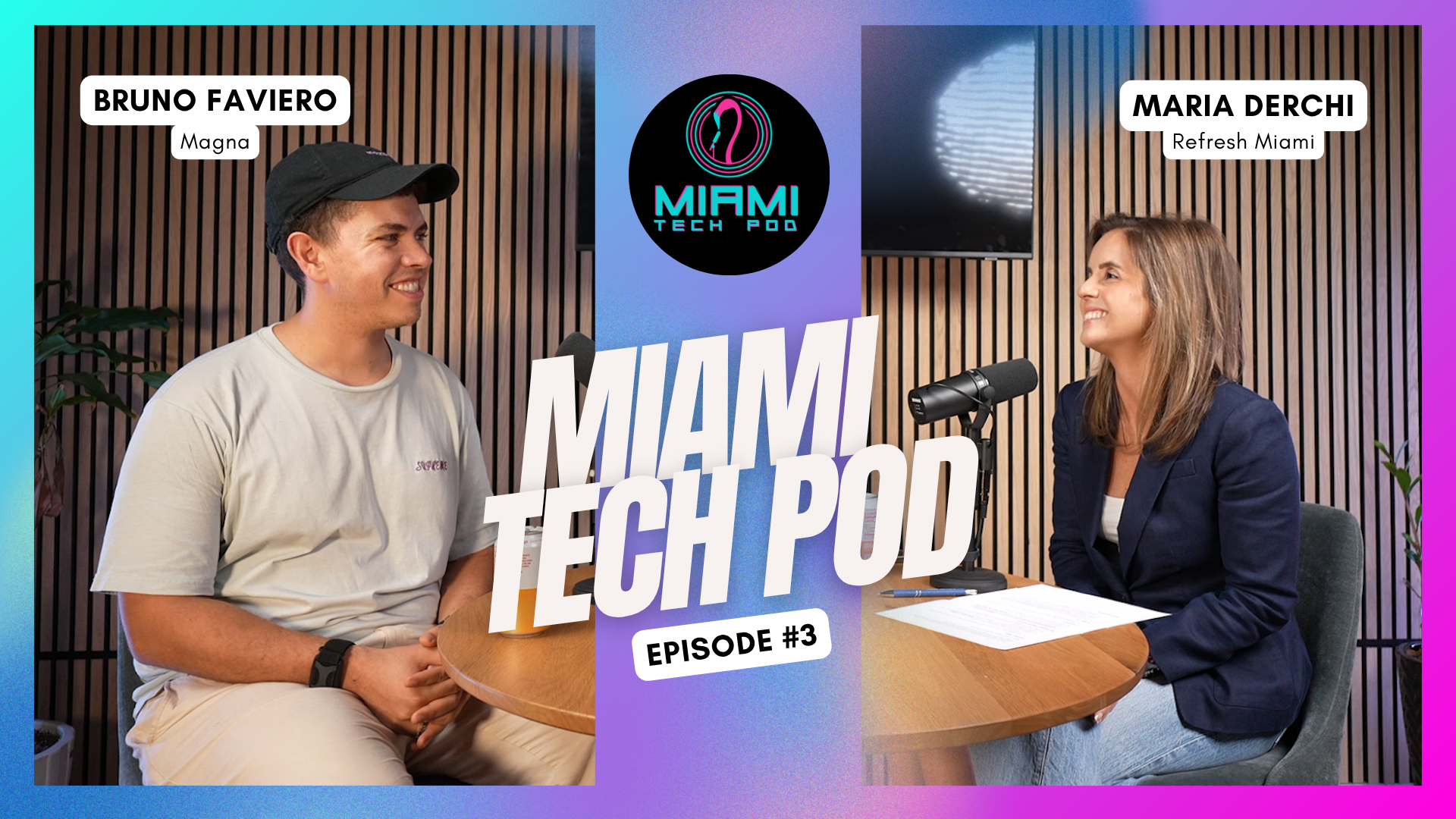
 In this episode of the Miami Tech Pod, we sit down with Bruno Faviero, founder of Magna, the “Carta for crypto tokens,” to unpack how he built critical infrastructure for the web3 economy and navigated a rollercoaster journey from early traction through the crypto crash to a successful acquisition by Kraken / Payward. This conversation goes deep on building in emerging markets, scaling too fast, and what founders actually get wrong when raising capital.
We cover:
- How Magna became the system of record for token ownership—and why tokens could replace equity
- The brutal reality of building through the Terra/Luna and FTX crashes
- Lessons from raising too much capital too early (and the cost of overhiring)
- Tactical advice on negotiating with VCs — and avoiding getting taken advantage of
- Why being a founder might be overrated (and when it’s actually worth it)
- What Miami still needs to become a true global crypto hub
If you’re building, fundraising, or thinking about starting something in today’s market, this episode is packed with hard-earned lessons. Tune in to hear the full story.
00:00 - Welcome To Miami Tech Pod
00:22 - What Magna Builds For Tokens
01:01 - The “Token Cap Table” Origin
03:57 - Early Customers And Bear Market
05:57 - What YC Changed For Magna
07:35 - Multi-Chain And Security Tradeoffs
10:01 - Raising Big Then Overhiring
12:21 - The Kraken Acquisition Story
14:37 - What Miami Needs As A Hub
18:59 - Practical Tactics For Dealing With VCs
23:59 - Founder Myths And Career Reality
28:40 - Investing Thesis And Favorite Startups
31:24 - AI Productivity For Teams
34:17 - How Listeners Can Reach Out
Welcome To Miami Tech Pod
Maria Derchi
Today on the Miami Tech Pod, we have Bruno Faviero, founder of Magna, a company that built critical infrastructure for token ownership and recently sold to Karkin. Welcome to the Miami Tech Pod.
Bruno Faviero
Thank you. Happy to be here.
What Magna Builds For Tokens
Maria Derchi
Now, for those of you of the listeners that may not be in crypto, can you tell us a little bit about what problem Magna is solving?
Bruno Faviero
Yeah. So Magna, when we started the company, was we actually named it after Carta, which is cap table management for equity. How does a company manage their equity and track how much is going to employees, to investors? And we really sought to do that for tokens. We thought tokens are the future of equity. And in fact, a lot of crypto companies don't even issue any equity. They just issue tokens. And we were that, you know, still are that operating system, that system of record for token ownership and also doing the distribution of the tokens on-chain.
Maria Derchi
What was the moment when you realized that this product needed to exist?
Bruno Faviero
Yeah, so it's interesting because it was sort of the intersection of my interests. I liked crypto. I was going very deep into crypto and thought the technology was really kind of the future of finance. Uh, from the perspective of I had worked in kind of finance technology. So I worked at a company called Kensho as a software engineer, and we were helping building Rails to like analyze financial data. And we were at one point, one of my products was maintaining a database of corporate actions, and corporate actions get very messy when you've got share splits and you know, um mergers and acquisitions and companies split off and and that stuff is it's very messy to track. Of course, as an employee, I've been, you know, I've had to sign to option agreements, equity. And you look at all this stuff and you're like, okay, eventually all this logic like has to end up on chain, be or at the very least, in some sort of deterministic way that, you know, it shouldn't be PDFs in in 30, 40 years, right? Uh and so I thought, you know, the the technology was accelerating rapidly back in 2021. Uh, you know, I thought that we were going toward more mainstream adoption of crypto. And so intersected that with my interest in just startups. And like I loved building for startups, I loved being in the startup ecosystem. And we just took a bottoms-up approach from talking to companies and really understanding what are the tools you need to get a company off the ground. Uh, and so we kind of mapped out what do you need to get a you know, what we call web two company off the ground, right? A non-crypto company. And okay, you need equity cap table management and you need accounting and you need, you know, the formation before all of that. Um, you know, maybe uh banking, uh, insurance, tax, accounting. We really like wrote out that whole stack. And actually at the time we had the side project where we kind of had that stack as like a product-tized playbook where you could browse discounts that you could get on all these tools and see what startup programs recommended or discounts they were.
Maria Derchi
Yeah, it was Maple. Yes. I forgot about yes.
Bruno Faviero
It was a side project. And it was like you could view startup playbooks of what software to use, when, aggregate discounts, and see between them. And then so we we we kind of combined that and we asked ourselves the question of, well, what is the web three startup stack? And what we pretty quickly realized was a lot of those tools did not exist at all. If you go back to 2021, there was not really any meaningfully robust formation, accounting, equity, tax, payroll, none of it. And so we kind of thought about, well, what do we think we're well positioned to do? Um, you know, I'm not a lawyer, uh, maybe I'm not an accountant. And I think the uh, but I understood equity quite well. I've been a VC, I've been an employee, I've been a founder, and we thought, well, let's bring that knowledge to try to build that lifecycle uh for the crypto world. And that became Magna. We we pivoted to that while we were in YC, right before we got into YC. And then yeah, it really kind of stuck more or less to the same mission ever since.
Early Customers And Bear Market
Maria Derchi
So what were some of the early customers that you had?
Bruno Faviero
Yeah, so it was interesting. So we we had a few early customers, like very small companies that were willing to take a chance on putting all their tokens into our smart contracts, which requires a lot of trust. Uh, you know, it's kind of like the equivalent of your company's equity, and you they were trusting, you know, 50%, 80% of it uh to code that we wrote. Uh in our case, we had some early clients that had tried to do it themselves, had made mistakes, and we're like, okay, we we really want to bring in someone else that focuses on this. So small, you know, it's always those early customers are, you know, not necessarily big names, but the people that are willing to take a chance on using your product, giving you feedback, uh, not ask, no, not pushing back too much on the quality at the time. And eventually we went on to onboard much larger customers over time. You know, L2s like Optimism, L1's like Optos and Barrachain. Um, the Trump token was one of the larger projects that we worked with, which at one point had $70 billion worth of tokens in our smart contracts, which is, you know, very much a big responsibility. So uh the first but the first year, two years were pretty quiet because right as we started the company, a week after we signed our term sheet to fundraise, the Terra Luna crash happened.
Maria Derchi
Oh wow.
Bruno Faviero
Uh five months later, FTX happened, the bottom fell out from the crypto space. So 22, 2022, 2023 were a little bit of the last years of the company because there wasn't much happening in the crypto world or barely any clients to sell to.
Maria Derchi
Oh gosh, that must have been a wild ride.
Bruno Faviero
Yeah. I mean, we when we started in 2022, we were a Solana only company. And so we were focused on Solana. And then between Terra Luna and FTX, you know, Solana went from at one point in that the high that you were for, you know, $240, it went down to $8 that November, uh that October, I remember, right after breakpoint. And so yeah, it was uh truly the the barest of the bear markets.
Maria Derchi
Oh my god. So you mentioned YC. Uh tell me a little bit about that experience. That tends to change people's lives.
Bruno Faviero
Yeah, you know, so I've heard. Uh we were the last remote batch of YC. So we we didn't quite get the full experience. Uh we were literally the last fully remote batch. I think the next batch was a hybrid batch, and and then it went back to being fully in person. But yeah, we had a strange time because all the office hours were over Zoom. Not everyone was even in San Francisco in the cohort. The people that were were, some of them didn't even want to get together because they were very COVID-sensitive. And so it, you know, we got great um access, you know, to the community. I mean, it's incredible. The, you know, the forum, right? Bookface is is incredible. I still learn from things that are posted there to this day. And I do think that they really push you to do more faster, hit bigger milestones and really keep yourself accountable to hit hitting real milestones, right? I think YC always pushes you to actually go for you know, revenue wherever possible, not even vanity metrics. Exactly. You know, obviously, you know, at the end of the day, you're still getting up there in demo day, you know, trying to show something impressive. But I do think they push you to focus on the right things. And I think that helped us definitely accelerate the product a lot and in some cases get it into the hands of customers maybe before we might have thought to otherwise.
Maria Derchi
Yeah, ship early.
Bruno Faviero
Exactly. Get in front of people, test it against the market, get people actually using it is the best feedback versus tinkering quietly and then one day doing a big launch. I think they really encourage you to get the product out there, sign up customers and iterate that way.
Maria Derchi
Now, what part of the problem turned out harder than you expected?
Bruno Faviero
Yeah, this was um a post that came up actually the other day on Twitter. Someone posted that you know, a lot of token projects would be better off focusing on one chain instead of multiple. I think that was one that turned out to be much more challenging. You know, we thought let's focus on two chains, it'll help us capture more market, go broader. Turned out to be, you know, it's not twice the technical lift, it's in some ways like 10 times the technical lift because Ethereum and Solana are very different, especially at the time. The a lot of the service providers were very different, usually totally different RPC providers. The tech is completely different. It was still very mature at the time. There was no AI vibe coding at the time. And so you you really had to train up developers to write Solana code. Now it's much easier. Um, so that was one piece of it. I think be multi-chain was was very challenging because then it also meant that we didn't get the economies of scale of you know, working within one-chain ecosystem was where you can then really kind of double down and have liquidity partnerships and you know, other wallet partnerships, like a lot of these things were very ecosystem specific. Now, Phantom, for example, is multi-chain. But at the time, you know, Phantom was the Solana wallet, you know, Meteora is on Solana, but then we're also trying to straddle the Ethereum ecosystem. So that was challenging. Um, I think at the time as well, there were not a lot of good primitives to build on top of. And so we initially wanted to build more of that business layer, that business logic of managing employees and documentation and legal agreements. But at the end of the day, you had to put the tokens somewhere and we didn't feel comfortable putting tokens on other people's code. One of the streaming platforms, I think it was super fluid, had gotten hacked. There were one or two others that had gotten hacked over time. And so that's why we went full stack and roll all of our own smart contracts. I mean, you know, again, if it was Trump token with $70 billion, you know, we looked them in the eye and felt comfortable saying, you know, we wrote the code, we got it audited, we feel very confident, and the security might not have, you know, been able to do that or be in that position if it had been built on top of other people's code. So yeah, I think kind of going full stack into the smart contract layer also was was challenging because very specialized skill set, especially in the bull market. I mean, a smart contract engineer, a good senior smart contract engineer was commanding 400k a year at that time. The salaries were crazy. Yeah.
Raising Big Then Overhiring
Maria Derchi
So you started the company in what year?
Bruno Faviero
So we we worked on Maple in 2021. That was when we were doing the startup discount management, which was a side project. It wasn't even really a company. We even had a bunch of people that uh were helping us out that weren't even working kind of full-time. And then we got into YC with that idea in Q4 of 2021, and then started YC in Jan 2022, and that was when we we pivoted to Magna. So Magna effectively since the beginning of 2022.
Maria Derchi
Okay. And you grew the team to how big is it current day?
Bruno Faviero
So that was the thing we we raised a lot. We we raised the the round got out of control.
Maria Derchi
We raised um the round right after YC?
Bruno Faviero
Yeah, the the YC demo day round, we raised 15 million at 70 post.
Maria Derchi
Damn.
Bruno Faviero
Basically pre-product, uh basically two co-founders and one, maybe two hires. And we made the classic mistake of like, let's go spend it. First thing we did, we bought a company, we acquired a company, and then we were like, oh, what do we need? Okay, let's get a head of design from Facebook, let's get a senior software engineer from Microsoft. In less than a year, by the end of the year, I think we were 24 people. We overscoped the product, we were building a fund admin product in parallel. Yeah, it it got a little out of control. We reined it in. We we ended up you know making a difficult decision in the bear market. We like downsized the team. We went from 24 to 10 um and and kind of tightened up the scope and the focus. But yeah, we we got a little big there pretty quick for a while.
Maria Derchi
Was there is there one piece of advice for a YC company coming out that you would give based on that experience? Don't overhire or you know, I think it's interesting.
Bruno Faviero
I think companies often do a lot more creative work when they are constrained. Uh they have less capital and when they actually have to make priority this prioritization decisions. I think there's a lot of challenges of raining raising too much money that people don't think about. And one of those is that when you have so much money, you don't really have to say no to things in terms of like, you know, you can always throw another engineer at it. Um yeah, having less money and uh some people are very disciplined and they do do that even when they do have a lot of money, but it's just a lot harder to be as disciplined when you know you have what looks like at the time infinite runway.
The Kraken Acquisition Story
Maria Derchi
Yeah. And so congratulations are in order. You recently it was announced that you recently sold to Kraken.
Bruno Faviero
Thank you.
Maria Derchi
How did that all come about? And is there anything that surprised you about that whole process?
Bruno Faviero
Yes. Yeah, we were acquired by technically Payword, Kraken's uh parent company. Uh so Magna is powered by Kraken, but we are now a pay part of the Payword family. And yeah, we are now, I think literally this is the the one-month mark from when we closed the deal.
Maria Derchi
Aaron Powell We should have some champagne here.
Bruno Faviero
You know?
Maria Derchi
Well, I'm I'm poorly prepared. I'm sorry. Yeah. Have you been able to even enjoy it so far?
Bruno Faviero
We really hit the ground running uh at Kraken. I mean, uh they're a great team, very high energy. I think, you know, looks like they might IPO this year, which would be really exciting. And I think there's a lot to do. I think it's it's really exciting to be at a company that has a lot of different product lines and a lot of different work streams and I think ambitions to kind of really push across the board on all things. And, you know, I I never thought I'd have more fun at a bigger company than at the startup, but it's been really exciting months so far. Just the energy of all the people at Kraken combined with having a lot of resources and, you know, the bigger team to kind of throw at some of those things means that we can take a lot of these ideas that we had at Magna that we couldn't quite do because we didn't have licenses or we didn't have the compliance capability, or we didn't have enough people on, you know, the BizOps side or the support side, and now kind of like, oh wow, like we can kind of work on all those things at Kraken. And they've been very supportive of our roadmap and our ideas and and some of our vision. So yeah, no, it's been a blast.
Maria Derchi
Okay, that's awesome. So the team is staying intact, growing. Yeah.
Bruno Faviero
They kept the brand together. We're still Magna. Everyone, you know, kind of reports to me. We're we're we stuck together as a unit. And I think, you know, part of that is we built a good brand within crypto. A lot of people have heard of Magna. I think we host a lot of events that people enjoy attending. Yeah, the the name is nice. Yeah, I think the logo is pretty nice.
Maria Derchi
Uh repping in on the hat.
Bruno Faviero
Yeah, exactly. And so we uh still get to do a lot of the the kind of the culture things that we built at Magna. We do like a very inclusive brunch at every conference that people always enjoy. And so it's nice that we didn't kind of get you know swallowed up and and spit out like happens with some acquisitions sometimes.
Maria Derchi
Yeah, that's good.
Bruno Faviero
Yeah.
What Miami Needs As A Hub
Maria Derchi
So on the crypto topic, how did you end up in Miami? Well, I guess let me go back. What does Miami still need to become a real true global crypto hub?
Bruno Faviero
Yeah, so it's it's interesting because what what makes a crypto hub a crypto hub? I think there's a lot of different hubs of crypto. I think certainly one is New York. I think New York has a good density of talent across the board. There's great founders, there's great VCs, uh, there's great engineering talent. Of course, you have a lot of finance that's right nearby. Circle's office is in World One World Trade Center, right next to Goldman Sachs. I mean, all of the asset managers are there. So, you know, New York is a unique hub. Um and so I think but then you look at other hubs like um Hong Kong, I think is a lot of traders, is very used to have a bit more of a friendly regulatory environment, but still have a very heavy density of like traders and market makers and also international asset managers. A lot of people set up shop there. Um, San Francisco actually pulls its own weight in terms of research. A lot of crypto AI is out there, a lot of stable coin um innovation is out there. Uh, I joked the other day on Twitter. It's uh New York is like finance people building stable coins, SF is tech people building stable coins. You have teams like Bridge and Privy that are very startupy, right? Have that kind of innovative tech energy that they bring to the crypto world. In New York tends to be a little more TradFi energy that they bring to the crypto world. And so I think in terms of Miami, right, it's how do we foster one or more of those subsets of people? How do we either get more founders out here and support them with more resources or find a way to get more engineers uh building in crypto for people to recruit? It's it's still not a lot of local engineers to hire. I think the pitch of moving to Miami is getting easier, or even the idea of being a founder running a company from Miami. Like now I'm I'm fully remote from Miami, uh, partially because Kraken is fully remote, and so the culture is very conducive. We have our CMOs in Miami, there's a lot of people that are in Miami. But um, yeah, I mean, I think investors as well. I think we we have a good number, but you know, you could always have more angel investors. And part of what makes a lot of these other geographies good is like the serendipity of it. You know, you you you go to a happy hour in New York and you have a mix of angels and founders and engineers and and some tradfied people come through, and you get a lot of those serendipitous encounters where people are kicking around an idea, someone writes an angel check, right? Like someone ends up wanting to join someone full-time. And so I think, yeah, just figuring out ways that we can bring more of those types of people to Miami and get them together more often, but also have an influx of new people that come to keep it fresh. Yeah. I think that would be very important.
Maria Derchi
So, what brought you to Miami and what keeps you in Miami?
Bruno Faviero
Yeah, so I actually have a lot of roots in South Florida. I grew up in Boca Rotown for most of my childhood. My mother lives down here. I was actually in a long-distance relationship. My girlfriend lived down here. Um, and so partially personal reasons that I moved down here, partially that uh also professional. I think, you know, there are a lot of now there's a lot of investors here, and you know, a lot of service providers, a lot of law firms. It is getting easier to also have uh professional kind of ROI from living in Miami as well, not purely personal in lifestyle, as maybe was a bit more in 2021. Well, 2021, you did have that huge VC wave. Yeah. And so that there was at one point, right, a very large density of angel investors and VCs that were very active. Um, but I think now you're getting more of a broad array of like founders and angels and exited founders that are down here, you know, executives that live down here, that kind of make it more of a holistic hub. Um, and so yeah, it's it's kind of checks a lot of boxes. Personally, professionally, uh, I go to New York quite a bit still, and so New York is still pretty close and easily accessible. But what I tell a lot of founders, why like you don't need to live in New York, you don't need to live in SF. Go there a week, a month, a week, or two weeks, a quarter, do your networking, you know, make the rounds, do the meetings. But I personally enjoy Miami as a home base uh a lot more than I did living in New York.
Practical Tactics For Dealing With VCs
Maria Derchi
Okay, good. Now I want to get this right. Uh you recently posted on X some a tweet that kind of went viral, how to gaslight a founder as a DC.
Bruno Faviero
Yes.
Maria Derchi
Uh which I you mentioned was meant to be satire, but seemed to resonate with a lot of founders.
Bruno Faviero
Yes, it did.
Maria Derchi
Um and I'll include in the link because I want to make sure everybody gets to read that. Um then in a follow-up post, you mentioned that you're you're always happy to chat with founders that find themselves in strange situations, dynamics with VCs, and that you do that a lot. Um can you share some of the most practical tips of dealing with VCs?
Bruno Faviero
Yeah, if you read that blog post, every one of those came from some story of some founder that I helped that was in some insane situation, just because you know, it's a it's the power dynamic between the VC and the founder, but also the VC has done it a hundred times, the founder is doing it for the first time. I I've worked with a lot of founders that are doing a fundraise for the first time and they don't know what the norms are. They, you know, don't know how to push back, when to push back, and and and it's little things where just knowing sometimes what words to use or what to ask for can be the difference between a great round and getting taken advantage of. And so it's something that strikes quite close to home because you know, sometimes you have these technical founders and they're not fundraising experts. The, you know, they're not necessarily always very smooth with how to push for what they want. And so I really do uh or have helped a lot of founders out of a lot of sticky spots. I mean, so many examples come to mind. Um, these things don't always happen. Well, when they do, it's very tricky. I had one founder once had had a term sheet and it's so many like sketchy things in it, so many weird terms, so many non-market terms. And the founder was trying to negotiate, you know, one by one. And can we remove this in a term sheet? And then VC would say, okay, but then you know, I need something on the other side. And what I told him was like, this is a terrible term sheet. You should go back to them and say, This is a terrible term sheet. Give me a clean term sheet. Um, the founder literally did that. He said, This is a horrible term sheet, come back with a clean term sheet. And the VC came back with a clean term sheet, almost like uh you got me, you know, like wow. And so sometimes it's literally just knowing how to pattern match with, hey, this is not market. Um, and you shouldn't need to over-explain yourself beyond that. Um, can help a founder out of a tough spot. I mean, one of the first ones was a founder once has gone on to build a great company, literally had the two VCs that they were trying to close, then started colluding and kind of came together and basically said, why don't we both invest in this company? You know, let's let's coordinate the valuation and who gets how much. And and it was going terribly because the founder kind of lost all the leverage. And I remember what I told him was like, okay, get them both on separate calls and just put them on the spot right there, negotiate. You know, don't let them talk to each other. And that's what they did, and it worked great. So yeah, knowing those tactics, those rounds can can kind of how those go can go a long way. But typically what I tell founders is like, look, don't try to be too cute, don't try to be creative, don't try to social engineer your round. A lot of people. Try to, you know, start a whisper campaign. And oh, if everyone's talking about our company, maybe around will come together. For 90%, 95% of founder, it's like, look, just run a straightforward process, get all your materials, warm introductions, you know, time box it, tell everyone we want it to be done with this in you know, six weeks and do it that way. And that can avoid a lot of the drama in the politics when you just run like a very fair, straightforward, competitive process.
Maria Derchi
I mean, I feel like that it just seems like a terrible way to start a relationship that's gonna last for years is like already trying to screw the person from the start. How much of it's like, okay, if there's too many, like just walk away entirely because these are not the people you want to have on your cap table.
Bruno Faviero
There's very few VCs that are successful enough to be able to like truly be that kind of level of founder friendly. Um and a lot of times it is because they're more seasoned and they're playing a longer game or their fund is bigger and they can buy up more equity in future rounds. Um but no, I mean, you you'd be surprised um at the kind of things a lot of VCs pull to try to get more leverage or get more favorable terms or really like get more economics uh out of a deal. Um you know, when when you're doing that professionally, I think. Investors, kind of like investment bankers, right? Like they can kind of separate their mindset and their attitude during a negotiation versus after. But for a founder, it's very personal. It's very hard to separate yourself from maybe the temperature of a conversation from your long-term relationship with someone. And so sometimes that's the disconnect, right? If you're a founder and you're very emotional, very personal, and a person sitting on the other side is an professional, seasoned negotiator, uh, it can be a little asymmetric, which is why the best way to end up with a good deal is to just have multiple offers and you know keep things on a level playing field.
Founder Myths And Career Reality
Maria Derchi
What is something you believed about startups early on that you don't believe anymore?
Bruno Faviero
Wow. That's uh I need to think about that one for a second.
Maria Derchi
That's a deep one.
Bruno Faviero
Um I think I used to believe that like to do interesting things, you kind of had to start a company and and or work at a startup. But I think these days you have these large companies that are doing so many crazy interesting things, you know, anthropic. I have friends that are anthropic that are doing crazy things, you know, Andreil, uh Palantir, that in some ways so many startups are there kind of doing somewhat meaningless things or kind of flailing. Where I sometimes tell a founder, an early employee, I'm like, honestly, you'd probably be better off personally, professionally, even in terms of the skills you're building, going to a high growth trajectory, you know, post-Series A company, working with the best, um, you know, learning from the best than you would trying to be the best, right? Because it's very tough. Like it's, I think for most people, they will have a a hundred times better probability of like identifying a rocket ship company, because if you're you know, well networked, you know where the talented people are going, you know where the talented investors are looking, then you are trying to build a rocket ship. And I think today it's so much more competitive to build a unique company, to build a differentiating company, to build something in a space where you're not gonna have a hundred copycats and you know, people vibe coding competitors over the weekend. A lot of the low-hanging fruit is completely picked over. And so I think that the contrarian belief I have now is like if you want to start a company, you have to have a really differentiated approach, either some sort of best in class execution or some really unique insight. And even then, unique access to customers or kind of unique inroads into customers that just kind of having a a good idea and identifying a good market isn't enough because in the world to vibe coding, you could spend one, two years building something because you were there early. But then once other people catch on, the competitors can catch up way more quickly than they could before.
Maria Derchi
Yeah. Well, on that topic, if you were to start another company tomorrow, what would you build?
Bruno Faviero
You know, I I joke with my friends. Um I'm like, you know what? Next time I'm gonna shoot for the moon, I'm gonna do a nuclear fusion, AI space data center cooling company. I don't know, it's like crazy. Every buzzword and yeah, why not? You know, whatever I think would be a trillion dollar company. Um, I think it's true. It's like, you know, until I, you know, people keep asking me, like, oh, what do you do next? We're gonna start a company. I'm like, I'm not thinking about that at all. Like, I'm trying to I really enjoy, you know, being a Kraken. It's a hundred times less stressful than being a founder. Um, I enjoy all the people I'm working with. Like, I'm I'm in no rush to to go back to the extremely stressful, high anxiety existence that is being a founder.
Maria Derchi
Yeah. Fair. Yeah. Enjoy it.
Bruno Faviero
Exactly. It's it's it's great. I think being a founder, maybe that's the one thing I think I used to believe and that I don't like. Now I I think being a founder is a little overrated. Uh, I think a lot of people go into entrepreneurship because they think, oh, my friends are raising so easily. I should be able to raise too. Um, you know, why would I, you know, I can always go join anthropic and why don't I start my own company? But I think it's there's very few, you know, real original ideas out there. I think it's harder than ever to be unique, to be differentiated, to get an exit, but it's easier than ever to, you know, go to a great company that's doing well and, you know, kind of join that rocket ship and work with great people and and have fun. Yeah, being a founder is is very stressful in ways that I think a lot of people don't really understand until they're in it.
Maria Derchi
Yeah, I totally agree. I feel like the hot take is like we glorify like the founder life too much. And it's kind of like Instagram versus reality. Like you only see the TechCrunch headline, but you don't see all the companies that yeah, didn't make it or released.
Bruno Faviero
And I think that's it, right? Like, I think maybe once you get older, you start to actually see a lot of your friends that didn't work out that maybe now don't have much of a resume. They didn't build a lot of hard skills because they now just have this generic founder background. Uh, and you're like, man, I honestly don't know what they're I don't know. And a lot of founders, you kind of also become a little unemployable because you you become a little irreverent to authority. And not a lot of companies can stomach hiring founders. You know, there are some famously, you know, Brex was always in book face, like we're looking for founders or hiring founders. There's a lot of companies, you know, I think Ramp has a lot of ex-founders. There's a lot of companies that are innovative, but for most companies, you know, a founder comes in and they cannot deal with the corporate politics and the hierarchy and, you know, the drama. And so it can be very hard to get back into the workforce as a founder.
Investing Thesis And Favorite Startups
Maria Derchi
Yeah. So what is one startup that you're excited about right now?
Bruno Faviero
You know, I think there's a lot of really cool stuff being built out there. Um, I think obviously I I have my own fund and my own angel investments. So I'm very excited about a lot of the companies that are building products, I think, for like real industries that don't get affected as much or don't get penetrated as much by AI and technology. So Nitra is one of my portfolio companies, they're doing kind of like ramp and AI for healthcare practices, helping kind of make their workflows more advanced and more automated. Uh, basis is one of my portfolio companies are doing AI for accounting firms. A lot of people are trying to, you know, automate the accounts or trying to give them superpowers. And so I like those that kind of reach into those industries that are maybe not immediately intuitive if you don't have insight into those types of industries, right? They're not very superficial problems. You have to go quite deep with those stakeholders. But I also just invested in a missile defense company. Uh I saw, you know, on Twitter, like, right, there's now this company that put brain cells in a jar and taught it to play Doom. And I'm like, wow, that's that's crazy. So there's a lot of really cool stuff being built out there. Like there's a lot of, you know, copy, cat kind of cut and paste, you know, AI, open claw, act for X, open claw for a while. And I think like I'm I'm more interested in the companies that are solving problems where you kind of need to have come from that industry or to have gone really deep in that industry to appreciate the problem in the first place.
Maria Derchi
So on that note, what is your funds thesis? It sounds pretty broad.
Bruno Faviero
Yeah, so it's fully deployed. So, you know, maybe at some point we'll raise a fund too. Uh my partner Max is now a visiting partner at YC. Uh, but we had deployed in uh it was really the in May was our third partner. It it really was the areas that we had personally worked in, which for me was fintech, defense, um, enterprise AI, enterprise SaaS for May was biotech, for Max was enterprise SaaS. Um, and so it was broad, but it was also where we had each spent time in. And so if I did do another fund, it would also be in those areas where I've built and sold companies, which is defense, fintech, AI. Where you can add the most value, it sounds like yeah, it's where I where I can add the most value, but also, you know, where I have some experience, right, to be supportive to the founder, where I have a network of other investors, of you know, other angels, of other operators in in those areas, and also just the areas that I'm excited about. Because um, yeah, like there's a lot of a lot of different areas where I'm sure it might be a great business, but I just don't really care for it.
Maria Derchi
So one question I've asked the founders that have been on the pod so far is what was what is one thing you're working on as a founder, like personally?
Bruno Faviero
Yeah, I mean, I think we everyone is, you know, especially now that I'm at Kraken is trying to work on how do I leverage AI for personal productivity. I mean, I think you see those people on Twitter or YouTube, you don't know how much is exaggerated that they're like, I'm 100x more productive with AI and AI is answering all my emails and managing my calendar and booking all my employees. Um, I think obviously you have to be very uh concerned with security and privacy. And that becomes a hundred times harder when you're applying it to a team. I think AI is great for personal productivity, but something I'm starting to think a lot about is how do you really increase team productivity? George Savolka from Hebia, Hebia founder had a great article recently on Twitter, and it was something like personal AI versus institutional AI. And he was saying AI has made a lot of individuals 10 times more effective, but it has not made those companies 10 times more effective. So that's something I'm I'm curious about. It's like, how do we close that gap and how do we make teams more effective, especially as a founder where you sit? Your whole job is to try to make the organization more effective, not just do everything yourself. So that's something I think a lot about at work at Kraken, now that I'm a larger team. How do we leverage AI to make these teams more effective, unlock siloed knowledge, help people coordinate to do more interesting things? But it's so hard because it's like, you know, you got to do that stuff in your free time.
Maria Derchi
Yeah.
Bruno Faviero
So every weekend that I get, I I try to set aside some time to spend time with like open claw and and some of these other tools. I ordered a Mac Mini. You know, I have some like VPS cloud instances running. So trying to like stay up to date. I have probably 15 or 20 open clawed articles bookmarked on Twitter for me to go back to. So yeah, that I think like everyone else, right? Trying to figure out how to do more with AI in my life.
Maria Derchi
Yeah. So is there any way the community can be helpful to you? Anyone, any listeners if you're hiring or you're just looking to meet a certain profile of a person?
Bruno Faviero
Yeah, I mean, you know, certainly if if anyone out there is fundraising, you know, wants some advice, some feedback on their pitch, I'm I always let it be founders. I I tell them, like, look, let's let's do it async. Like, we don't need to do a call for everything. But um, I I am known for my hot takes on decks and and pitch feedback. Um, but in terms of otherwise, you know, I'm enjoying Miami. If anyone wants to play paddle, I'm always looking for a paddle partner.
Maria Derchi
Your paddle guy, okay. What's your uh I'm just started, but what's your rating? Is there is a rating right now?
Bruno Faviero
Oh gosh. Um I don't think I have a very accurate rating. If I were to rate myself, it's probably like a three.
Maria Derchi
Okay.
Bruno Faviero
Upper intermediate, I would say.
Maria Derchi
Awesome. You play with Jen or yeah, we keep talking about it. I need some more practice before I go up against you guys.
Bruno Faviero
You know, we sometimes we're just out there to have fun. So I wouldn't stress about it too much.
Maria Derchi
That's awesome.
How Listeners Can Reach Out
Bruno Faviero
Yeah.
Maria Derchi
Well, thank you so much. This has been wonderful. And congrats again.
Bruno Faviero
Thank you. Thank you for having me.
Maria Derchi
Good luck building at Corragon.
Bruno Faviero
I wish I had hotter takes for you today. But uh, you know. Okay, next time we're gonna have you back for next time. Hot takes only next time.
Maria Derchi
Or drinks. Maybe next time I'll spike your spindrift.
Bruno Faviero
Or we'll get out the the hot hot wings, right?
Maria Derchi
That would be awesome. Awesome, thank you so much.
Bruno Faviero
Yeah, thank you.