What Top Seed Investor Ed Sim Actually Looks for in Founders
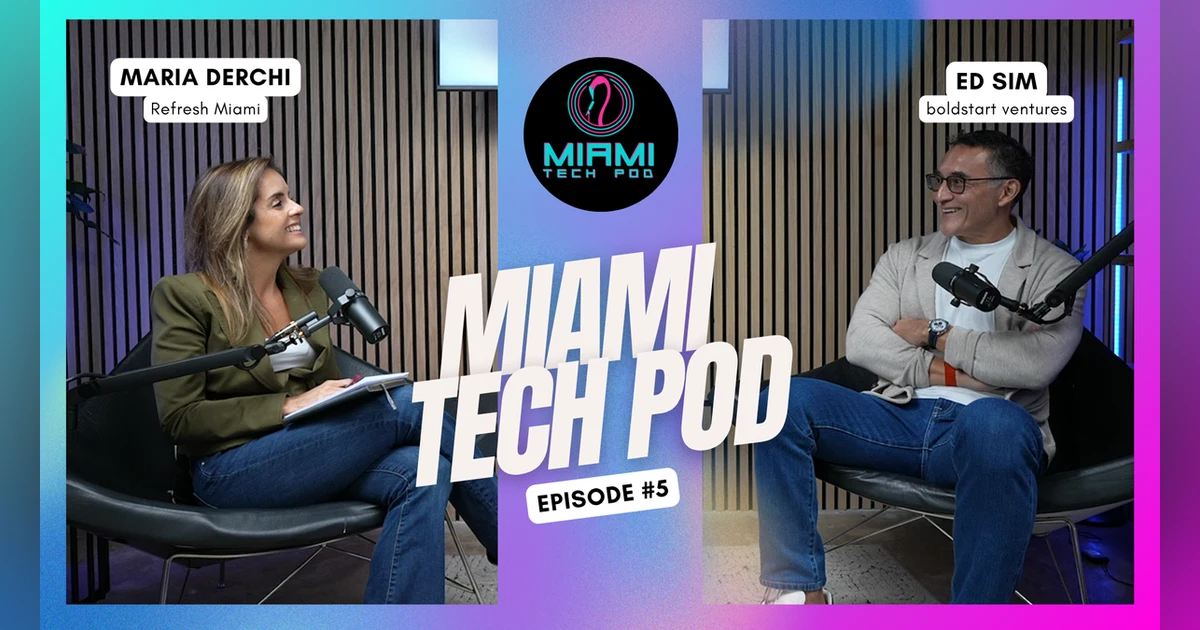
A Top VC’s Brutally Honest Advice for Founders (And Why Miami’s Just Getting Started) Should founders raise venture capital? What actually makes someone fundable? And what does a top investor really look for in a founder? In this episode of the Miami Tech Pod, Maria sits down with Ed Sim, founder of Boldstart Ventures and one of the most respected seed investors in tech, to unpack what separates great founders from everyone else — and why the future of AI (and Miami) is moving faster than mos...

 Spotify
 Apple Podcasts
 YouTube
 RSS Feed
 A Top VC’s Brutally Honest Advice for Founders (And Why Miami’s Just Getting Started)
Should founders raise venture capital? What actually makes someone fundable? And what does a top investor really look for in a founder?
In this episode of the Miami Tech Pod, Maria sits down with Ed Sim, founder of Boldstart Ventures and one of the most respected seed investors in tech, to unpack what separates great founders from everyone else — and why the future of AI (and Miami) is moving faster than most people realize.
We cover:
- The founder traits Ed bets on (and the ones he avoids)
- The biggest misconception founders have about raising capital
- Why most people shouldn’t raise venture funding
- What AI changes about startups, work, and investing
- What Miami still needs to attract world class talent
Whether you’re building a startup, raising capital, or betting on Miami tech, this one is full of practical lessons.
00:08 - Welcome And Guest Introduction
01:06 - What Inception Investing Means
03:17 - Funding The Autonomous Enterprise
07:22 - The Five Ps Founder Framework
09:59 - Energy, Grit, And Scrappy Signals
11:58 - Hiring Fast And Selling Candidates
14:04 - Why Agentic AI Is Spreading
16:46 - Cheer, Challenge, Chill As A VC
21:46 - Raising VC Without Chasing Brands
24:08 - Breaking Into VC And Building First
28:54 - The Myth Of Glamorous Venture
30:45 - Why Miami And The New Community
34:17 - Miami’s Parallels With Early New York
40:41 - The Plan B Talent Problem
42:52 - Events, Crypto Maturity, And AI Builders
45:52 - Answering “Why Are You In Miami?”
48:17 - The Hard Lesson: Stay Steady
50:31 - How To Help And Join The Meetup
Welcome And Guest Introduction
Maria
qnks for tuning in. This is Miami Tech Pod. I'm your host, Marina, and we're recording to you today from the Lab Miami. Shout out to the Lab Miami. And today's guest is Ed Sim. This is where I get to embarrass you a little bit. Ed is a prolific investor that started his career in VC in 1996. He is the founder and general partner of Bold Start Ventures, which he founded in 2010. And prior to that, he is the co-founder of Don Treader. Don Treader Ventures. Notable investments include superhuman, customer with a K, Sneak, go to meeting in live person. He has been recognized on the Mind of Seedless multiple times and is ranked number one seed investor on Business Insider, Seed 100, in both 2023 and 2024. Did I get that right?
Ed
I guess.
Maria
Thank you. Welcome to the pod. Thanks for coming.
Ed
Thanks for having me. I'm psyched to be here in the on the Miami podcast.
Maria
Oh, yes. We're going to get into some Miami questions. We have to, of course.
Ed
For sure.
What Inception Investing Means
Maria
So I would love to kick us off with, you know, I feel like you almost kind of popularized or kind of, you know, led this term inception investing. Can you explain what that means?
Ed
Yeah, so I've been doing venture, we'll call it enterprise and enterprise infrastructure, which really is a lot of AI these days, since 1996. It's been 30 years. And I will I've always gravitated towards working with founders kind of at the very beginning during the ideation phase, you know, during that company formation stage. It's also like the most fun, it's the most exciting, also the most challenging, right? But for some reason I gravitated towards that. And the nomenclature got so confusing because back when I started in the mid-90s, it was called Series A investing. There was no seed.
Maria
Wow.
Ed
Then it became seed when we started both starting in 2010. Seed investing was the first thing that you could do, believe it or not. And everyone had to popularize that. And then over time became pre-seed. And then it became really confusing. And I'll give you some examples. If you're a founder, you're building your second or third company, pre-seed started to be to become synonymous with no product but only raising a million or two million bucks. If you're really a great founder, you want to raise 10, 15, 20. And then seed became this thing where if you looked at the data from Pitchbook, the median age of a seed company was 3.7 years old at time of funding. And I think what really happened was as people wanted to go earlier and earlier, and as seed funds became more institutionalized, they started taking less risk. And I was like, you know what? There's got to be a better way, because all we do, like 95, 98%, pretty much 100% of what we do is partner with technical founders, you know, take some technical risk, uh, take some market risk. And it doesn't matter whether you're raising 200K, 500K, or $20 million or $30 million. We want to be that first place that you go to if you're building the categories that we care about. So you could write one check that we could lead or co-lead, and we want to get you back to business. And that's kind of why I kind of started that. But now these inception rounds can become a billion dollars in size, which is kind of another question altogether. But yeah, that that's kind of why I I kind of started that whole idea. It just made it less confusing.
Maria
And you you mentioned what are the areas that you invest in.
Funding The Autonomous Enterprise
Ed
I'd say that we've always been excited about infrastructure ever since I started kind of working back uh in the mid-90s. Uh, and I'd say that Bullstart right now is all about, you know, we came out with this thesis which was kind of partly tongue-in-cheek when we now start fund seven, which is a $215 million fund last June or July, and we called it funding the autonomous enterprise. And if you take that to the extreme level, that would be a one-person company dealing, you know, $500 million of revenue with all agents running around.
Maria
Yeah.
Ed
And that's kind of like the joke. That's the aspiration. But I think underneath that, what we're trying to say is that when the world goes to uh from humans actually interacting with with uh the internet and and kind of computing to hundreds or thousands of agents outnumbering humans, you know, like 100 to 1, 500 to 1, that whole infrastructure has to be rebuilt from the ground up. Uh and I'll give you some great examples. Um, should an agent have the same uh authorization and authentication that you have to go into Salesforce and update systems? Should that be uh an always-on thing, or should it be dynamic and ephemeral? Um, should it, for example, in a workflow, if you wanted to buy a pair of jeans, should it always have access to your credit card like you do? Probably not, right? So these are some examples of things that you have to rewire and rebuild from scratch. The scale is crazy. Um, when you have agents doing work for seconds, for minutes, for hours, for days, for weeks, that authentication and security process becomes absolutely crazy. So that'll be one example. The other areas that we'd say would be that if you apply AI to the physical world, uh, I think that's another massive opportunity. So companies like Generalist AI, which is in our portfolio going after the robotics problem, they're building a foundational model for robotics. We have a company called Topo's Bio building out a foundational model for um for bio to analyze uh disordered proteins. So we've been really extending kind of that framework of kind of what's possible with AI.
Maria
Okay. And so I know you've worked a lot with multi-invest uh multi-founders. How many of you would you say in your portfolio over the years has been first-time founders versus serial founders?
Ed
I'd probably say maybe it's 50-50. Um look, we think that having both first-time founders and serial founders is is a great balance. It just really depends on kind of the opportunity in the background, right? And um we're not afraid to invest in first-time founders. We actually sometimes I think that naivete in building something completely new and something completely crazy is kind of required. And I think if you know too much, I think having uh like this second or third time founding uh a company thing can be actually good and can also be bad. Yeah, and I think naivete is actually not a bad thing either, where you're kind of like just stupid enough to try something crazy that that that that you have to be kind of on that edge and not not afraid.
Maria
Yeah, fair. Okay, one question I wanted to ask you. We recently had Anya from Kind Designs, she on the podcast, she is building seawalls, and she's actually a former lawyer who had no background in that industry, but you know, decided it was a problem she wanted to tackle. For you, how important is industry expertise when you look at a founder?
Ed
I guess for us, when we look at more of the infrastructure type things, the expertise and kind of domain understanding, I think is super important. Look, you could easily argue that um AI can kind of democratize kind of the learning process. But I think in the industries that we kind of um live in, like cybersecurity, for example, having people from the industry is super, super important from a networking perspective, a hiring perspective, the understanding of the deep pain points and the problems that are kind of associated with that industry. Not to say that, you know, she can't build a great business, but our stuff has typically always been around um what is that unique insight? And, you know, I mean, if you want to talk about it, that's it's kind of like what I think about is
The Five Ps Founder Framework
Ed
the five P's. Like we've created a framework around how we do inception investing, and I kind of call it the five P's, and there always starts with the people. You know, like what gives you the unique insight that is probably learned over years that that is so technical that it's gonna kind of lead to a major, major breakthrough. And then the next P would be what is the pain? And typically these people have lived this pain for a very, very long time. Like, even when I brought up that example in security of kind of authentication authorization, you know, we backed a company uh at inception with Andrewson uh called Keycard AI, and I'd known the founders for 15 years, and they had been living and breathing this pain for a very, very long time. And when agents came around, they said, hey, I think I can apply it to that area. Um, the next would be the product, right? That would be the third P. Is that how do you actually um change the day-to-day life of a user and make it 10 times better with your product or service than without? And a lot of times what you'll find is that there's a pain and people will kind of will, you know, use spreadsheets or there'll be some manual process, but now you can automate automate that process or do it at scale in a better way. Um the other thing I would think about would be passion and perseverance, because once again, these things take a long time when you start a company. The journey now used to be seven to eight years to IPO when I started investing. It's 15 years or two or or longer, right? I mean, if you actually really think about the IPO process. And right now, rarely, very few companies are going public now. I mean, the scale of like a SpaceX or like an uh anthropic or an Android are kind of off the charts. And they've been around, well, other than anthropic, but some of these other ones have been around a long time. So passion and perseverance I think are important. The last thing I think about is potential. You know, at the end of the day, when I'm funding people, I know that 999,000 things can go wrong. You know, but if one thing goes right, the question is is kind of how big can it be? And how are you going to actually be one of that four be that person that's a force multiplier and making that happen a little bit faster? And and those are the things that we kind of look at from that perspective. And as you can see along those lines, when it comes to people paint and product, that deep domain expertise becomes very important, at least for the things that we do. Like the robotics company we did, General Estate I, the founders actually had come from Google DeepMind, and they were uh key authors of the paper called uh called the Palmy paper, which was how you can apply transformer models to robotics. So these were people that have been in the industry for a long time.
Maria
Okay. Is there like a non-obvious trait that you look for in a founder?
Ed
I don't
Energy, Grit, And Scrappy Signals
Ed
know if it's non-obvious, but man, it it's it's the passion and the energy. Like I feel like there are a couple kinds of people in the world. I feel like that they're energy givers and energy takers. And I want to be surrounded by people when I when I meet them in person or again on a Zoom where I just I just like leave and just You're like infectious. Yeah, like I'm so fired up. Like these people want to conquer the world. Like I I'm with you on that. Let me let me participate in that journey with you. Like, and you just get fired off, even if they call you at midnight and you're trying to deal with some problem. There's just something about that energy. And that doesn't mean that it always exists because there's once again always gonna be hard times. But but that is something that's important. And then two, underneath that, I think um it's hard to really test for grit, but you can kind of look at the backgrounds of these people and kind of the histories of them. You can understand kind of even where they came from personally to understand grit. And then of course, I always like to kind of push people on the weekends to kind of see like when when we're doing diligence, like, you know, hey, you want to get catch up on the weekend to to do stuff. Because if if this is that important to you, and I'm not saying that you should be working 24, 7, 7 days a week, but if that's important to you, you're gonna find time, especially when you're trying to raise money from us at Inception, to get on a call or do Zoom or meet in person over the weekend as well. And we'll do the same as well, because you want your investor as committed as you are to being successful.
Maria
Yeah, I feel like one thing I always think about is like everything is a test to how scrappy you could be. So I know I feel like I may have heard you say this on a a podcast or something, but if someone's like, you know, if you are investor and you're like warm intros only and that person can't figure out how to get a warm intro to you, then that's not probably a not a great sign that like, you know, whatever it is, find out where your coffee order is, show up at the coffee shop. I don't know.
Ed
Um I agree, and I think that's gonna be more important these days with AI. Yeah. Right? Yeah. Which one's like we're doing this in person. And not over Zoom.
Maria
Yes. Uh and so I I I also understand you got you help and the whole whole bold start team helps your founders pre-sell their
Hiring Fast And Selling Candidates
Maria
hires. Uh can you speak a little bit to that?
Ed
Yeah. So when I go back to the five Ps and the people, um, one of the things that's very, very important to us, when you do inception investing in the right way, like part of our job is to make sure that if you come to us and we we lead you around or co-lead you around, I want to reduce the amount of time and friction it takes for you to raise capital. And if we can take the whole round from the very beginning, you can just get started right away. And and a lot of times people come to us and the idea may is, but then they have four or five key. I want to know who your first four or five, six, seven key hires are gonna be right out the gates. And part of that will be A, is it the technical talent that you need? Uh two is are some of these people, do some of these people have a working history with you or a personal history with you, right? Because I want to know that you're almost like a pied piper, that you can bring people with you and people follow you, and that you're you're a good leader. So I think that's a very good sign. The worst thing that can happen is we give you a check and you spend another six months trying to hire the engineer, you just lost six months. Like, what's the point of kind of doing that? You want to be ready fire out of the gate. And so, look, I mean, I've I've got I've got two interviews today where we have a VP of uh sales candidate, a VP of marketing candidate for my portfolio companies where we help screen and vet. And look, the ultimate decision comes down to the founder. But I think after having worked with companies over 30 years and seeing kind of what scales and what works and what doesn't work, you kind of find typical archetypes and patterns and and whatnot. And and I think having a second set of eyes, I think is helpful for the founder to not mishire someone because it's very expensive to mishire someone, especially in the beginning. And the second thing I'd say is that we also help partially sell. Like, hey, if if you join this company, this is why we invested, this is why we're active, and this is why we think it can be a massive, massive outcome for you if you join.
Maria
Yeah, I feel like that must go a long way with hires. It does. Especially that early, you're, you know, it's a risk.
Ed
It's like part um, it's part uh vetting and part selling, I think is part of the process. And you always ask the founder how much of either do you want me to go down the path of?
Maria
Obviously, we probably want founders who can do a really good job of selling to these employees, but you know, having you involved certainly helps.
Why Agentic AI Is Spreading
Maria
Uh is there, I'm curious, is there a technology that you either thought would take off and didn't, or didn't think would take off and did?
Ed
That's a really good question.
Maria
Um Like for me when Snapchat came out, I'm like, I don't get it. I still don't necessarily get it. I'm not on it, but obviously it it definitely, you know, I was wrong in that sense. But I'm curious, yeah, if there's anything that you were like, this seems ridiculous.
Ed
Um You know, I have to tell you that the speed and diffusion of technology is happening faster than ever. And while it doesn't seem ridiculous, um I keep thinking about the moment in December when Clawed Code came out and then OpenClaw came out in January, February. I think until then, before then, AI was kind of a a nice to have and not a must-have. And for me, it's more the diffusion and speed at which um agentic technology is taking. I thought it would take like five or seven years, you know, five years, particularly in regulated enterprises like banks and um, you know, healthcare firms and other things that have massive regulations, but I think the speed of diffusion is absolutely insane right now. And when I, you know, we spend a lot of time with kind of the top banks and you know, insurance companies and healthcare firms with their leading IT executives. And um, when you hear them wanting to go wall to wall with agents, and and it's still early right now, um, uh it blows my mind. I've never seen any technology in the history of my entire life of doing this for 30 years, kind of move this quickly in these areas. And another good example would be Goldman Sachs, I think a few months ago announced that they were going to bring Claude in across uh across the whole company and automate a lot of their back office functions. And I mean that's a that's a massive bank, massive public company. I know it took them a year to get through all the security issues and all the things to build all the tooling around Claude to make it secure and private and all the other things, but that is massive, right? I mean that that is absolutely massive. And I I I do believe we're just at the tip of the iceberg. I was just in Chicago last week speaking at a McKinsey uh tech leadership summit with 50 CIOs and heads of AI and doing hands-on workshops with them uh or participating in those with them. And it is astonishing to me, um, A, how forward-thinking they are, but also how early it still is. So I I think this is gonna be an absolutely, absolutely massive, massive upswing, to be honest with you. It's just beginning. Good, good answer.
Maria
Um I'm curious, I'm sure you have many examples of this, but if you can think of one that you want to share where Gold Start's involvement helped materially change the course of one of your portfolio companies.
Cheer, Challenge, Chill As A VC
Ed
You know, I don't I'm always of the believer that um a good investor and a good board member um should never claim success or credit for a founder of success. Um but I think 999 times out of a thousand, they could actually be pointed at for the demise of a business. So I think they can get in that I think they can get in the way more than they can help. Um but look, I I I think that when I think about kind of how we operate, um I have this thing, and and I've been doing this a long time. I'm I'm a frameworks kind of thinker. I have something called the three CHs about how I like to work with founders. And I think the first CH would be you have to know when to cheer. And it's usually when the founder is beaten down. Because look, you know, maybe they lost a big deal, maybe their their term sheet fell through to raise capital, you know, maybe they um couldn't make this big hire, but you know, they're beaten down and they just need some support. Like, hey man, like uh get up, like, you know, like it's okay. Like, you know, we got keep keep going, right? I think that's that's kind of one aspect. I think the other is to know when to challenge. And I've seen too many times where founders have a big win or they have a couple wins in succession, and they're like, all right, I'm ready to tackle the world and take on the world. You know, ramp up spending 10x and do all these things, and you're like, hey, you know what? Are you sure? Like, you gotta challenge them a little bit just to make sure that, you know, that they don't feel like they're iron men, right? Like that that the hubris can kind of get you get to you in in a certain way as well. So you always have to be kind of paranoid. So that's what I like to challenge. So it's cheer, challenge, and then you have to know when to chill. So I like to tell founders that look, our job is to, and we're we believe in you. You're building the product, you have the vision, you have all the stuff. Um and like, for example, when I give you that first check in inception, I'm getting out of the way. Like, go build your stuff. Like, if you want me to help you get feedback from potential customers, I will do that. But I am literally gonna get out of your way because you need to build the product and come to me. So I think the best founders, in my opinion, are ones that pull. They know when to pull from you versus you pushing on them. Um, but look, I mean, uh I'll celebrate a big win. We protect AI. We we helped uh I met Ian Swanson like a year before uh ChatGPT came out, and we worked with him and and he got his two co-founders together and you know he helped create the AI security market. Um and then in three and a half years, we went from idea to buying three other companies. And look, I was there helping advise him through that whole process, hiring people, helping him get a lot of his rounds done. Uh, and then we ended up selling to Palo Alto Networks uh for over 700 million cash in in three and a half years. Uh so we were the largest shareholder. Uh we co-led that initial round with our friend today crew and then brought in a bunch of other people, but uh definitely we're texting, communicating with each other nonstop for three and a half years. And and so I just like to think that we're I want to be that safe choice in that first call that people can call. I mean good things and bad things. It wasn't all all great. Um but I would say that that's kind of what you want in a partner and investor. And frankly, as I said, I don't want to claim credit for any of these things. I feel fortunate that we're able to partner with these founders and and and help them behind the scenes.
Maria
Yeah, it sounds sounds like you're always a good counterbalance to whatever's going on in their work.
Ed
We try to keep an even keel because man, if you pay attention too much to everything that's happening on the outside, you can get whiblashed across the board. And it's like, how do you make sure you know what your North Star is and stay focused, but you know, deviate and kind of where where you need to when it's important without people freaking out on you, right? Because your job's hard enough.
Maria
Yeah. And I think it's a testament to your success and how helpful you are that, you know, you said 50% of your portfolio companies are repeat founders. Some of them probably have had exits.
Ed
They could self-fund, they have their choice of investors they could approach, but the fact that they go with you all is a you know, oh yeah, like I mean, like even like Rahul from Superhuman came to us after we were in his n his initial company reported if that was sold to LinkedIn. Guy Bajarni, uh, we he was out of fund one. We sold uh his company, Blaze, to Akamai, uh, and then he started Sneak. So we were there from the very beginning, and Sneak hit a market cap high of like 8.6 billion, and it's obviously still super successful. I mean, from company founding it now, I think we're doing over 320 million of of AR right now. It's it's recognized as a market leader in security. But guy went on to start his next company, and he had um you know lots of money being thrown at him from lots of different people, and we ended up co-leading the initial round. This was a $25 million inception round with with G V with G V. So we did half the round. Um, and then six months later, 100 million came in from Excel and Index. So the point is that these long-standing relationships, I feel like Guy and I kind of grew up in the industry together. Because like no one knew Bolstra was when he took money from us, no one knew who Guy was, right? And so that's kind of that that journey is super, super fun for I think both of us. And to continue that on in that in that way is we're continue to learn from each other and learn from what's happening and you know, challenge each other.
Maria
Yeah.
Raising VC Without Chasing Brands
Maria
So I'm curious, particularly with first time founders that you work with or that you just come into contact with, what is like a common misconception they have about raising venture capital?
Ed
I think the biggest common misconception. When I talk to first-time founders, they get enamored by a brand versus the person who's doing the work. And I and I think that they may overoptimize for valuation too much and what brand is versus kind of who's going to be there through thick and thin. Um look, there are a lot of great firms out there that are doing multi-stage investing, but you know, mm a hundred million dollar checks move the needle more than a five million dollar check. And sometimes I'd say that those five million dollar checks could be seen more like option value than it would be for a firm like ours, where that would be a meaningful check for us. Um so I like to tell founders like, hey, make sure you find a partner, no matter not not just us, but whoever it is, that it's gonna be there through thick and thin with you because the early days are the hardest days, period. And hopefully what what they'll do is they'll challenge you, they'll support you, uh, but they'll also help you reduce the friction amount of time it is to raise your next round as well from good people. So typically then I would look at kind of who do they who works you know downstream from these investors as well, like who funds their companies? What do those relationships look like? So I think it's very important, but I like to say like you could bring uh my partner Elliot calls it uh bringing the elephant in the rowboat. You don't want to bring an elephant in the rowboat too early. You want that rowboat to become a much bigger boat that you've upgraded to before you bring the elephant in. And so so I we like to say, like, let's help you get the elephant in the rowboat, but right now, like let's kind of you know build an experiment in in a bunch of different ways before you get there.
Maria
Yeah. I think probably some in it, like they kind of underestimate the relationship dynamic.
Ed
Yeah. And that once again, I think just that's a common theme with AI, it's gonna become more and more important. I feel like the world and the speed at which we're doing things and speed at which AI is changing things and automating things. Um I feel like that makes the world more transactional and then more relationship driven. And my hope would be that all that manual grunt work that you have gets more automated in which you can spend more time with people, right? And I think I think in the next five years, I think the people equation is gonna be much more important or people are gonna value that, you know, as much as they do, you know, the automation.
Maria
Yeah.
Breaking Into VC And Building First
Maria
So what would some advice be for someone looking to get into venture capital? I know you had kind of a unique background in terms of how you got into it.
Ed
Yeah, when I got into it, it wasn't really an industry or anything. It was like I gotta be honest with you, I was um I was in college, uh, I was playing lacrosse at Harvard, and a friend of mine's brother was like, hey, there's this thing called Venture Capital, and he came in and gave a little talk about it. I said, this sounds really, really cool. And the thing that stuck with me was he said, you know, you can be a founder. Founders have dreams, you know, et cetera, but it's super, super risky. But you could actually work with several founders and be like a coach. And sometimes you want to be you can be a player coach, but you don't really want to be a player coach because that means that the company's not doing well. You just want to be a coach. You can coach, uh, you know, coach a team and figure out how to how to get performance going and and still be part of like creating net new things for the world. And that always excited me. And I sent out like 100 letters to PE firms, LBO shops, and like um VC firms. I didn't know the difference. No one knew the difference between them. And only one person responded back, like, hey kid, just get a job. Like, you know, like get a job. So I went to New York, I got a job, I worked in real estate investing for a year, and then I worked, uh, went to JP Morgan to do um quantitative uh derivative investing. And I was basically a spreadsheet jockey. I was helping kind of, you know, the portfolio traders, the portfolio managers kind of enter data into an Excel spreadsheet, and uh, and basically we would figure out how to trade uh and get more exposure in different countries using futures and options. And while I was doing that, I was like, man, this is horrible. Like I should automate my job. So I learned how to code, I learned Visual Basic. I basically would record macros and then reverse engineer it and kind of eventually someone came up to me one day to my partner and I said, Hey, we're gonna turn this into a real-time trading platform. This was, by the way, the mid-90s. And we're gonna take real live Reuters data feeds in, and I need you to help us kind of do the business QA process. So I downloaded Mosaic Browser, which be which was before Netscape, and boom, I was like, oh my God, like this is a future. Like when you went went onto the internet for the first time and saw the Yahoo directory there, it was like a portal into a new world. And this is kind of why I I bring that up because like the AI world right now, it's not even AI, it's the agent world right now. I think it's a hundred times crazier and and bigger than what I saw then. But that was like I I need to get into the business. So I kind of got lucked out, I lucked out that way. Just I learned how to code and I've been coding since. Um, but if I were kind of thinking about it right now, I I think the best experience is just being at a startup. But I mean right now, I think it's the best time to build as a founder. And and I like to say that um there are so many people that need help in terms of how to figure out how to even use AI. You could probably you could probably create some small agents and some small niche industries for like you know, medium-sized enterprises and kind of create your own little business without even having to raise any capital. Like, like honestly, I I feel like there's this idea that if you start a company, you have to raise venture capital. I I like to say, like, first ask yourself, why do I want to raise venture capital, right? I mean, if you're building something that's absolute, absolutely massive, then yeah, you should kind of think about, you know, to hire a team, um, you know, in a very competitive space, to like if you're doing robotics or hardcore AI infrastructure, whatever. But I would think long and hard first before we even r want to raise venture. And then if you do want to raise venture, make sure you know what you're signing up for, right? Because every check that we write, you know, we filter, you know, thousands of companies a year, and everyone does. Um we need to think about how you can return the whole fund or more back to us if this is successful. Right. So it's gotta be a pretty big idea. Um or or at least we need to believe it's gonna be a big idea, even though it seems small today. And uh I think being a founder though is the is the best way to dig into venture right now, at least in the earlier stages. If you're talking about growth stages, it's more you know, number crunching and all the other stuff, a different business, but our business is really about founders. In fact, you know, Ellen Cheese and one of our partners was a is a former founder. We'd backed her before and she she just joined as a founder in residence, and then she ended up becoming, you know, a very successful partner of ours. And and she's the one that led the robotics around, right? So I think that's a great archetype that we look for uh at our fund.
Maria
Yeah, I totally agree. I feel like I I I've said this a few times in in different groups where we glorify too much like the raise versus the building. And um I yeah, I think that a lot of people can build incredible businesses and not have to raise, but if they they everyone's just seeking that external validation.
Ed
Yeah. And sometimes people just get on that flywheel of who did I raise from and how much did I raise, but yet the business is not performing that well, right? But yeah, i you gotta find the right balance.
Maria
Would you is there one thing that you would say is the most overrated thing about being in venture?
The Myth Of Glamorous Venture
Ed
People think it's glamorous. It's not, it's a lot of grunt work, right? And I was joking with a friend of mine, and and I like to give him credit. He's uh this guy, Mayor Friedman from F2 Capital. It was like 1 a.m. We're at RSA. This RSA is kind of the big security conference every year where you know, every we've got, I don't know, 17 cybersecurity investments through our seven funds, and so they're all there. All the buyers are there, this the CISOs are there from all the biggest banks. It's one in the morning, and we're looking at each other, and we're with founders with some you know, CISOs from some large kind of customers, and he goes, Ed, you know what we are? I go, what?
Maria
Oh, let me guess. Groupies, no.
Ed
No, he goes forward deployed VCs. And I was like, that's awesome, dude. You hit it because it's like, you know, the pe we're not in an ivory tower. We're on the ground, we're getting, we're getting our hands dirty, we're hanging out. I mean, it's fun, but it's hand-to-hand combat, man. I'm telling you, and so so I I think that that energy and you know, the you've got to be kind of in the grind. And we're not in ivory towers, or at least some people aren't in ivory towers. We we we're on the ground, kind of helping our founders.
Maria
Probably the ones you want are the ones in the ivory towers. Yeah.
Ed
Yeah, and think about this. Like, do you know how important? And you asked about earlier about how um how we help. But like when you help get that first legitimate enterprise customer for a portfolio company, man, that changes everything. I know like one of our companies, SpectroCloud, we up to get T-Mobile on as our first customer. Now it's our largest customer, but it took them about a year to get to get to that journey. But that's that was an anchor customer, which changed the trajectory of a business. So when you're on the ground with all these CISOs and whatnot, I think it's super helpful as well. And something I enjoy, right? I think everyone has to learn how to sell and enjoy it and and be part of the mix.
Maria
Yeah, it's probably why you're so good at it. You have to enjoy that.
Ed
You gotta love it.
Maria
Yeah.
Why Miami And The New Community
Maria
So switching gears, of course, we have to touch on the Miami topic. Um you know, we're so happy that you're here. Can you tell me a little bit more about how long you've been here, what brought you here?
Ed
So I've been here for four and a half years, and um it was kind of during COVID, we're we're thinking about so we moved here in January of 2022. I've got two children, so my my youngest was getting ready to go to college. And my wife and I were looking around and we were like, man, like all of our friends are selling their places, our our our second child's going going to college. And at the same time, there's this buzz kind of building about Miami. I'm gonna be honest with you, I I think I'd only been to Miami three times prior to that, and it was all like bachelor parties or something.
Maria
That's what I always hear, yeah.
Ed
And and I was like, man, I could never live here like this would kill me, like in like a month. And uh and my my my good friend uh Dimitri Sirota, who's the um founder, you should have him on the pod at some point in time, co-founder and CEO of Big ID. Um, and they're they're doing well over 100 million of ARR in the security space, but he moved to Pinecrest.
unknown
Oh, wow.
Ed
And I remember he didn't really want to move to Florida, but he did, and and after a few months, he started smiling more and more. And so we had a board meeting in Miami, like in like June of 2021, and I stayed at his place. I was like, man, I didn't know Miami was normal. Like, what do you mean?
Maria
It's like he hadn't left the radius of South Beach.
Ed
Exactly. I didn't know there was like a real like place. And then I went down again like uh two months later. I stayed at his place. He introduced me to his real estate agent, and lo and behold, you know, we moved down here, and then we discovered this massive community. And you know, we met this guy, Peter Yard, uh, who you you've you you know, obviously.
Maria
Without Peter.
Ed
And Peter and and uh pulled us in to start this enterprise, Miami Enterprise Infrastructure Meetup. Now it started out with like three people when Peter started, and then it was like 20, and now we've got like 150 people on the list with a lot of founders, a lot of people doing AI infrastructure, cybersecurity, like robotic stuff. I've I've found more and more people, and it's growing. And so it's been and we're holding a meetup on Monday, but it's been super fun to be part of this community here, and everyone is collaborative and trying to be helpful and versus sniping each other because I think people believe that it's a it's a you know win-win-win for everyone if we can kind of raise this community up. And and and so look, it's been it's been super super fun. And I wanted to be part of something new like building. Uh, it seems so welcoming here. Um I think that the infrastructure here, the support from the government, um, I think the location, right? We do a lot in Israel as well. So we have like 16 portfolio companies in Israel. Um, you know, Guy, the the guy from Sneak is in London. So I fly to London, I go to Israel, I go to the Bay, I go to New York. I mean, it's all easily accessible. And frankly, the coolest part, which I didn't realize, is that once you're here, that I didn't realize how many people have events here. Uh offsites here, events here. I mean, it's just nonstop week by week. So I kind of call it long distance dating because I'll host, I'll host board offsites or company offsites here for three days and we'll get together, you know, and then we'll we'll spend really, really good time together, right? Um there's sales kickoffs here, and so I don't know. I I love it. I I I think there's so much more we can do and build, but absolutely love it here.
Maria
Yeah, I would love to get into some of the things that you think we, you know, we're we're not here to pretend that you know the work is done, we've got a lot of stuff to
Miami’s Parallels With Early New York
Maria
do. Let's and it's gonna take it's not gonna take a year, it's gonna take some, you know, good amount of years. You were in New York when kind of New York was being laughed at, like this would never be a startup hub. So kind of love to hear any lessons there. And like if there were you know one to three things we should focus on in the short term that it's gonna have the long-term effect that we want, uh, what would those be?
Ed
Yeah, I I think a lot about the parallels. Um in I started doing venture in New York in 1996, so 30 years ago. Believe it or not, I worked for this fund that had money from the New York City Economic Development Corporation to help turn New York, they called it New York into a high-tech hotbed. I mean, those were the worst words ever, but that back then that was kind of cool. And um and at the time there's this monitoring career called Silicon Alley. Now it's all about advertising, right? Like digital advertising and things like that, and and new media. And on the one hand, it was cool. On the one hand, on the other hand, it annoyed me, right? Because it just became synaptic, and we were doing enterprise software investing, right? So I learned how to do that because I would spend time with the banks, and you know, there's like 50 or 60 Fortune 500 companies, and there may be less now with the government there, but you know, that are buying lots of IT, and I would spend time with the IT leaders, right? And so I learned kind of what they were buying. But, you know, I think you need to actually stand for something. And at the time, Silicon Alley was the moniker, and there's no silicon there, by the way, which is kind of funny as well. But that was kind of helped draw the buzz in. But what then happened was all this buzz came in, and then everyone's like, where's the where's the reality? Like, what's what's kind of real behind it? And it crashed for a little bit, right? Because it was like all this hype, overhyped, and then crashed, and now, and then it took a while to build back, right? And then over time, now you have companies like MongoDB and others. Look, you don't have your um trillion-dollar path company like an like uh uh an OpenAI or Anthropic there, but there are there are a lot of good enterprise-related companies there. But but the buzz kind of drew people in. And the other thing you had was a lot of capital. There's a lot of capital there, but it was a net and exporter of capital. And in fact, more of the capital there was less venture-oriented at the time, it was more PE oriented and LBO oriented, so it wasn't really usable capital. And the third part you didn't have were angels that were writing checks. And I so that was kind of the New York area back in the early 90s, and then it changed. And look, it's still not known as the enterprise place, but it's kind of number two to California now, which is kind of cool, right? And you know, we're we played a small part in that, or I played a small part in kind of building that and investing in company. I was the first investor in 24-7 Media that went public. Live person was kind of the first chat-based SaaS uh company. We went, we took that public. It was probably the last IPO back in 01 before the market blew up. And, you know, Rob Lacassi was the founder and CEO of that thing for 28 years on Nasdaq. Um and and then, you know, coming to Miami, I felt there's a lot of similarities there, but in an accelerated way. There was a lot of capital here, right? You had kind of the Keith of the world and all the other people kind of coming down and shouting from the rooftops, talking about how great Miami was. And once again, you have to build the buzz. It has to be like, hey, you have to shout from the rooftop. Even there was nothing there yet, you have to say, come, everyone come and and and build the buzz. And that was awesome. And Mayor Suarez at the time was building the buzz. Two is the capital we had, I think, was more usable capital. So now, like, I mean, you probably know better than me, like there are a lot of venture firms down here, right? Or even one person uh folks who are part of larger firms from the West Coast and other places, some really good brand names that are hiding here, writing checks. So it's more usable capital versus kind of the capital we had before. So that's a positive. The third thing is we had the buzz. Started with a buzz kind of with everyone moving here, but then it was the crypto buzz, which at the time was solid when crypto was great, but then you know, I think it also became a negative in anchor, you know, when crypto kind of crashed. And I love the fact of what IL and the Miami, the AI lab are doing here and branding it as an AI kind of area. So I think I think we're feeling the same effects that New York had in the Silicon Valley days where it was all about new media, where crypto crash came down. Oh, Miami sucks because crypto is done. But no, there's a lot of stuff underneath it. There's a lot of diverse industries, there's a lot of build people building AI here. Um, we just funded our second Miami company here. So in the four years that we're here. Um the one founder is an XYC founder that moved from the Bay Area. His other co-founder. Are you able to say? I can't say. The other co-founder is engineer number five at um at a very successful API ballet company. And the third one lives in San Francisco. So two Miami, one San Francisco. Uh the other one we funded was a guy named Mark Ferrentino uh from Quotient AI. He's building out a full agentec marketing stack platform. He worked very closely with Howard Lerman. Um, his he's he's here in Miami in Pinecrest, and his uh technical co-founder is in Brooklyn, and they're building engineering there. But two companies so far. So there are people like that that are here, and there's more of them coming. And and I think what we're really hungering for, and this is what the enterprise infrastructure meetup is about, is having those AI conversations like you're in the valley, right? And kind of having that. And so I think that that we're coming through buzz, amazing, crash, and now we're kind of coming back on the upswing right now. And I think the opportunity here is gonna be bigger and better than ever, especially as you know, some of the bigger names like Palantir move here, Sergey, I guess, and some others move here. And it's not to say that, you know, lots of people will follow them, but I think that people will pay attention. And who knows, Elon Musk is looking here. Um, but I do think that you can build some great companies uh uh down here as well.
unknown
Yeah.
Maria
Well, I I know before we started a recording, I was mentioning how in preparation for this episode, I was listening to old podcast episodes of yours, and the one you were on Jason Calicanus's podcast, Angel. This was eight years ago, and I remember towards the end of the episode, you don't remember this because it was so long ago, but he you were kind of almost like pitching New York and talking about how you know you just you would describe a company and you'd be like, where would you think that company is based? And he would be like San Francisco or Seattle, and you're like, no, it's in New York. And so it feels like we've come so l far in eight years that like nobody would necessarily question that anymore. But that was only eight years ago.
Ed
Yeah, isn't that crazy? Yeah. And I think the speed at which things are happening here in Miami are faster.
Maria
Yeah.
Ed
Actually. And and it's and look, man, the people are dynamic down here. It it's every day you get texts like, oh, I just moved down here or whatever. And and so the quiet substance is is slowly building here. Um I also think that there's more we can do with universities and get more engineering grads
The Plan B Talent Problem
Ed
here and other things. So I think one once again, the the biggest problem in terms of people coming to Miami is not the weather. It's not kind of the um welcoming kind of government, but it's more if I come here and take a job here, and if things don't work out, do we need to move? Are there other places I can go laterally or somewhere else? And that's you know, in in the enterprise space or the AI infra space, that's what's lacking here.
Maria
Yeah, I I totally agree. I keep referring to it as like the plan B problem, where if someone is open to moving here, but they're worried about what happens next. And particularly if they go for a startup that could be risky, they want to feel like they have a backup. So I do think that you know, we always talk about having big companies move here in order to for them to just attract talent to work at those big companies. But I am actually a huge proponent of like having big companies here would help startups attract talent because more people are gonna be willing to take a risk on a startup because they feel like they'd have a fallback on these big companies.
Ed
I think you nailed it. Um this was something that I went through recruiting um in New York, you know, even six, seven years ago. And when Google moved and bought that massive space in Chelsea, that was one of the first signs that New York was kind of cool. Or I think OpenAI and some others are opening up New York offices now. So now the AI kind of jet stream starting. How awesome would it be if one of those labs kind of opened up here or s or if someone started their own lab down here, right? But I think we need something like that to really bring the talent in. And I think that would change everything. So call on Anthropic or OpenAI or any of these guys, if you want to build a lab here, you could you could hoover a lot of talent. I mean, amazing talent here, or and also have people move down here to work for you. So you should think about it.
Maria
Yeah, I do feel like there's the you know, we still have ways to go, but the perception of Miami has changed a lot and where a lot of people want to move here or want to live here, they just need to make it make sense. And so I think if they do open office, you'd be s they'd be surprised at how many people would raise their hand and be like, I'll move. Oh, absolutely.
Ed
And we need that. So we just need one or two people to go to go do that for one of those hot companies for people who we love to work at, right? And I think that we just had um I just hosted dinner a few weeks
Events, Crypto Maturity, And AI Builders
Ed
ago. You know what's really cool, like for me when we talk about kind of technology, is that the AI Engineering Summit was held here in Miami, right around React Miami. And the AI Engineering Summit, for those who don't know, they have something called the AI Engineering World's Fair, which is in uh the the Bay Area every year, like in the June time frame. The next one's coming up in June, but it's the definitive place where AI uh engineers kind of meet and build things, right? It's where a lot of great things get announced. It's what's happening with models, it's what's the latest and harnesses and all that stuff. But they held one here in Miami. Uh and I think that was really, really cool. And we had speakers from OpenAI and a bunch of other people. So one of our founders who sold his company to Shopify and then ended up at OpenAI, the uh he's leading the charge there, but we held a dinner for uh with him and had 20 founders in Miami uh around just having a conversation about what is state of the art? What are you thinking about right here? I had him stay an extra day, actually. And so him and his uh uh partner stay an extra day, uh, but to actually spend time with the community here. And I think he came away like, holy crap, there's some real serious talent here.
Maria
Yeah.
Ed
Uh but then also it's fun to expose the focus. Here to what is state of the art kind of in the in the Bay Area as well. But I would love to see more of that kind of collaboration kind of moving forward.
Maria
Yeah, to your point, we we have become such a big destination for events and conferences. We're coming off of a few weeks where we had our own Miami Tech Week, but then we had uh consensus. Well, possible first, then consensus. Uh to your point, like you know, crypto, you know, has gone through its ups and downs. I I did go by consensus and it was just a whole different vibe.
Ed
Consensus, by the way, this year. Well, I mean, like I think we had the Bitcoin thing a few years ago, right? Yeah. That's what I was expecting. This is a whole different thing. Yeah, you know what's funny is that while token prices are kind of down, we have a bunch of uh crypto infra infrastructure stuff. So we never really did the token stuff, but we have a company called Hypernative doing crypto security. We have BlockDaemon, which is doing kind of uh core infrastructure for wallets and helping uh large banks kind of deploy um tokenized assets kind of using our infrastructure. But this whole thing was all about Wall Street, right? It was all about tokenization of assets and and real world stuff versus kind of token prices.
Maria
Yeah.
Ed
When I walked the floor and I'm like everybody's like dressed up, like I was expecting like But that's kind of I think I think you just nailed it because I remember when I moved to Miami and the Bitcoin conference was like the thing, right? Promoted, but consensus was not as big a thing, but it was actually a big thing. And that's it's the growing up of kind of crypto, but also the growing up of Miami. You can kind of parallel those two together, right?
Maria
Yeah, I totally agree. It was like a snapshot of the R.
Ed
But there's hardcore AI, there's I mean, this you're talking about hardcore technology kind of that that was there, right? It wasn't just kind of like cool marketing stuff.
Maria
Yeah, and exactly. So when you know the benefit of that too is that what we were kind of alluding to is when people come here and they get come here for a conference, but then they get to experience more of Miami, they're like, oh, I kind of get it. Right?
Ed
Yeah. And the weather's kind of nice too.
Maria
Yeah. Yeah, yeah, definitely.
Answering “Why Are You In Miami?”
Maria
Uh so two last questions. I know you've been so gracious with your time. Um on the the whole topic of founders in Miami, I'm sure they still get from certain investors that are not here. Why are you in Miami? You should move. What would your advice to them be on how do you kind of counter that?
Ed
Shouldn't you know I I think that is the question because I ask that question myself too when I'm meeting founders.
Maria
Yeah.
Ed
Uh to be honest with you, I'm just not going to go away. It's like, um, kind of what brings you to Miami, why are you here? Kind of what do you want to do? You know, how are you building your company? And look, at the end of the day, first thing is is you can tell what people are doing, kind of even you can look at their Instagram and everything else. I mean, look, it's it's all out there. So you can see, I can see why you're in Miami versus why you're really in Miami. That so I think kind of that just being that builder persona, right, and kind of having a very clear answer, and just I just want to know where your engineers are, who's building the product. I mean, you may be an engineer, but I don't know where the rest of your team is gonna be and how you think about that. I ultimately believe in today's day and age, look, if you asked me, do teams sitting together, uh, the first five, six people sitting together, uh, build faster. Yeah, absolutely in person. If you're not gonna be in person, then tell me kind of why you're not in person, where your engineering team is gonna be, what the core talent is, and what is your plan to kind of spend time um in those places. Uh the that founding team, I'll give you a funny example. That founding team uh with the two folks here and the one in San Francisco, um, one of the guys was living more in North Beach. He moved down to Edgewater to be near his partner in Coconut Grove so they can get an office here in Wynwood and spend time together. I mean, even just within Miami, they moved because that's how intense they were. And guess what they just uh then did? They just picked up their bags, left their wife and kids, and moved to the Bay Area for four months because they wanted to be around like 20, and they're these guys early 30s, but wanted to be around the 20 somethings just to make sure they know what they're doing, then come back. So I mean that that's kind of what it takes. Like, and when I when I heard that, I was like, really? Like like the grit and intensity, but you do have a knock. I'm not gonna say you don't. You do a knock on kind of being a founder in Miami, especially if you're a young founder. So just make sure you can I mean that signal right there was like I'm in, right? I mean, that was kind of an all-in signal.
Maria
Yeah, fair point. Yeah, have that answer buttoned up.
Ed
Yeah.
Maria
Uh so closing
The Hard Lesson: Stay Steady
Maria
question. Uh, what is one of the hardest lessons you've learned in your career? That's a hard one right at the end.
Ed
I think, yeah, no, uh there's lots of things, lessons that I've learned. Um, but I think the most important thing is kind of you're never uh trying to trying to be steady, right? You're never as good as people say that you are, and you're never as bad as people think you are either. Right? And kind of having that central nervous system and just the belief in yourself and that North Star. Um, and it can manifest itself in so many ways. Like, I could say that what could have Boldstart done better? Uh, during ZERP and the height of zero interest rate policy, where all of our companies are raising a multi-billion dollar valuations, we probably could have sold some, taken some off the table, right? Off the, you know, asset-wise, right? And some of the founders could have too. Um, and and so those are some lessons that we think about kind of moving forward, is how do you think about that? Um, but the second thing is I say this is because the world is changing so fast that every model drop can actually kind of create a lot of tension and friction. And when you actually dig beneath the hood, um, it might be more marketing bluster than it is reality. I'll give you a great example. When Mythos was about, you know, launched, it was uh right after RSA. Um, I kind of joke that everything that happened at RSA was a joke because after the Mythos thing came around, it changed everything. But cybersecurity stocks went down like 10, 15, 20%, right? Because people were worried that they would kill everything. But then the reality is some of them bounced back because I'm, you know, I'm not to say everyone's protected, but some of them bounced back because people realize, hey, mythos is really good at finding vulnerabilities. Um, but they're not going to fix them for you. You actually have to have real technology and a deep understanding of the enterprise. You can't just blindly apply a patch that mythos gives you because it might kill uh an application because there's other software dependent on that, right? So you have to map that all out. So I guess what I'm trying to say is that you can't always kind of re- overreact just because everyone else is overreacting to everything and just make sure that you stay at the course. Uh and that's the most important thing that you can do. Because look, we can fall prey to that too as investors, right? Because you can get whiplash back and forth. But know your what your newer star is and stay at the course, I think is important. That's like great advice.
How To Help And Join The Meetup
Maria
Okay, how can the community be helpful to you?
Ed
We need more engineers coming down here. People bring more friends down here that are builders. Like, we want builders here. Let's get robotics people, let's get bio AI, let's get people down here, and let's get like a real frontier lab to build an office here, right? I think that'll be awesome. Like the more we can do to do that, I think the better off the whole community can be.
Maria
Yeah, agreed. I've been happy to see the first episode post-relaunch, we had um Gabe from who's building uh 3D batter printed batteries here at Material, Anya who I mentioned about seawalls. I know Kurt at Hextronics. I just I'm starting to love more and more of these like exawat, of course.
Ed
Like, that is awesome. Yeah. Yeah, these hard founders. Yeah. Yeah, we need more of those.
unknown
Okay.
Maria
And then if people are interested in your enterprise AI meetup.
Ed
Oh yeah, just uh you can DM me or whatever, and and we can get it uh, you know, invite people.
Maria
Awesome. Thank you so much. Thank you for your time.
Ed
Thanks for having me.