From Shark Tank to a Nearly Nine-Figure Exit: The Basepaws Story

 Spotify
 Apple Podcasts
 YouTube
 RSS Feed
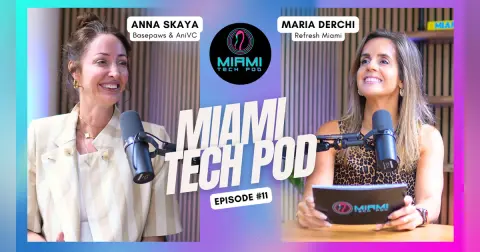
 Anna Skaya built Basepaws from “23andMe for cats” into a pet genetics company that ultimately sold to Zoetis in a nearly nine-figure exit.
But the path there was anything but straightforward. Anna was rejected by YC four times, initially turned down by Shark Tank, struggled to raise venture capital, navigated a painful co-founder split, and spent years hearing that her cat DNA company would never work.
In this episode, Anna shares how she turned that rejection into fuel, what she learned from Kevin O’Leary and Shark Tank, why founders should start building relationships with potential acquirers years before an exit, and what life after selling a company actually feels like.
Now a General Partner at Ani.VC, Anna also shares what she’s seeing next in pet tech and why she believes Miami could become a global hub for the industry.
00:00 - Welcome And Guest Background
01:03 - CityDeal And The Groupon Grind
09:44 - Two Startups That Did Not Work
11:21 - The Basepaws Origin Story
17:22 - Friends And Family Fundraising Reality
20:34 - Shark Tank Pressure And The Deal
29:11 - Co-Founder Breakups And Solo Founders
35:58 - Selling The Database And Planning Acquisition
39:39 - Annie VC And Building Pet Flywheels
43:16 - Longevity Humanization And Cat Opportunities
48:00 - Why Miami Works For Founders
49:53 - How To Connect With Annie VC
Welcome And Guest Background
Maria
Welcome to the Miami Tech Pod. I am your host, Maria Dircey, and I want to give a big shout out to the Lab Miami for hosting us today. Today on the podcast, we have Anna Skaya, founder of Base Paws, a pet genetics company that she founded and scaled to an almost nine-figure exit to Zoetis, the world's largest producer of medicine and vaccinations for pets. She's now a general partner at Annie VC. We're going to get into a lot about the journeys about starting and growing base paws and the highs and lows of post-exit life and now your life as a VC in Miami. We've got a lot of ground to cover. I joke that this is a stackest amount of questions I've had, the biggest stack of questions I've had. Honored. But welcome to the podcast.
Anna
I've been watching this podcast, by the way, for months now, way before you invited me. So I'm honored to be on it.
Maria
Oh, we're so excited. I know we had to reschedule once. The summer was crazy, but I'm so, so glad. We're back. Welcome back, Miami.
CityDeal And The Groupon Grind
Maria
I actually want to start off very kind of really at the beginning parts of your career because I found your background fascinating. I consumed as much content as possible on it. But yeah, your success and incredible experience dates back way before Base Paws. But I want to specifically start with City Guide, because I found that to be really interesting. City Deal. Oh, sorry. Yeah, City Deal, sorry. As we lovingly called it City Deal. I don't know if I'm allowed to say that. So, you know, Groupon was one of the hottest startups in the world at that time, and City Deal moved really quickly to kind of mimic that in Europe. And then you they eventually sold to Groupon for $100 million. What was it like at that time being in one of Europe's hottest startups? Yeah.
Anna
I love that we're starting here because I honestly think this is one of the most fun chapters of my career. I was 22 years old working in the States and just got plucked out of the ether by a German who said, you know, there's something about you. Why don't you go and run a company instead of going to graduate school? Plucked me out of application for graduate school. And there I was in London working for a company that had no name, a company that had a business model based on a very public company where you knew the business model right away. And it was cutthroat. I worked for these very well respected, feared entrepreneurs, three brothers, the Zalmer brothers. They were incredible. Call you at three in the morning, do you know, cell 97B? Why is that number wrong? Oh my god. You would show up in the meeting and there'll be two less chairs. And if you're the last two people you're standing. I thought you were going to say you were fired. I was gonna be the wild. I'll get there. Uh the sales team, absolutely ruthless. Uh, group one is based on sales, right? So how many of those little coupons can you sell? How many of those restaurants, nail spas, whatever, can you bring onto the platform? The sales team, their names were allowed on the board. The last two every week were cut. If you're the last on the board, if your numbers are the last two, you were cut. We would cut people every single week. We would hire people every single week. Ruthless. Ruthless. I don't think in today's day and age you could run a company the way that it was run back then. Um, but what a great education, what a great MBA program. I think one year with the Zomers is like five years in the Army. It was it was very, very hardcore. Uh, but I was young. I am an athlete, so I think being an athlete taught me how to just persevere and keep going no matter what. Yes, I was tired. Nothing else mattered by it but the company. But in 18 months, we went from the company not having a name to a sale to Groupon. That's insane. It was insane. I have never heard of this ever happening. I mean, with AI now, I think I'm seeing similar vibes, but before that, I haven't seen that since.
Maria
Well, I'm really glad that you brought up the Samuel brothers because uh you know, I wasn't as familiar with them. Yeah. Learning about them was fascinating. Yeah. Um so to give the listeners, if they're not familiar with them, uh they basically have become famous for identifying successful business models and adapting them to new markets. Trevor Burrus, Jr. American successful business models.
Anna
They only copied Silicon Valley businesses. They would have moles in YC, and the minute a startup was hot, they were on it like super fast.
Maria
So, yeah, some examples of that, I guess. They created an eBay clone in Germany and sold it to eBay for $43 million. They launched a version of Facebook for Germany and sold that for $100 million. They launched Zelando, which was inspired by Zappos and has become one of Europe's largest e-commerce companies. Uh they copied Alibaba in the Southeast and ended up selling it to Alibaba for four billion.
Anna
Food delivery. There was uh online uh telemedicine, um there was clothes. There was clothes, the clothes in the shoes business, they were the most fascinating because they were able to replicate that in Africa, in Asia, in Europe, everywhere. And I think their most successful and their best known was Groupon. So what what were some of the learnings you took from your time with them? Sure. Well, we were very young, and they really taught me how to be competitive. I have not forgotten those days where you are it's you against five other people all vying for the CEO role. That was my relationship with the last two years of that company. It was me and five other guys, and the Zommers, Mark Zommer, said the six of you, one of you will be CEO of one of the largest companies, one of the largest groupons, prove to me who it's gonna be. And we all competed against each other. We all had a sales team, we all had a uh a page to fill with deals, and it was eat or be eaten, incredible competition, so much fun, so hard. I mean, the trying and trying and pushing. I've never worked like that since. But what a great education. Um they were very rewarding when things were going well, very harsh when things were not going well, um, praised in public, uh, scolded even more in public. But the praise I would get once in a while from Mark Zamur about something I did well, I still remember how good that feels when someone pushes you so hard and then tells you you're doing a good job. So I actually have learned that skill and I use that skill um often. Uh when a German that he he in his German way taught me the shit sandwich. I don't know if I can do a German accent. And when I was 22, I learned about the shit sandwich of how you deliver like bad news. So you go good news, bad news, good news. Um little things like that. You know, at 22, 25, that to me seemed like the most revolutionary thing I could learn from from a from a leader and a manager. And uh enjoyed every minute of it. I've been interviewed about them multiple times because they're very um notorious, I would say notorious. They would say publicly things you should never say publicly, and they uh they drove their teams to the to the edge. They also had pretty bad business practices where they would work you really, really hard for 11 months and when and you had equity, and then when your one-year cliff was about to expire, they would fire you. So I also learned what not to do. Okay, that's important. But working for people like that, and I have only seen people like that in Silicon Valley, New York, and that one time in London when I worked for them. Um, what a gift. What a gift if you can survive it. Crazy you know, 18 months. I was there for probably three years. Uh I actually worked for Groupon for two years or so. Okay. Yeah, after we were acquired. I became the CEO out of that out of those six, I won the CEO role. Of course you did. And moved to uh Russia to be the CEO of top 10 Groupon uh worldwide. I was the CEO of Russia for about two years. Okay, how was that experience? Insane. Insane. I um came in to kick out so Groupon did MA across the world. It was very easy to replicate that business model, right? So there was all these copycats. Uh they bought City Deal and then they went on an acquisition spree. And when they bought a Russian version of City Deal, they brought me in to lead the company. And so I'm this 25-year-old girl barely speaking the local language, barely knowing anything about it. And my job is to fire the current executive team. We just acquire them and we've got to get rid of them, hit my numbers month one, and do it all. Uh not working for the crazy Germans anymore, but working for the very, very, very, very proper Americans where um no mistakes, everything had to be by the book, everything had to be white and clean. Um and working in Russia back then, nothing was white and clean. So it was, it was it was a huge mess and it was a lot of fun. And uh we were really successful. We continue to be well the best performing countries. When I got there, they were doing well, but when I left, they were doing phenomenal. That was like whiplash going from like one culture to the other, right? It was, it was, it was a culture I was very familiar with, but it was still uh, you know, I'm still very much American, so it was definitely whiplash. I love learning, I love, I love hearing myself talk about this. It's been so long, and those memories are vivid and fun, and I'm sure they're a lot worse than the way I'm explaining, but right now all of them are the good stuff. That's important. Yeah.
Two Startups That Did Not Work
Maria
You end up leaving Group Bond and starting, you know, two different businesses before, basically.
Anna
I did, I did, I did. I started a company called Breakup Buddy. I was going through a breakup, and I thought, listen, my girlfriends are so sick of hearing me talk about this. Like, I gotta go and talk to people that are maybe going through the same thing. We can bond together. And so I decided to make a social network of women mostly that were going through breakups together. And we even had a partnership with Time Out where we would go out there together and in the real world. And I think I put $75,000 of my own money. I had exited group on at that point, made some money, um, and it it didn't, it didn't end up working out. But worked on that for about a year and a half and then joined another partner and became a partner in a business called Visual DNA. And that was Attech, B2B. Big, I had really big clients, mostly American, in between Russia and the UK. But when 2016 happened and it was the Velvet Revolution and the Ukrainian war, um, so many American clients basically pulled out right away and didn't want to have anything to do with Russia. So many of my clients left and the business unfortunately closed. So those are the two stories. I mean, both, you know, very good learning opportunities, as we say in tech. But I was ready for at that point, I was ready to go back to the states, uh, which is where I'm, you know, where I feel very much American, and I was very much American when I was living in London and Russia, and uh a little bit of a sore thumb in both those places with my like, go, go, go, we can do this, like, you know, big attitude. Uh so I missed the states, and then I came back to the states.
The Basepaws Origin Story
Maria
And then it was getting into kind of the founding of Base Pause. It was a moment when you were at Singularity University, correct? I would love to kind of you recount how you started.
Anna
Sure. So the company started with the name, which I think is a really fun story, and I have done that since again, and I've seen others do it. Um I was listening to the founder and CEO of 23andMe, Anne Waziszki, and she was on stage with a microphone just talking about her recent investment in a dog DNA company called Embark. This was 2016, and she loves her dogs and she loved this company. It was a personal investment for her, and 23andMe was blowing up. 2016 was the heydays of personal genetics. And she's on stage with the mic, she says, someone should start a company and call it 23andMeow for all the cat people. And everybody in the audience laughed. And I went home that night and I bought that URL, 23andmeow.com, because wow, what a funny, funny name. What a great name, right, for a company. So 23andMeow.com, I had the URL in my hands, Singularity University, for those that don't know, is a great uh summer program for people like myself that are entrepreneurs but don't have their next idea. Like let's go and simmer together and think of new cool ideas and things to build. And then I was just sitting there with that URL, 23andmeow.com. I'm not a geneticist, not even a scientist, I'm not even a huge cat person. So I had to figure all that out from scratch. Well, how do you Yeah, yeah, crazy, right? So bringing on a science, a science team, finding someone to do this with. Uh first I found somebody at Singularity, but very quickly went on to find other people that could help me. If I can build a company in animal health genetics, if I can build the biotech, having never done anything in science before, you can do anything you want to do. And it's all about hustling and it's all about not sleeping and every day just research, research. You know, I always say like it's throwing spaghetti at the wall. I talk to so many different people, people in cats, people in genetics, random people, people, people, until boom, I found the right person. And you start throwing, throwing, throwing, boom, you find the right thing. It just came a lot of it came from the energy I had, the trial and error. Um I had a chip on my shoulder because so many people said, What are you doing? Are you a scientist? No. Like what are you doing building a science company? I love that. I love investing in people now that I'm an investor that have a chip on their shoulder. I want to hear that story. Like, someone doesn't believe in you. I love investing in founders that are first generation immigrants because they definitely have had experiences where people don't believe in them. And I just think that is a huge driver. It was a huge driver for me. People didn't believe in me. Previous investors pulled out their money saying, you know, this is never gonna work. I loved, I loved all those stories. Look, everything worked out at the end.
Maria
You reminded me of a guest I had a few months ago, which was Ani of Kind Designs. Like she was a former lawyer, then starts decides she wants to start a 3D printing seawall company because she was just annoyed about the flooding in her neighborhood. And I'm like, how did you convince investors? Yeah. Yeah, but you're you guys are both perfect examples of you don't necessarily come from the industry. You need to have chip on your shoulder, the hustle.
Anna
How did she convince investors to invest in that?
Maria
Well, what was interesting is she was talking about how she was a lawyer, so she was very good at making, you know, making a pitch. And she surrounded herself with the right team of people who did have industry knowledge. And yeah. So she actually just raised an a a new round recently. Good. Yeah.
Anna
I'm like maybe more lawyers need to be founders just because they I'm sure you see this too. Like, this is the best time in the world to start a company right now. Like AI can be your HR, it can be your operations, it could be your logistics. When I was doing base buzz, I did not have AI. Can you believe building a company that you don't have access to these tools? Right now, I love these stories because they tell me anyone who's listening to this and has an idea, go and try it out because it's easier than ever. And if you're not doing it, five other people probably are.
Maria
Yeah, don't let yourself get hung up on the don't let yourself get hung up.
Anna
And if people don't believe in you, use that as as you know, as kindling to light a fire under your bum.
Maria
Yeah, it's almost like you have to thank them for that.
Anna
Oh, I think so. One of my favorite stories, I gotta tell you the story. So we're fast forwarding a little bit because this is right of the exit. By the way, I think today or yesterday was exactly four years. Well, happy anniversary that I had I had sold I had sold Bass Boss. So one of my favorite things is this email that I wrote. And they went something like this Dear friend of Basseboss. Um Thank you so much for being uh a dear friend. Um I'm so sorry you didn't get a chance to invest in us. I take I took every single dollar ever given to me. I tend I took like $10,000 checks because it was impossible to fundraise for this company. So email. Thank you so much for uh being a being a friend. Um I'm so sorry you didn't get a chance to invest in us. While I cannot tell you the exit amount, I can tell you that uh my early stage investors uh made 25x their investment. And uh it was a really big pleasure uh knowing you. Uh I hope you wish us the best in the future. Thank you. That went out to gosh, like 300 people. Okay and I had that list going for years. Yeah. My my list. I had I it wasn't just investors that passed on me, like there were hundreds. There were so many people that wasted my time because they wanted to meet the really cute, funny, weird DNA company that was on Shark Tank that was like, oh yeah, I'll meet her. Oh yeah, I'll meet, I'll meet, I'll meet with actual no intention. Never. Yeah. So I had 60 people on my cap table. The biggest check I think was 650, and the smallest was 10. And and the median skewed a lot towards the tens.
Friends And Family Fundraising Reality
Maria
Well, actually, this is a perfect timing because I want to get into some of the fundraising. Yes. Because I know that you know you early on raised a friends and family round. Yes. And I think I've heard you say the good and bad of it. The the good was it makes you work hard because you didn't want to lose your friends' money, but also it could have the opposite effect where people hold on to things for too long. Yes. Uh, and don't kind of call it quits when they need to.
Anna
Yes. I want to talk about that a little bit. So because it was so hard to raise money for a cat genetics company, if you think about a fund, a fund has a thesis. We invest in AI, robotics, deep tech, animal health. Nobody invests in pet genetics. Pet already is not really a thesis, but pet genetics is just a weird thing that no fund really understood, but every fund wanted to talk to me because it seemed fun. Yeah, yeah, we've heard of 23. Yeah, we'll talk to you. So just hundreds of conversations that went nowhere. Um the checks I did take were very small checks. And um the first three checks I took, check one, two, and three came from friends. It was actually the reason the company started. Had I not taken those checks, I would have just said, How could I build a biotech? That's insane, and gone off to do something else. The first and the second check came from two dear friends, still very dear. One of them is my partner in this fund. When I took those checks, I committed my soul to not letting these two guys down. I couldn't imagine going to a birthday party or a barbecue in a few years and being like, oh, I can't, I don't listen, uh I don't I don't, you know. I I just, you know, I lost this. Even though right now I understand investors totally, this is what they do. They don't it doesn't work like that. There they understand their money can get lost, but I didn't really understand it back then. And every time base boss had a hurdle and they had many hurdles, especially the two or three times where the hurdles were insurmountable at that point. I maybe should have pulled the plug. There were legal challenges, uh, there were scientific challenges that simply just could not be sold or solved, I thought. Or I could have just said, you know what? So many startups do it, right? It just it didn't work out. We we ran out of runway, the science doesn't work, et cetera. But I pulled through. I really felt like I had the company on my back and I was just like pulling it, pulling it myself uphill with my team, of course, always with your team, never by yourself. And I did it when I look back at it, which is uh probably one of the first times I shared it when I was sharing it with you, because I think these self-realizations are coming afterwards. I did it because I did not want to let my two friends down. So now as I talk to founders, I say, Do you really want to take money from friends and family? Because that money would mean so much more to you than any other money you'll take.
Maria
Yeah.
Anna
And if the time comes where things might need to be shut down, you might be making an irrational emotional decision. Which is I I made that decision irrationally and emotionally. It did work out for me at the end, but I don't know if I don't know if it's a good thing. I really don't. I still don't.
Maria
Yeah.
Anna
Decide for yourself.
Shark Tank Pressure And The Deal
Maria
It's a tough one. Yeah. Oh, but you kind of briefly touched on this, would love to talk about the Shark Tank experience. Sure. Because I know the highlight of my career.
Anna
The highlight of my career.
Maria
At what point in the business did you end up getting on the show? Uh yeah, let's start there.
Anna
Well, um I was building the company in Los Angeles and Shark Tank Films in LA. So I've heard about the show. I've actually never really watched it, but of course I've heard about it. We are a physical product, and multiple people have told me to apply. I applied the first time, I did not get in, but I got the email of the producer. So I didn't have to go through the application again. But six months later, when my revenue was probably about 400K, the first time I applied, I think maybe it was 100. And I got feedback, and you will always get feedback if you're not selected, why you're not selected. I got feedback, you know, we like you, but you're not big enough for us. So come back when you're bigger. And about in six months, I applied again. And this time, it was just so many, you just do so many things for them. We like this. Can you please do this now? We like this. I had to get a green screen and make all these videos. I had to get a cat. Well, you didn't have a cat? I didn't have a cat at this point. Okay. I had to get a cat just for this. I mean, I love my cat afterwards, but like I knew I had to get a cat. I just, you know, we're so busy running a company, it's not always your priority. So I got a cat for this. And slowly, you know, every time I submitted a video or a pitch, or you I wrote out My story, I kept coming closer and closer to. I I even remember this. Like, I at this point I had another co-founder. I had partnered up with Damien. Damien was my co-founder up until the end, phenomenal guy. And I remember calling him from the car. Damien, we got in. Anna, are you sure you want to do this? Do you understand? Like, you're gonna have to share all your numbers. You're gonna have to open up every detail about the company. You can totally mess up. You can look really stupid. Look at all these. We were watching videos with him at his house and look at all these girls crying. They were making all these female founders cry. And we were just like, oh, look at those sharks. They're terrible. And of course, of course, Damon, of course, we're doing it. Of course we're doing it. Three things that really worked out in my flavor. Number one, living in LA, I had a lot of actor friends. And I called up an actor friend and said, teach me everything. And over the course of a few weekends, I got taught how to present, how to speak. You know, not that I speak like on a podcast, this seems natural to me. Back then, it was it did not feel natural. It was not natural. You know, you get this skill as you get a little older and you get to practice. And I got to practice a lot with him. How to walk in, how to memorize things, which is very important. Um, and I got to be very, very comfortable. The second is I pushed back on the producers. And I actually I'm so grateful that I get a chance to talk to other founders that are trying to get on the show and help them because I learned this really important thing. The producers will push you to be as crazy and kooky and stupid and weird as they possibly can because it makes for great television. You are a founder, you're a business person, you wear heels, you wear a suit. You do not get into a cat suit and roll around on stage, which is what they wanted me to do. They got this really cool cat suit. They're like, we have this brilliant idea. You're going in the cat suit and you're gonna come out and you're gonna present. And I'm just like thinking about my investors watching this thing, watching me in a cat suit. So push back on the really weird stuff. The third thing is, you know, I was very confident about the product. I thought the product was looking really good. It was six months into this whole new production, and we were feeling very, very good about our numbers. It was right before COVID. And, you know, those doors opened and music starts, that red carpet is before you, and you know, I was feeling good. I walked in and I looked up and I saw that's the sharks and like 70 people behind them. What you don't see is like the massive room, and there's like a million people there, and they're all watching you, and there's a little X on the floor, and you're meant to step on the X and they say, Go. And Maria, I swear, I swear I'm like I have anxiety just sitting here. I forgot the pitch. I forgot the pitch. You're so anxious. I I now that I'm talking about it, I'm remembering, but like right afterwards, a microphone gets shoved in your face. How did it go? It's like their behind the scenes thing. You have no idea how it went. You cannot remember a single moment. So how how did it go? Oh, so they're like, go, and I'm looking up and I I don't even know what what what word to say because I can't recall the number. And I remember Mark Cuban was like, you can go now. And then he goes like this, and I'm like, oh. And he snapped back into it. I totally snap back into it. I just had to like forget that there were all these people there. Like I didn't realize that there will be so many more people. Is it just production or is it like a good live eye? It's it's no, no, no, it's production. It's like it's like they've got these cameras that are kind of on a circle and they're just kind of rolling around, and there are people colding them, and there's like there's a whole other world back then, and it was super distracting. Um, you're in the show for an hour, they grill you, you better know all your numbers, you better know everything, have some really good stories, they love stories. And we got two sharks to bite, say yes. At the end, one of them did not work out, uh, one of them did, and my shark and I are still in touch. And I'm not gonna call us besties, but we're we're we're in touch. We've we've tried to even do deals together.
Maria
Yeah, actually I wanted to talk about him because uh Kevin O'Leary was one. He was on diary of a CO, probably a little over exactly a year ago, and said you had the highest IRR of the in the history of the show, at least at that point, which I still assume that sticks. Uh yeah, that shows a huge impact that you've had even this many years later. Thank you. He still seems to be one of your biggest cheerleaders.
Anna
He seems he's he's fantastic. I loved working with Kevin. Kevin is, you know, we we call him Uncle Kevin. I don't want to say like we're so close, but we call him Uncle Kevin because to his companies, he's a very, very, very nice guy. He understands the pressures of being a founder. He always tries to help. I always said that with Kevin, I was always like his squeaky wheel because I understood that to get anything out of Kevin and his team, you have to just ask, ask, ask, ask. And sometimes you would get. And I talk about this a lot. You know, I would call him and I would call his team. I would send them champagne, I would send them really nice cards. Please get me into this, this, this, and this. Please help me with this. And once in a while, it would hit and it would help, and that help would be astronomical because that's who they are. They're they're very connected in the world. Um, I've enjoyed working with him. He has been very helpful in the acquisition. He made sure to meet the CEO of Zoetis. Um, he actually has heard of her, and I think they're still in touch. He has been very helpful in thinking about how to structure that exit. Um, and I've just been in touch with him. He lives in Miami, so I don't know. People run into him. Oh, I've I've run into him like at least three times. He's always at Smith and Valensky at Sunset, having a journey. Yeah, everybody go check him out. Kevin O'Leary is always at the bar. And uh, you know, I see him around town. I go to a few events with him. I am involved in his, you know, he's got this little incubator of his companies. I try to be helpful since I've had the exit. And yeah, it's it's been a really good exit, especially for him since he got such a tiny valuation on the business.
Maria
And I rem I think you wanted Mark going in, you wanted Mark. I wanted Mark so badly because he's Has he ever admitted that shoot, he missed out?
Anna
He never has. Um backstage after you know, I remember things that happened after the the actual Shark Tank, but I can't recall anything in there. My memory's wiped. But after the show, I'm still in the back and I'm kind of decompressing, just excited. And he came by and gave me a hug and said, You did a great job. Congratulations. That's the only time I've ever spoken with Mark. But I mean, Mark comes from tech and I thought he would understand it. Yes. So I really wanted him. I got um Kevin and I got Robert. Robert Hershevik. And Robert was great. Uh, he made me feel so good because he said, Anna, I'm jumping up and down. I don't know why everyone else is out. Like, this is amazing. Like, I want to invest. You know, you can never know what gets cut, and that did not get cut. That made it into the final episode where he says, Anna, I'm jumping up and down. I love this deal. So that really was amazing. We couldn't find like couldn't do the deal. Not every deal gets done. You know, you you shake hands on the show, but sometimes like due diligence doesn't work out. So him, his team and our team, we couldn't figure it out, but Kevin and I did.
Maria
And
Co-Founder Breakups And Solo Founders
Maria
you kind of mentioned Damien, who became your co-founder, but the original, you had an original co-founder, Damien. I did.
Anna
I did. I did had an I so wow. I don't talk about this very often because it's so painful and hard to talk about. Like, you know, you're building a company, you're you're going into battle. You're going into battle. You don't know what's gonna work. Every day you start a project, and in a week that project could be just a waste of time. You could be trying to find someone and you find them and you finally have a call with them, and it's not the right person. Like there's so much uh hard work that goes in in the beginning. And I was working with someone that has never done a startup before. We met at Singularity University. We had just met. So also don't start a company with someone that you've just met. And it was a very, very difficult experience because after the first, like after the honeymoon was over the first few months, it was just hard. Like he was very risk averse, didn't like the speed. I thought the speed wasn't fast enough. And so it was butting heads, butting heads, butting heads. Of course, the division of equity is always the pain point. If someone wants to leave a startup that they founded, um, did they walk away with all of their equity? Did they walk away with the vested equity? Um, he was by the time he was ready to walk away, he was over the cliff. But because he had 50% of the company, like it's a pretty substantial amount to just take and walk away with it. There was a lot of lawyers involved and there was a lot of money paid, and it was my own personal money. I I everything I made in Groupon, I put into base pause and it was gone fairly quickly. You know, if there is any lesson besides be very, very careful who you start a company with. In today's world of AI, I actually really recommend starting a company by yourself. I don't think that we need to have that extra stress. And now that I'm a VC, I've worked with tons of founders the last four years and I've noticed a pattern. And this is just my pattern, but I think that the first 18 months, having a co-founder is great. You're in it together, it's really hard, you have someone to lean on. After 18 months, having a co-founder becomes liable. Liability. A liability, or like you don't need them. If you can survive those 18 months by yourself, you really don't need a co-founder. Um, it's too hard. Unless you're completely different. But now, what does different even mean? You used to be a tech person and a marketing person. Well, now you can have AI be both or either one. I think that the challenges of splitting equity and the challenges of working so closely together, it's like you're married to this person, are usually very big. And if you can figure it out on your own, it would be uh short term painful, long term uh the right thing. Sorry for all the co-founders listening to me.
Maria
No, I think it's it's refreshing, I think, because for so long, you know, even when I was working in VC, like you know, you would always hear funds don't want to invest in a solo founder. YC would never accept a solo founder. And so I feel like that's changing now.
Anna
I applied to YC four times. And the the people that that interviewed me, I think I had out of the four times, twice I was coming in for an interview, um, they were on my list of the 300 people that received my very lovely note about not joining the investment. And man, like YC was a chip on my shoulder, for sure. Wanting it so badly, being out of singularity, coming through the Silicon Valley like pipeline of everything and 23 and me being so Silicon Valley. I just like I craved it. I could smell myself there. I I took pictures and why I've of course I've gone to YC and pretended and imagined and wanted it so badly, applied four times, never got in. You know, it's okay. It's okay to want something like that. It's okay to have something drive you like that. Um and it's also okay to send them a little note afterwards, letting them know they didn't get it.
Maria
Well, I feel like in general, you you were a great example of resilience because from what I understand, yes, you applied four times to YC, you got denied. The first time you applied to Shark Tank, you got denied. Yes. You and your co-founder broke up. Yes. It was very tough to raise money, but like despite all those odds, you can't.
Anna
Don't take money from friends. I'm telling you, like so much of what I can I mean, that's that's a little bit of what it is, but yeah, I've set up these these things for myself that almost made it really difficult to quit. Every time somebody told me no, I got a lot of people laughing, like not in my face, but alongside me for what I was doing. For a few years, the cat would be like waxed with this piece of tape we would send, we would send you in the mail, and like it was like a funny experience. And yes, while my other friends from Singularity were doing crypto and AI, I was doing this cat DNA company. By the way, Singularity University is founded by Peter Diamondis, and Peter Diamondis refuses to acknowledge baseballs as part of Singularity because we're such a funny company. We're like the only company that was successful. Singularity, my program, I think was going on for five years, and we are the only company that kind of made it. And like they never talk about us because Singularity stands for you know changing the world. And BasePuzz was this funny little cat DNA company. Um ultimately the database that we build had profound effect on the way that we're treating our pets and the therapeutics that we're making and the vaccines that we're making for our cats. I know that for a fact. So I do know that we changed the world, but maybe not in the way that Peter wanted. And these this is just one story of many where um yeah, the the the chips on my shoulder were many, and I really it felt like they were driving me through all of my resilience.
Maria
Well, I think it's a good lesson of like, you know, the criticism can break you or it can fuel you. Yes. And in your case, you just used all of it.
Anna
Yes, someone told me this story about Michael Jordan receiving an award, and when he goes up on stage, he often talks about like the basketball coach that didn't bring him into the game and the college recruiter that didn't recruit him, and he has all these grudges. And uh I read this story as someone saying, like, how could you have how could you use that opportunity to to talk about your grudges? And I totally feel it. I'm like, yes, you gotta drive yourself. And if those grudges are driving you, keep talking about your grudges. I watch a lot of tennis and I see that the best player, some of the best players, they love it when the crowd is rowdy and like the crowd is supporting their the other guy because it really fuels them. They're like, oh yeah, you think the other guy will win? Like, let me show you. Love that. Oh, I never thought about that. Yeah. Yeah, watch more tennis. The US Open
Selling The Database And Planning Acquisition
Anna
is now.
Maria
You know, you end up selling to Zoetis, and it kind of to your point, I think on the surface it just sounds like a funny company of like, oh, you want to know about your cat. But it really is a data company that helps unlock. You amass one of the largest data sets on felines and like what that, you know, the downstream effects of that are.
Anna
Um and now there's a lot of companies that are trying to do very similar things. We're seeing like the function health and um the personalized nutrition companies, and a lot of them are using the BasePause playbook, where they're trying to create a company that has, you know, financially is sound, but what they're trying to really do is collect data and then trying to find someone who will buy this data for you know, unlocking a therapeutic or unlocking a much bigger solution to a problem. Before BasePause, like no one's ever sold a database anywhere. Like that really wasn't a thing in pet. And now, you know, I love working with founders that come to me. I sit on a bunch of like advisory boards just because this model of build a profitable business, but you're building a database business first and not a profitable business first. When Zoetis bought us, they did not buy us for our revenue. They bought us for the database. Um so it was one of the very first exits that positioned the exit in this way. And now I see a lot more companies doing very similar things.
Maria
And so I think you got some pretty good advice when about kind of what to do to get acquired in terms of where to go what relationships to build. Yes, I did. Um I think it was from one of your board members or yes, I did.
Anna
So I um I had a board member who was younger than me, but he gave me a piece of advice that to this day I think is one of the most important pieces of advice. And he said that you're creating a company to get acquired. And it's a hard conversation to have, especially on camera, because what you think you're doing is you're creating a company that will change the world. And in many ways you are, because those are the companies that get acquired. But your North Star is usually acquisition. So build to that acquisition. Create a company that is going to be acquired. Get to know the acquirers in your space. Understand how PE works if PE is in your space, understand how strategics work. So I had a lesson probably in year two of how to sell baseballs that I did in year seven. And for five years, I I want to say it was systematic. It was probably less than I should have had, but now I teach other entrepreneurs to be systematic about it. Get to know your industry. Who are the players that acquire startups? What are they looking for? If they're public companies, listen to their earnings. Hear what the CEO is talking about. If they're private companies, follow them, go to conferences where they speak and listen to them speak, understand their needs, because that's going to be your path to acquisition. Super important lesson very early on in the base buzz world. And I took that lesson, and for five years I did just that. I would I made a list of all the strategics. I understood who the executives were, I understood who the BD teams were, business development teams, they're the ones that acquire, right? So I went and I met them and I shook their hand and I got to know them and they got to know me. And they, you know, people acquire people. Like companies don't acquire companies. It's it's founders get acquired by the CEOs. It's teams that meet teams, it's the relationships that are formed, and that takes a few years. And now I say the same thing to my founders that I work with. Like make sure you know how you're gonna get an exit and make sure you talk to the to the people that are responsible ultimately for that exit. That's great advice. Yeah. I really believe it, and I've I've seen beyond myself, others have success with
Annie VC And Building Pet Flywheels
Anna
it.
Maria
Now let's switch gears a bit to now Annie VC. Yes. Kind of full circle moment. Can talk to us about what you all focus on.
Anna
You know what's funny. Coming here, I was thinking about our our conversation, and to be honest with you, I very rarely talk about my story. Like I have this like super sexy, juicy story. And you know, the Shark Tank and the exit and all this stuff, and I never really sit down and talk about it. But I talk so much about it one-on-one with founders, and I always feel like I'm saving all of these stories so that I can work directly with founders. Um, after my exit, I was like, wow, what an amazing thing that just happened to me. Why doesn't that happen more often in pet? Started digging around. And so here's my reason for not a lot of exits in pet. In tech, you have founders that get acquired and they put some of the money they make back into the ecosystem and invest in other founders. I don't see that a lot in pet. I see very little of that, where there's an exit and the founder brings the money back into pet. That's unfortunate. That's the that flywheel is the only way the ecosystem will grow. We are need more investors, we need more exits, we need more founders that are staying in and bring and building the ecosystem again as VCs or angels. I didn't want to leave. Like, you know, the pet space is so much fun. Like, where am I gonna go? What's more fun? What's more lucrative? Like, where are the founders as passionate? Like, have you met like founders and pet? They're the most passionate people because they're solving a problem for their own families. It's it's incredible. The VC came out of first of all, just came out of people asking me, like, why are you the only person I know in pet that has had an exit? You and like these two other people. Um and one of the people whose check I took back in 2016, it was his idea. He said, Listen, you know so much, we have some cash, why don't we pull our cash together? We actually have very few LPs uh by design, because in early stage pet, like the checks are pretty small, and we really get to cover a lot of ground with the money that we've raised. But we invest in early stage animal health, which is therapeutics, diagnostics, like the next best drug that's coming out there, hopefully will be one of our investors' investments. And then we invest in consumer. So all the things that you love for your own dog. Like just think of you know, food and treats and you know, new modern, amazing uh animal hospitals and new veterinary care and anything that feels like it's not made for the old guard is what I love. Anything that makes it feel like, oh, this is made for me, like the human, um, as opposed to like I call it the kibble and the crates. Like we don't do that. We love things that are very, very innovative and new, obviously.
Maria
And I know uh a few months ago we hosted a dinner together for pet industry founders. And it's exciting to see Miami growing as it's a hub.
Anna
I would say it's one of the like world hubs for animal health and pet. I don't know how it happened, but so many founders are here and more and more moving here. Um if you're building a company in pet and you don't know where your people are, they're here in Miami. Reach out to us. Completely. We'll introduce you. Like we have a WhatsApp group coming. I know that if we put more attention to it, Miami could really be the pet hub for all the new pet innovation. Because I'll tell you why, two of the three biggest conferences in Pet are in Orlando, right? Uh VMX and Global Pet. This is these are two of the three biggest, biggest, biggest. So already people are coming here, plus all the other amazing things about Miami that we
Longevity Humanization And Cat Opportunities
Anna
know and love.
Maria
So, what are some of the trends in pet health or pet tech or companion commerce that you're most excited about?
Anna
I'll talk about two that I really love. Uh first of all, of course, longevity. Like we want our dogs and our cats to live longer and have a better life. Same thing as with human, right? But with pets, the the path to that is a little bit shorter. There's less privacy concerns, there's less policy concerns. You can really move fast, like we were joking around earlier about peptides, peptides now. Um, longevity in ingredients and food is becoming a really big deal. We're really paying attention to that. Uh, longevity in services, so we're really paying attention to that. Of course, longevity in in medicine and therapeutics and the kind of diagnostics you're running at the veterinary space. So anything that's really focused on um not really just saving money, not um maybe make going out the easy way. You know, it used to be that our pets just, you know, we're outside and they worked for us and and if something happened, then we'll get a new one. Now like our pets sleep in our bed, they eat our food. Like we we can't imagine them not being there like like right now I'm talking to you. I'm like, oh I miss my cats. So anything that brings more life and more healthy life to our pets, that's it. There's no going back. Like we've hate escape velocity in in our conversations about pet longevity and it's only going to get worse. And then the second trend that I'm a big fan of is humanization. Like Base Paws was like on track for that. You take a DNA company that's made for humans and you make it into a pet. Like for anyone out there that's thinking about getting into the pet space, think of your favorite products in human and you can probably make the same thing for pets. I've seen just the funniest things and just people that are just really passionate about solving one little problem and they are going to get to the bottom of it and they're going to solve it and then it's going to become a really big business. A lot of those little problems start with little problems for us humans as well. So those are the two main trends humanization and longevity that like I'm a huge fan. And is there one product in the pet space that you wish existed and does not currently oh my gosh you know I'm a cat person and I'm just disappointed by the cat aisles in general. Like walking to a pet co you see dog dog and maybe in the corner right there you'll see like a little cat section. It doesn't have to be like that. We there's actually more cat owners than dog owners we just aren't as loud about it. We're not walking around with our cats but we want as many options we want as many cool treats toys uh enrichment products uh one of my favorite people in in pet is Jackson Galaxy he's like this Uber celebrity cat guy he's the cat daddy um he used to have a show on Netflix called My Cat from hell and I like subscribe to all his newsletters and I read and like he gets really really like worked up about the fact that like it's 2026 like where are all the cat things like why are we not surrounded by cat companies where's where's the golden child for cat you know there's none. Where's all the amazing food homemade like home cooked good frozen fresh for cats there are there's none like I can count them on one hand.
Maria
Oh wow yeah well this is going to show that I don't watch sports that much but I remember there's a bunch of like athletes that in the last year or so have come out and been like showing their love for their cats.
Anna
Come out have you ever heard of anyone coming out to show their love for dogs? Even the way that you're saying it like it should be absolutely normal. Half of the pet owners in America have a cat.
Maria
More than half. Well I just feel like men historically haven't been much cat people. Like it there's a stereotype talk about it.
Anna
Of course they have actually one of the investors that I really wanted for Bass Boss he was going to be my lead. I'm not going to name names but I have named him in the past and he famous investor and we came really close and he wrote he ghosted me and then wrote me like a month later you know I just not a cat person. And I'm just like are you a money person? That's what I'm yeah exactly. He just I'm not I'm like this is where like I have friends that are raising money for like you know lingerie or like underwear for girls and no one can give them money because no one's like an underwear guy. It sucks. It sucks so uh we are cat people there's a lot of cat people out there they want better products they want to be on the same level as dogs when they walk into Petco we want dogs and cats 50-50 equality that's what I'm that's what I'm here for. Okay all you you know entrepreneurs out there start building more in the oh I talk about this a lot like it's an amazing space it's there's just tons and tons of opportunity. Okay I want to close out with more Miami questions.
Why Miami Works For Founders
Anna
Yes. How did you end up here? Uh first of all I love Miami so much I can't believe I'm here I'm like lucky lucky just super lucky to be here. COVID we were in LA for a long time we've been wanting to move and then COVID happened and we couldn't move and we traveled a little bit went to Austin went to Miami and just fell in love with it. I'm very very lucky to be living in Coconut Grove which is to me just paradise yeah paradise on earth um moved here five years ago a little bit before like the beginning of the boom but very much part of the part of the boom. It is a smaller network and a smaller community of tech entrepreneurs you have to find your people which means that once you found them you're closer. I really believe that so my I have a much closer circle of entrepreneurs that inspire me and that are building alongside me than I did in Los Angeles where there's a lot more of them but that means they're probably like they have their own clicks here it's it's just tighter. So I love that about about Miami. I love it like the connections are deeper? Connections are deeper because there's less of us and once once we find another one we're like yes you're one of us come in and here's this person and we're gonna introduce you to everybody and you're gonna go to all these events and we're all gonna be really really tight. Whereas in LA there are way more communities but people weren't like they here when I find an entrepreneur that I love I just like hold on to that person and introduce them to all my network because I'm just like so grateful that they're here in Miami and not in San Francisco. So I love Miami for that. It's just I have much deeper connections here. Maybe there's fewer of them but they're much much deeper. Plus this is the pet pet hub pet hub of the US of the world even so anything that the community can do to be helpful to you? As a VC now other than launching cat business.
How To Connect With Annie VC
Anna
Of course well that's number one if you have a really good idea I'm at on EVC so two things as as a as a founder of a fund we're always looking for LPs and we're always looking for amazing pet companies to join. So if you want to invest in pet or if you have a pet company this is the place to go an AVC. Awesome thank you for coming on absolutely so much fun.